

Yes, you can spread appliance upkeep across the year instead of tackling everything at once. A yearly appliance maintenance checklist for Houston homeowners can group quick monthly checks, tasks to repeat every six months, and annual jobs. Put each task on your calendar so refrigerator, washer, dishwasher, and range care stays manageable.
A few minutes of regular attention can help you spot buildup, worn seals, and other changes before they become harder to address. Give each appliance a simple routine, and leave complex repairs to a professional.
This checklist explains what to clean and inspect, how often to do it, and how to spread the work through the year. Follow practical steps for refrigerator coils, washer hoses and gaskets, dishwasher filters and spray arms, and range and oven surfaces. You’ll also learn when to stop and arrange repair help.
Key Takeaways
- Spread upkeep across monthly, seasonal, and annual reminders instead of doing every task at once.
- Keep refrigerator coils clear, inspect door seals, and replace the water filter on its recommended schedule.
- Use washer cleaning cycles and check hoses and dispensers to catch residue or wear early.
- Clean dishwasher filters and spray arms, and keep range and oven surfaces, seals, and hood filters in good shape.
- Leave complex repairs and gas or electrical work to a professional, and stop if a task feels unsafe.
Refrigerator coil cleaning, door seals, water filters, and temperature settings
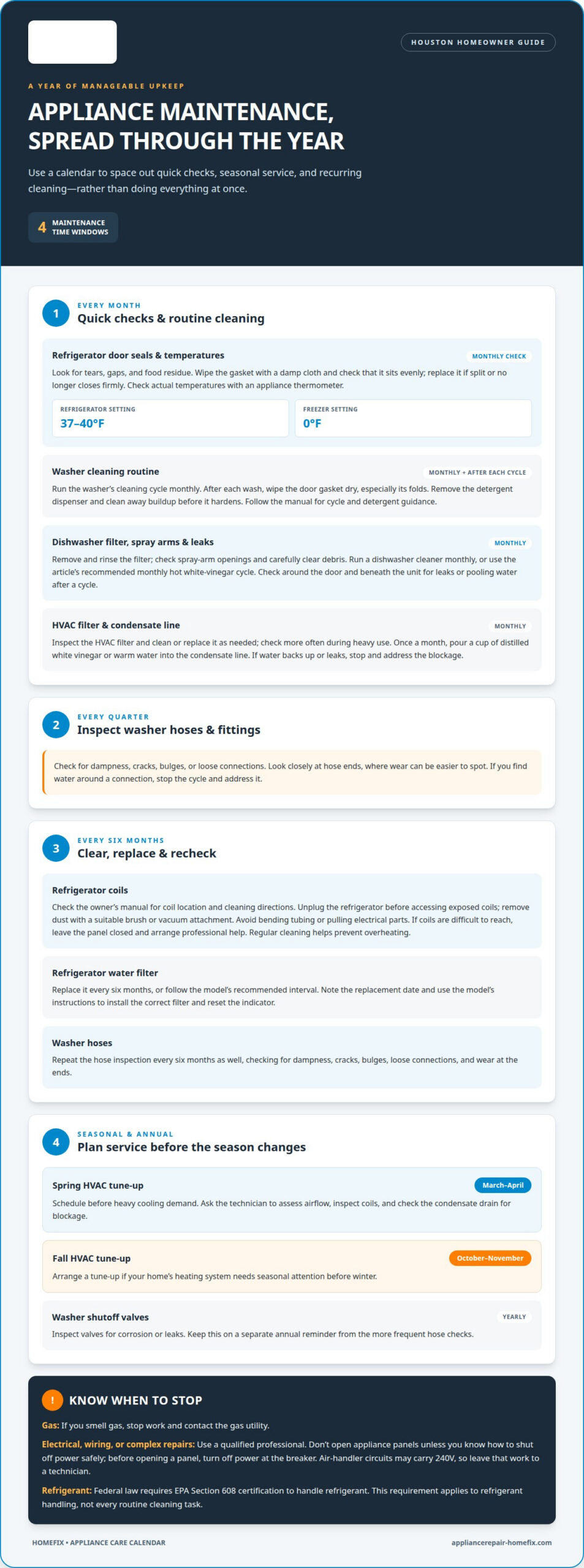
Schedule refrigerator coil cleaning every six months to help prevent overheating. First, check your owner’s manual for coil location and cleaning directions. Unplug the refrigerator before accessing exposed coils, then remove dust with a suitable brush or vacuum attachment. Avoid bending tubing or pulling on electrical parts. If coils are difficult to reach, leave the panel closed and arrange professional repair. For a Sub-Zero model with a repair issue, see Sub-Zero refrigerator repair in Houston.
Inspect door seals monthly for tears, gaps, or food residue. Wipe the gasket with a damp cloth, then check that it sits evenly against the cabinet. A damaged or poorly seated seal can let cold air escape and raise energy costs. Replace a seal that is split or no longer closes firmly. Check the refrigerator’s temperature setting, too: the recommended range is 37-40°F. Set the freezer to 0°F, then use an appliance thermometer to check actual temperatures.
Replace the refrigerator water filter every six months, or follow your model’s recommended interval. A fresh filter helps maintain the taste and quality of drinking water and ice. Note the replacement date on your calendar or set a recurring reminder. Keep the model’s instructions handy so you install the correct filter and reset the indicator properly.
Dishwasher upkeep also fits a monthly reminder. Remove and rinse the filter to clear trapped food, then check the spray-arm openings for blockages. Clear debris carefully so water can reach dishes. Run a dishwasher cleaner monthly to help remove mineral buildup; a monthly hot white-vinegar cycle is another recommended cleaning task. Check around the door and beneath the unit for leaks, and note any pooling water after a cycle.
Include the air conditioner in the same household calendar. Inspect HVAC filters monthly, then clean or replace them as needed. A clogged filter restricts airflow, so check it more often during heavy use. Inspect the outdoor condenser for visible debris and keep its airflow path clear. Dirty evaporator or condenser coils can reduce heat-exchange efficiency and increase energy use; schedule coil cleaning when they appear coated with dust or grime. Check the condensate drain for blockage, too. Once a month, pour a cup of distilled white vinegar or warm water into the HVAC condensate line to help keep it clear. If water backs up or leaks, stop and address the blockage before it causes further damage.
Professional maintenance for complex or gas and electrical work
For Houston appliance servicing, use a qualified professional for complex repairs, gas work, and electrical work. Federal law requires EPA Section 608 certification to handle refrigerant, according to the U.S. Environmental Protection Agency. That requirement applies to refrigerant handling, not every routine cleaning task.
Stop work if you smell gas and contact the gas utility. Don’t open appliance panels unless you know how to shut off power safely. Before opening a panel, turn off power at the breaker. Electrical circuits inside an air handler may carry 240V, so leave that work to a technician. Unusual operation, visible damage, or a repair involving wiring are reasons to stop and arrange professional service.
Call a professional when a task goes beyond cleaning or a simple visual inspection. A technician can diagnose a refrigerator that won’t maintain temperature, a washer that won’t complete its cycle, or a dishwasher with a persistent leak. Have the model number and a brief description of the issue ready. These details help focus the visit on the appliance’s symptoms and repair needs.
Schedule a spring HVAC tune-up in March-April, before heavy cooling demand. Ask the technician to assess airflow, inspect coils, and check the condensate drain for blockage. A blocked drain can lead to water leakage, while dirty coils reduce heat-exchange efficiency. Arrange a fall tune-up in October-November if your home’s heating system needs seasonal attention before winter. Keep HVAC work separate from kitchen and laundry appliance care when setting calendar reminders.
Maintenance agreements can help organize recurring HVAC checkups. An annual agreement, for example, can set a regular time for system inspections before the cooling or heating season. Review what it covers, such as scheduled maintenance, repairs, or emergency service. HVAC agreements don’t replace separate care for refrigerators, dishwashers, ranges, or washing machines. For commercial facilities across Texas managing larger-scale mechanical equipment and installations, j3mech.com provides specialized commercial contractor services.
Texas-specific rules for every type of appliance service aren’t covered by the facts here. The clear federal requirement is refrigerant handling: EPA Section 608 certification is required by federal law, as stated by the U.S. Environmental Protection Agency. For gas or electrical work, stop and use a qualified professional rather than opening panels or attempting a repair.
Professional annual maintenance costs in Houston depend on the appliance, the work needed, and whether repairs are involved. The price depends on the case and is given after a quote request; the appliance type, repair scope, and parts required affect the cost.
Washer cleaning cycles, hoses, and detergent dispensers
Run the washer’s cleaning cycle monthly to help prevent odors and residue. After each cycle, wipe the door gasket dry, especially around folds where moisture collects. Remove the detergent dispenser and clean away buildup before it hardens. Check the manual for the correct cleaning-cycle steps and detergent guidance. Regular upkeep helps keep the washer running smoothly, but it doesn’t replace needed repairs.
Inspect washer hoses and fittings quarterly for dampness, cracks, bulges, or loose connections. Check the hose ends closely, as wear can be easier to spot there. Look over the hoses again every six months, and inspect the shutoff valves yearly for corrosion or leaks. If you see water around a connection, stop the cycle and address the leak rather than continuing to run the washer.
For annual washer and dryer upkeep, inspect washer hoses and shutoff valves, clean the washer, and clear the full dryer vent run. Clean the dryer lint trap after every load to reduce fire risk. A clogged vent restricts airflow; clothes taking longer to dry or a dryer that feels unusually hot are signs to check it. Annual vent cleaning doesn’t replace removing lint after every load.
- Monthly: Run the washer cleaning cycle, wipe its gasket, and clean the dispenser.
- Quarterly: Inspect washer hoses and fittings for leaks or visible damage.
- Annually: Check shutoff valves and clear the full dryer vent run.
Set a monthly home-maintenance reminder for quick appliance checks, such as looking for washer leaks, clearing the lint trap, and noticing unusual changes during a cycle. Set a separate annual reminder to check the full dryer vent run. Before maintenance that could affect warranty coverage, review the owner’s manual. Leave complex or warranty-related repairs to a professional.
Add kitchen ventilation to the calendar, too. Houston homeowners are advised to clean range hoods, fans, and vents in January. Remove and clean the hood filter according to its instructions, then wipe grease from reachable surfaces. Also schedule refrigerator coil cleaning every six months and inspect door seals monthly. These are separate recurring checks, so assign them their own reminders rather than waiting for an annual deep clean.
How maintenance affects appliance lifespan and safety
Houston’s humid subtropical climate brings long, hot, humid summers and mild winters that still require heating. Heat and humidity increase cooling demands, while hard water can leave mineral buildup on appliance surfaces. Before storm season, secure loose outdoor items and inspect the roof and windows to help reduce weather-related risks around your home.
Routine care helps catch wear before it disrupts daily use. Most major appliances are built for roughly 9 to 15 years of service, and annual maintenance can help identify issues and extend appliance lifespans. It can’t prevent every breakdown, but it gives you regular chances to notice leaks, unusual sounds, damaged cords, or changes in performance.
Use a simple monthly walk-through to spot changes. Check beneath the refrigerator and washing machine for moisture. Look for rust, cracks, or loose connections on visible hoses. Note whether the refrigerator struggles to keep food cold or the washer leaves clothes unusually wet. These observations help distinguish a new warning sign from a normal operating sound.
- Cooling: Notice if a refrigerator or freezer no longer holds its usual temperature.
- Water: Look for pooling beneath a dishwasher or washing machine.
- Power: Stop using an appliance with a frayed or damaged cord.
- Operation: Record unusual noises, burning odors, or repeated cycle interruptions.
Safety depends on small habits as well as annual checks. Clear the dryer lint trap after every load to reduce fire risk. Keep appliance cords visible and away from hot range surfaces. Don’t ignore water around a dishwasher, because a continuing leak can damage nearby flooring. If an appliance smells of gas, stop work and contact the gas utility.
Houston’s hard water makes mineral buildup worth watching around appliances that use water. Follow each appliance manual for cleaning products and maintenance steps. If residue returns quickly or water flow changes, note the symptom and when it started. That information helps a technician focus on the problem and diagnose it before recommending repairs.
Storm preparation can help reduce avoidable damage around appliances. Before severe weather, secure loose outdoor items and check the condition of windows and the roof. After a storm, look for water near appliances before restarting them. Keep appliance access clear so you can inspect for visible damage without moving heavy units or opening panels.
Spread checks across the calendar instead of treating maintenance as a once-a-year event. Set monthly reminders for visible leaks and changes in performance, then schedule deeper inspections separately. Keep a written log with the date, appliance, and observation. A short record can show whether a symptom is recurring and help you describe it clearly when arranging a repair.
Refrigerator, dishwasher, and range upkeep
An annual checklist should cover refrigerators, dishwashers, ranges, ovens, washers, and dryers. Give each appliance recurring checks as well as deeper seasonal or yearly tasks. A calendar helps spread out the routine and prevents neglected maintenance from piling up. A yearly appliance maintenance checklist Houston homeowners can use should reflect how each household uses its kitchen and laundry appliances.
For the refrigerator, inspect visible door seals monthly and check for tears, gaps, or residue that can interfere with the seal. Clean condenser coils on their scheduled interval, and check the owner’s manual before moving panels or reaching behind the appliance. If the refrigerator sits in a garage, watch for temperature changes: a single-thermostat model may stop cooling its freezer side when the garage falls below about 40 degrees in winter.
Keep the dishwasher’s filter and spray arms on separate checks. Clean the filter monthly to remove trapped food, then inspect spray-arm openings and clear blockages so water can circulate. A monthly dishwasher-cleaner cycle can help remove mineral buildup; a hot white-vinegar cycle is another monthly cleaning task. Look around the door and beneath the unit for leaks after it runs, since ignored water can damage nearby flooring and cabinets.
Range and oven care combines weekly and seasonal tasks. Wipe up oven spills and splatters weekly, before heating turns residue into stubborn buildup. Check the oven door seal and hinges twice a year; a loose hinge or damaged seal can affect how the door closes. Deep-clean the oven seasonally, following its manual. Before holiday cooking, use an oven thermometer to check whether the displayed setting matches the oven’s actual temperature.
Don’t overlook ventilation. Degrease the range hood filter quarterly, then replace it as needed if cleaning no longer clears grease. Clean reachable hood surfaces and check that the fan runs without unusual noise. A clean filter supports airflow while cooking, and it keeps grease from collecting around the kitchen exhaust.
Build a practical schedule around these intervals:
- Weekly: Wipe oven spills to limit baked-on residue.
- Monthly: Clean the dishwasher filter and run its cleaning cycle.
- Quarterly: Degrease the range hood filter and check the fan.
- Twice a year: Inspect oven hinges and the door seal.
- Seasonally: Deep-clean the oven and review each appliance’s manual.
Record completed tasks and note anything unusual, such as a dishwasher leak or an oven door that won’t close. Keep the yearly appliance maintenance checklist Houston households use updated with completed tasks and follow-up notes. That simple log helps you plan checks and spot changes before they interrupt cooking, cleaning, or laundry.
HomeFix: Refrigerator Repair
HomeFix repairs appliances when routine cleaning doesn’t solve the problem. If a refrigerator won’t maintain temperature, a washer stops mid-cycle, a dryer isn’t drying properly, or a dishwasher continues to leak, arrange professional repair instead of opening panels or forcing parts.
Before booking, note the appliance model and the symptoms you’ve observed. Include when the issue began and whether it happens during a particular cycle. These details make it easier to describe the repair. For persistent cooling problems, unusual operating sounds, or recurring leaks, don’t wait for your next maintenance reminder to act.
HomeFix provides Refrigerator Repair, Washer Repair, Dryer Repair, and Dishwasher Repair. Choose the service that matches the appliance, then share what you’ve noticed.
Contact HomeFix about an appliance repair
Make appliance care part of your household routine
Turn your yearly appliance maintenance checklist for Houston into a shared household calendar. Assign each reminder to someone, then record completed tasks and any new symptoms. A simple log gives everyone the same reference and makes it easier to notice when an appliance’s behavior changes.
Use your maintenance findings to choose the next step. Cleaning and basic inspections belong on your regular schedule. A persistent leak, cooling problem, or appliance that stops mid-cycle needs repair attention. HomeFix provides Refrigerator Repair, Washer Repair, and Dryer Repair when routine care can’t resolve the problem.
Start with one reminder today, then add another task when it fits your calendar. Small, scheduled checks make appliance care easier to maintain throughout the year.
Keep the routine simple, and the next maintenance task will be easier to manage.
Frequently Asked Questions
Can I spread tasks out?
Yes. Group upkeep into small calendar reminders instead of saving everything for one weekend. Pair quick checks with existing routines, such as looking for leaks while loading the dishwasher or checking the washer area on laundry day. Set separate reminders for less frequent tasks, like annual dryer vent cleaning. A quarterly schedule is another practical way to spread the work through the year.
Does the checklist change by brand?
Yes. Basic tasks are similar, but cleaning steps, approved products, and filter instructions can vary by model and brand. Check the appliance manual before using a cleaner or removing a part. A self-cleaning oven, for example, has specific preparation instructions, and refrigerator coil access varies by design. Keep the model number with the manual so you can find the right directions when a reminder comes up.
How often does a dryer vent need to be cleaned?
Clear the full dryer vent run annually, and remove lint from the lint trap after every load. Check the vent if clothes take longer to dry, the dryer feels unusually hot, or airflow seems restricted. These symptoms can point to lint buildup, but they may also indicate another problem. Stop using the dryer if you notice a burning smell, and arrange professional help for a blocked or damaged vent.
How often should you clean refrigerator coils?
Clean refrigerator condenser coils every six months to help prevent overheating. Check the manual first, since coil location and access vary by model. If the coils are exposed and easy to reach, unplug the refrigerator before cleaning and carefully remove the dust. Don’t force a panel or pull on tubing. Set a recurring calendar reminder so the task doesn’t depend on noticing dust during another kitchen cleanup.
Is DIY enough, or do I need professionals?
DIY is suitable for routine cleaning and visual checks, such as wiping surfaces or noting a leak. Leave complex repairs and gas or electrical work to a professional. Stop if a task requires opening an appliance panel, handling refrigerant, or working around damaged wiring. A persistent fault, such as repeated cycle failure or ongoing water leakage, also calls for diagnosis instead of repeated resets or disassembly. Experienced appliance service companies like Ti-Jay Electronics recommend scheduling professional maintenance as soon as internal components or complex wiring are involved.
What does appliance maintenance actually prevent?
Maintenance helps you spot conditions that can contribute to breakdowns, water damage, odors, or unsafe operation. Noticing a damp spot under a dishwasher, for example, gives you a chance to address a leak before water spreads. Removing dryer lint reduces fire risk, while checking appliance cords can reveal visible damage. These steps can’t prevent every fault, but they help you notice warning signs and respond sooner.
What maintenance does a dishwasher need?
Clean the dishwasher filter monthly, remove debris from spray-arm openings, and use a dishwasher cleaner monthly to help clear mineral buildup. Check around the door and beneath the appliance for signs of leaks. If dishes remain dirty, look for blocked spray-arm openings and residue in the filter before starting another cycle. Follow the manual when removing parts, since filter designs and cleaning directions vary by model.
What yearly maintenance steps should homeowners perform for refrigerators and freezers?
Set annual reminders to review each appliance’s manual, inspect accessible cords and visible connections, and note unusual sounds, leaks, or temperature changes. Check that refrigerator and freezer doors close properly, and look for damage around the seals. Coil cleaning and filter replacement need more frequent reminders, so track them separately. If either unit struggles to keep food cold, arrange diagnosis rather than waiting for the annual review.


