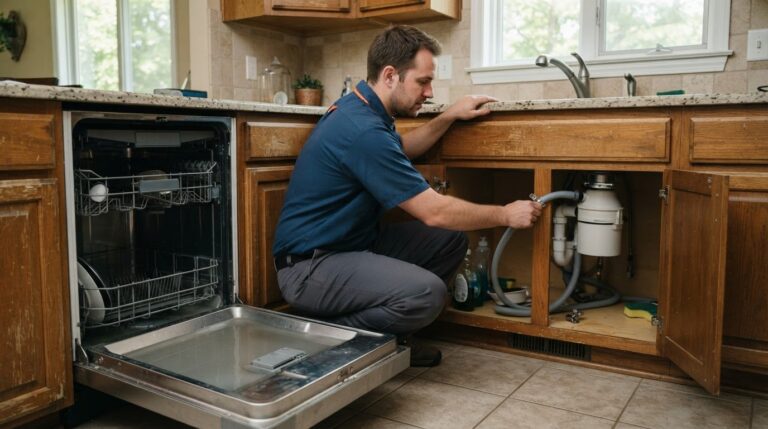
A dishwasher that has standing water at the bottom in The Woodlands may not have a serious drain problem: a small cup or two cups of clean water in the sump beneath the filter can be normal. Several inches of water left in the tub after a completed cycle points to incomplete drainage and needs attention.
It’s easy to mistake normal sump water for a fault, but water pooled across the tub can signal a blockage or a component that isn’t draining correctly. A technician can inspect the disposal connection, drain hose, filter, and sump to determine whether the cause is a simple obstruction or a problem that needs repair.
This guide explains how a technician diagnoses drainage issues, cleans the filter, and distinguishes normal sump water from a fault. You’ll also learn what the disposal connection can reveal and when persistent water means it’s time to arrange dishwasher service.
Key Takeaways
- Look at where water remains after a completed cycle to help distinguish normal sump retention from a drainage problem.
- Consider the disposal connection and drain hose together; a kink, blockage, or plumbing restriction can affect how water leaves the dishwasher.
- Filter debris can interfere with drainage, so professional cleaning includes clearing the filter and dishwasher interior.
- Persistent water or repeated humming and grinding can point to a pump, valve, or electrical issue that needs professional diagnosis.
- If cleaning and a drain cycle don’t resolve the problem, arrange dishwasher repair to identify the cause.
Can a clogged garbage disposal cause standing water in a dishwasher?
Yes. A clogged disposal can block the dishwasher’s drain connection, leaving water in the tub after a cycle. The dishwasher’s drain hose, filter, sump inlet, or pump can also restrict drainage.
Standing water can develop an unpleasant odor and support bacteria or mold growth. The water itself doesn’t prove an electrical fault, but power should be disconnected before reaching inside the dishwasher. Electrical testing carries a shock risk, so pump voltage checks should be left to a trained professional.
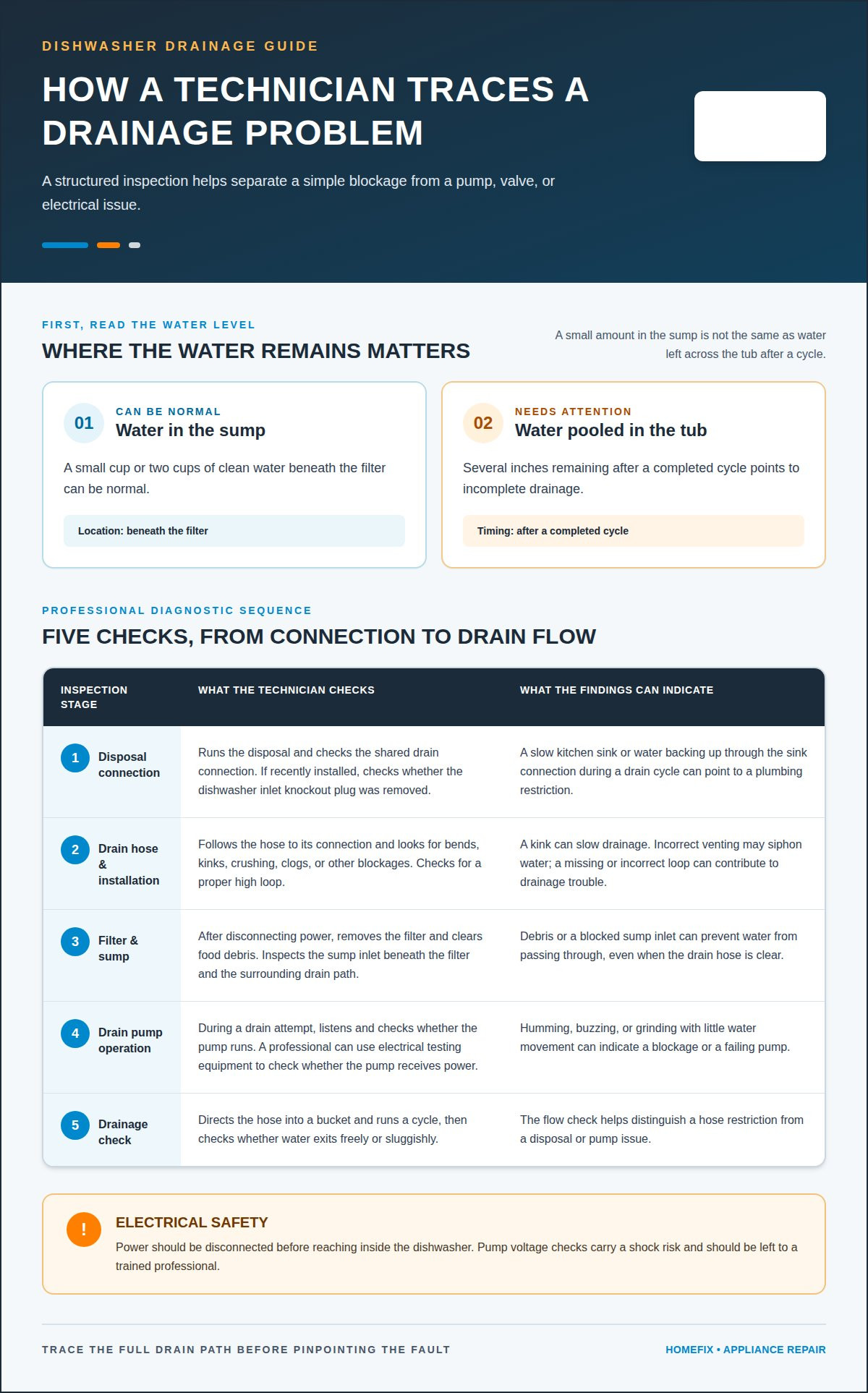
- Check the disposal connection. A professional runs the disposal and checks for a blockage that could prevent wastewater from moving through the shared connection. If the disposal was installed recently, the technician checks whether its dishwasher inlet knockout plug was removed. A slow kitchen sink or water backing up through the sink connection during a drain cycle can point to a plumbing restriction.
- Inspect the drain hose and installation. The technician follows the hose from the dishwasher to its connection, looking for bends, kinks, crushing, clogs, or other blockages. A kink can narrow the passage and slow drainage. The technician also checks that the hose has a proper high loop to help prevent backflow. An incorrectly vented drain may siphon water, while a missing or incorrect loop can contribute to drainage trouble, especially when the dishwasher doesn’t connect to a disposal.
- Assess the filter and sump basin. After disconnecting power, the technician removes the filter and clears food debris that could obstruct water flow. The sump inlet beneath the filter is another potential blockage point. If water cannot pass through this area, it can remain pooled even when the drain hose is clear. A professional checks the filter, sump, and surrounding drain path as connected parts of the same system.
- Test the drain pump’s operation. During a drain attempt, the technician listens and checks whether the pump runs. Humming, buzzing, or grinding with little water movement can indicate a blockage or a failing pump. A professional can check whether the pump receives power using electrical testing equipment. Because that test involves hazardous voltage, it isn’t a safe task for an untrained person.
- Confirm the repair with a drainage check. A technician can assess drain flow by directing the hose into a bucket and running a cycle, then checking whether water exits freely or sluggishly. This helps distinguish a hose restriction from a disposal or pump issue. For a persistent drainage problem in The Woodlands, a professional dishwasher repair service can trace the installation and drainage path.
How does a professional diagnose and resolve a dishwasher that won’t drain?
- Build a clear symptom history. The technician asks when the problem began, whether it happens every cycle, and whether the cycle was interrupted. A one-time interruption can differ from a fault that returns during normal use. If a dishwasher has standing water at the bottom in The Woodlands, sharing when it first appeared helps the technician choose the right diagnostic path.
- Observe the dishwasher’s cycle sequence. Rather than assuming the drain system is at fault, the technician checks whether the selected program reaches its drain stage and finishes normally. A cycle that stops early may leave water for a different reason than one that completes but doesn’t clear the tub. This distinction helps focus testing on the control sequence or the drainage operation.
- Match the symptom to the likely failure point. The technician compares the timing of the problem with the appliance’s behavior. For example, a cycle that finishes while water remains calls for a different assessment than one that stops before reaching its final stage. This symptom-to-sequence comparison prevents a single visible pool from dictating the entire diagnosis.
- Evaluate components without repeated attempts. If observations point to a component fault, the technician tests the relevant part instead of repeatedly restarting the dishwasher. A drain valve that doesn’t open correctly can retain water. If the valve’s operation doesn’t explain the symptom, the diagnosis can move to the appliance’s electrical system. This staged process narrows the fault before repair work begins.
- Decide whether the cause is mechanical or electrical. The technician uses the inspection results to distinguish a physical failure from an electrical or control issue. A component may appear intact yet fail to operate as intended, so appearance alone doesn’t settle the diagnosis. For a dishwasher that has standing water at the bottom in The Woodlands, this distinction guides the repair toward the specific fault instead of unnecessary part replacement.
- Explain the finding and next repair step. Once the cause is identified, the technician can describe which failure explains the drainage symptoms and what repair addresses it. If the diagnosis points to a drain component, the repair should address that part. If the evidence points to the electrical system, the repair needs to address that system instead. Clear findings help the homeowner understand why the recommended work fits the problem.
Schedule a professional dishwasher diagnosis
Professional cleaning of the filter and dishwasher interior
- Disconnect power before opening the wash area. Before reaching into the tub or removing the filter, the technician turns off dishwasher power. This reduces electrical risk during hands-on cleaning. The technician then removes the bottom rack to access the filter and sump area. If standing water hides the filter assembly, the technician first removes water safely enough to inspect the components without forcing or damaging them.
- Remove and inspect the filter assembly. The technician checks how the filter sits in the dishwasher, then removes it according to the appliance’s design. Food particles, grease, and small debris can collect in the mesh and restrict water flow. The technician looks for buildup, damage, or a poor fit. These details matter because a filter that remains blocked can continue to interfere with drainage after surface cleaning.
- Rinse away trapped debris. The filter is rinsed under warm water, and the technician clears food particles from its surfaces. A soft, careful cleaning helps dislodge debris without forcing delicate filter parts. The technician checks the mesh again before reinstalling it. If residue remains in openings, water may still struggle to pass through the filter during a wash or drain cycle.
- Check the sump beneath the filter. Cleaning the filter alone may not clear a blocked sump inlet. The technician inspects the basin and nearby water passage for food scraps or other visible obstructions. This step separates a dirty filter from debris farther inside the drainage path. The technician removes accessible buildup carefully, then checks that the filter area is clear before putting the assembly back.
- Clean the dishwasher interior. With the bottom rack removed, the technician checks the tub floor and the area around the filter for stuck-on residue or debris. The technician cleans those surfaces and examines the accessible drain area for material that could wash back toward the sump. This interior inspection also helps identify whether the water is carrying food particles or leaving residue after repeated incomplete drainage.
- Reassemble and confirm the cleaning routine. The technician reinstalls the filter securely and returns the bottom rack to its position. After cleaning, a drain cycle helps show whether water now leaves the tub normally. If standing water remains, cleaning hasn’t resolved the underlying issue, and further diagnosis is needed. For prevention, clean the dishwasher filter on the schedule recommended for that model, since filter designs and care instructions can differ.
Normal water levels in the dishwasher sump
A small cup or two cups of clean water can remain in the sump basin beneath the filter. That water sits below the visible tub floor, so seeing it after a cycle doesn’t automatically mean the dishwasher failed to drain. A technician distinguishes this normal sump water from water left across the wash area.
- Locate where the water sits. A technician checks whether water is confined to the sump beneath the filter or spread across the dishwasher floor. A small amount contained in the basin can be normal. Water extending around the filter and across the tub is a different condition. Its location helps guide the inspection toward the sump, drain path, or another component.
- Compare the amount with the sump’s position. The technician inspects the basin below the filter, where a small cup or two cups of clean water may remain. This residual water is contained in the sump, not pooled across the tub. The distinction matters because the same visible wetness can look alarming without showing where the water actually sits.
- Check whether the water is clean. Water remaining in the sump should be clean. A technician notes food particles, cloudy residue, or an unpleasant odor as signs that warrant closer inspection. Those details can help distinguish expected sump water from water that has collected with debris or failed to drain properly. The filter and sump area show whether residue is affecting the drainage path.
- Assess the dishwasher after a completed cycle. A properly functioning dishwasher is designed to drain water at the end of its cycle. The technician checks the tub after the cycle finishes, then separates a small amount under the filter from a broad pool on the floor. Several inches left in the tub indicate incomplete drainage, rather than the small residual amount retained in the sump.
- Inspect the sump before removing anything. A technician turns off dishwasher power before reaching inside or removing the filter. Then the professional examines the sump basin and inlet for visible debris that could affect drainage. If cleaning the filter and checking the basin don’t resolve standing water across the tub, the technician investigates the drain system instead of treating normal sump water as the fault.
- Use the pattern to guide the diagnosis. A small amount of clean water below the filter, with no pool across the tub, is generally consistent with normal sump retention. Water that spreads beyond the basin, contains debris, or remains after repeated completed cycles points to a different pattern. The technician uses those observations to decide whether the next check should focus on the filter, sump inlet, or drain components.
How a professional troubleshoots a dishwasher that won’t drain step by step
- Document the cycle and symptoms. The technician notes whether water remains after a completed cycle or appears during washing. Several inches left afterward indicate incomplete drainage. The technician also records humming, buzzing, grinding, or intermittent operation. These details help distinguish a drain restriction from a pump, valve, or control problem without relying on one symptom alone.
- Check for a temporary interruption. If symptoms suggest a control interruption, a technician may reset power at the breaker for two to five minutes. After restoring power, the technician tries one drain cycle. A reset can clear a temporary interruption, but it won’t correct a recurring drain fault. Repeated failures after one reset call for further diagnosis, not repeated power cycling.
- Start the drain command and observe. On many modern dishwashers, holding Cancel or Drain for 3 seconds starts a forced drain cycle. That cycle may run for 60 seconds. The technician observes whether the pump activates and whether water moves out. A hum without drainage, or repeated failure, signals that further attempts could strain a blocked or failing pump.
- Trace the water’s route. The technician checks the filter, sump inlet, drain hose, and connection to the garbage disposal. The inspection looks for debris, a kinked hose, a restricted disposal connection, or an installation issue. If the sink drains slowly or water returns through its connection, a plumbing restriction may be involved. The technician follows the evidence to locate where flow stops.
- Test the parts linked to the symptoms. If the pump doesn’t appear to operate, the technician checks its operation and whether it receives power. Electrical testing involves hazardous voltage. The technician may also inspect the drain valve, since a valve that fails to open correctly can leave water inside. These checks help identify whether the repair concerns a blocked path or a faulty component.
- Confirm drainage after corrective work. Once the cause is addressed, the technician runs a drain cycle and checks whether water exits freely. If the dishwasher still holds water after filter cleaning and a drain attempt, professional repair is appropriate. Stop repeated attempts if the unit hums, buzzes, grinds, or repeatedly fails to drain. Share the cycle details and sounds when arranging service.
Schedule a professional dishwasher diagnosis
HomeFix: Dishwasher Repair
HomeFix repairs dishwashers with drainage problems that persist after filter cleaning and a drain-cycle attempt. A technician can inspect the disposal connection, drain hose, sump, pump, and valve to identify where water flow stops. Arrange service if water remains across the tub, drainage fails repeatedly, or the dishwasher makes unusual humming or grinding sounds. A small amount of clean water contained in the sump can be normal, so the technician will distinguish expected residual water from a fault. Share what you noticed, including when the cycle stopped and any sounds or sink backups, to help focus the diagnosis. If standing water keeps returning, contact HomeFix to arrange dishwasher repair.
Move from a recurring drain issue to a clear next step
If your dishwasher has standing water at the bottom in The Woodlands, use the pattern of the problem to guide your next step. Water that returns after a cycle, unusual sounds, or repeated drainage failures are useful details to share when arranging service. A clear description helps focus the appointment on the symptoms and their cause.
HomeFix also repairs refrigerators, washers, and dryers. If a dishwasher drainage problem persists, professional diagnosis can help determine whether the issue needs repair rather than another restart. There’s no need to keep guessing with repeated drain attempts.
Describe what you’ve noticed and arrange service with HomeFix to get your kitchen routine moving forward.
Frequently Asked Questions
Dishwasher Repair: Water at the Bottom of Your Dishwasher?
Water spread across the tub after a finished cycle calls for a drainage diagnosis, while a small amount contained beneath the filter may be normal. Note whether the water returns after each cycle, whether dishes remain dirty, and whether the dishwasher makes unusual sounds. These observations help a technician distinguish a recurring fault from residual sump water and focus the inspection on relevant parts.
Is It the Dishwasher or the Sink Plumbing?
A slow kitchen sink or water backing up through the sink connection during dishwasher drainage points toward a plumbing restriction. If the sink drains normally but the dishwasher retains water, the fault may be within the appliance’s drain path. A technician can compare these signs and inspect the shared connection, helping distinguish a household plumbing blockage from a dishwasher component failure.
Why is there standing water in the bottom of a dishwasher?
Standing water can result from a clogged filter, blocked sump inlet, kinked or obstructed drain hose, disposal connection issue, or failing drain pump or valve. The pattern can help narrow down the cause. For example, water returning through the sink suggests a restriction in the shared plumbing, while humming without effective drainage can point to a pump or blockage that needs further inspection.
How much water is normal to remain in a dishwasher sump?
A small amount of clean water may remain in the sump beneath the filter. The key distinction is location: water held in the sump differs from a pool covering the dishwasher floor. If water spreads beyond the sump, contains food debris, or remains after completed cycles, describe those details when arranging a professional diagnosis.
How does a professional safely clean a dishwasher filter and drain area?
A professional disconnects dishwasher power before reaching inside, then removes the bottom rack to access the filter. The technician rinses the filter under warm water, clears debris, and inspects the sump inlet for obstructions. After checking the area and reinstalling the filter correctly, the technician can assess whether cleaning restored drainage or another part needs diagnosis.
Can a clogged garbage disposal or air gap cause dishwasher standing water?
Yes. A blocked garbage disposal connection can impede dishwasher drainage, and a newly installed disposal may retain a knockout plug in its dishwasher inlet if installation wasn’t completed correctly. A clogged air gap can also interfere with drainage. Water collecting around the air gap or slow drainage after cycles can offer useful clues. A technician examines the connection and drain path to identify the restriction.
How does a professional check a dishwasher drain hose for clogs or kinks?
A technician follows the hose from the dishwasher to its connection, checking for bends, crushing, clogs, and installation problems. To assess flow, the technician can place the hose in a bucket and run a cycle, observing whether water exits freely or slowly. This test helps distinguish a restricted hose from a problem elsewhere in the drain system and shows whether the hose route needs correction.
When should a dishwasher drain pump be repaired or replaced?
A pump needs professional diagnosis when the dishwasher repeatedly fails to drain or humming or grinding accompanies little water movement. A technician checks pump operation and whether it receives power, then considers other possible obstructions before deciding on repair or replacement. Electrical testing involves hazardous voltage. Persistent drainage problems after filter cleaning and a drain-cycle attempt are a reason to arrange service.