Sub-Zero Ice Maker Repair in Houston: Real Case of Water Overflow, Ice Buildup, and Ice Maker Replacement
When a Sub-Zero ice maker starts making less ice than usual, many homeowners assume the unit is simply aging or the freezer temperature is slightly off.
However, in high-end built-in refrigeration, poor ice production often points to a more specific mechanical or water flow problem.
In this real repair case, the team at HomeFix Appliance Repair diagnosed a failing Sub-Zero refrigerator ice maker in Houston that was not only producing very little ice, but was also leaking water into the freezer compartment and creating heavy ice buildup on shelves, in the ice bin area, and around the auger motor.
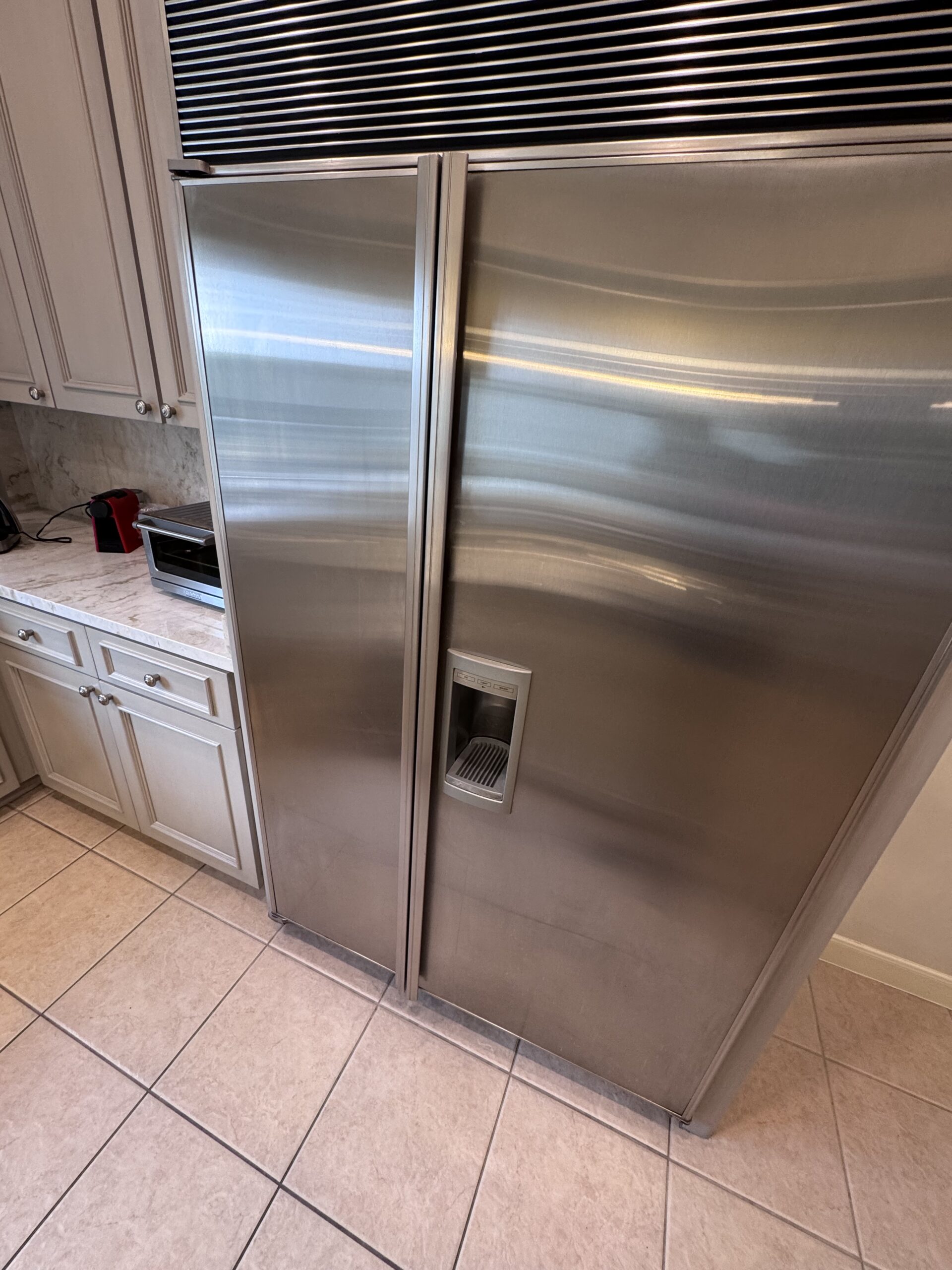
This call came from a repeat customer who has trusted us before with repairs of premium household appliances.
The customer reported two symptoms. First, the ice maker was producing very little ice. Second, they noticed random ice buildup inside the freezer and frozen water in places where it should not have been.
That combination is a strong sign that the problem is not just a simple production slowdown, but that the water fill process may be failing.
At HomeFix Appliance Repair’s Sub-Zero repair service in Houston, we regularly diagnose problems involving Sub-Zero ice makers, frozen fill tubes, leaking valves, jammed shutoff components, and water overflow inside the freezer.
Premium refrigerators like Sub-Zero are built to last, but after many years of operation, mineral buildup, wear, and secondary moisture damage can create issues that require a more thorough repair than a simple defrost.
Customer Complaint: Sub-Zero Ice Maker Making Little Ice and Ice Appearing on Freezer Shelves
The original complaint sounded simple: not enough ice and “some extra ice” showing up inside the freezer.
But once we removed the ice bin and protective covers, the issue became much clearer.
Water was not entering the ice maker correctly. Instead of flowing fully into the mold where the cubes are formed, the water was spilling outward and freezing all over the freezer interior.
This is why the customer was seeing several related symptoms at the same time:
- Low ice production from the Sub-Zero ice maker
- Frozen water on and around the auger motor area
- Ice buildup on freezer shelves and walls
- Frozen water collecting at the bottom of the freezer compartment
- Ice freezing around the bin area instead of staying where it belongs
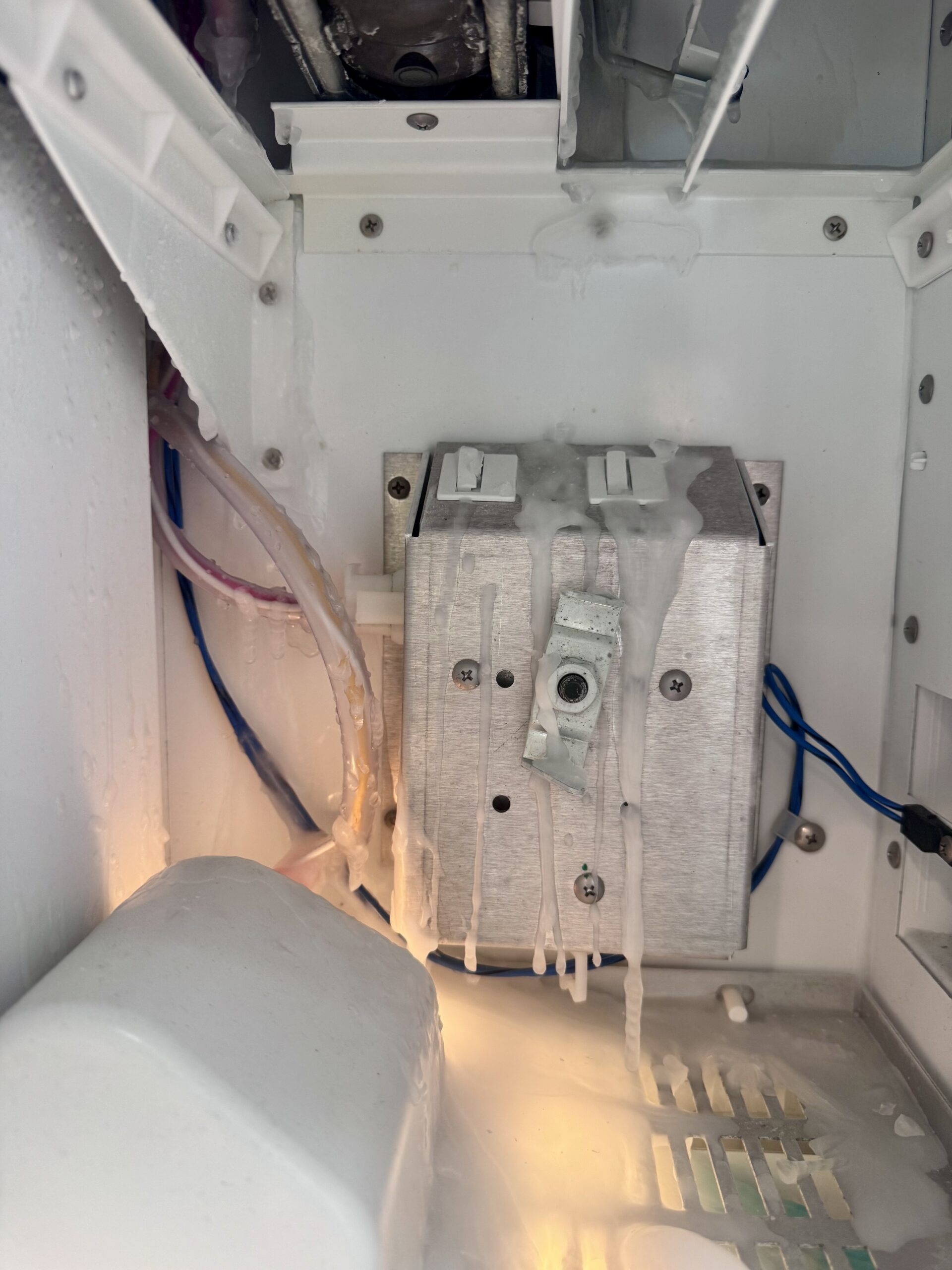
In a properly functioning Sub-Zero refrigerator ice maker, the fill cycle delivers a measured amount of water into the mold.
If that water path is restricted or blocked, water can overflow outside the intended channel.
Once that happens inside a freezer, every small spill turns into additional ice buildup.
What We Found During Diagnosis
After deeper inspection, it became obvious that the water was not making it into the ice maker properly because the fill inlet area was heavily blocked with ice.
The inlet throat where water should enter had become restricted.
Over the years, mineral deposits and calcium accumulation had built up inside the water path.
This Sub-Zero unit had been operating for nearly twenty years, and that long service life often leads to this kind of internal scaling in the ice maker fill area.
Once the fill path becomes restricted, water starts behaving unpredictably.
Instead of entering the ice mold cleanly, it can splash, dribble, or run outside the assembly.
That is exactly what happened here.
The overflowing water spread through the freezer and created the secondary ice formation the customer was seeing.
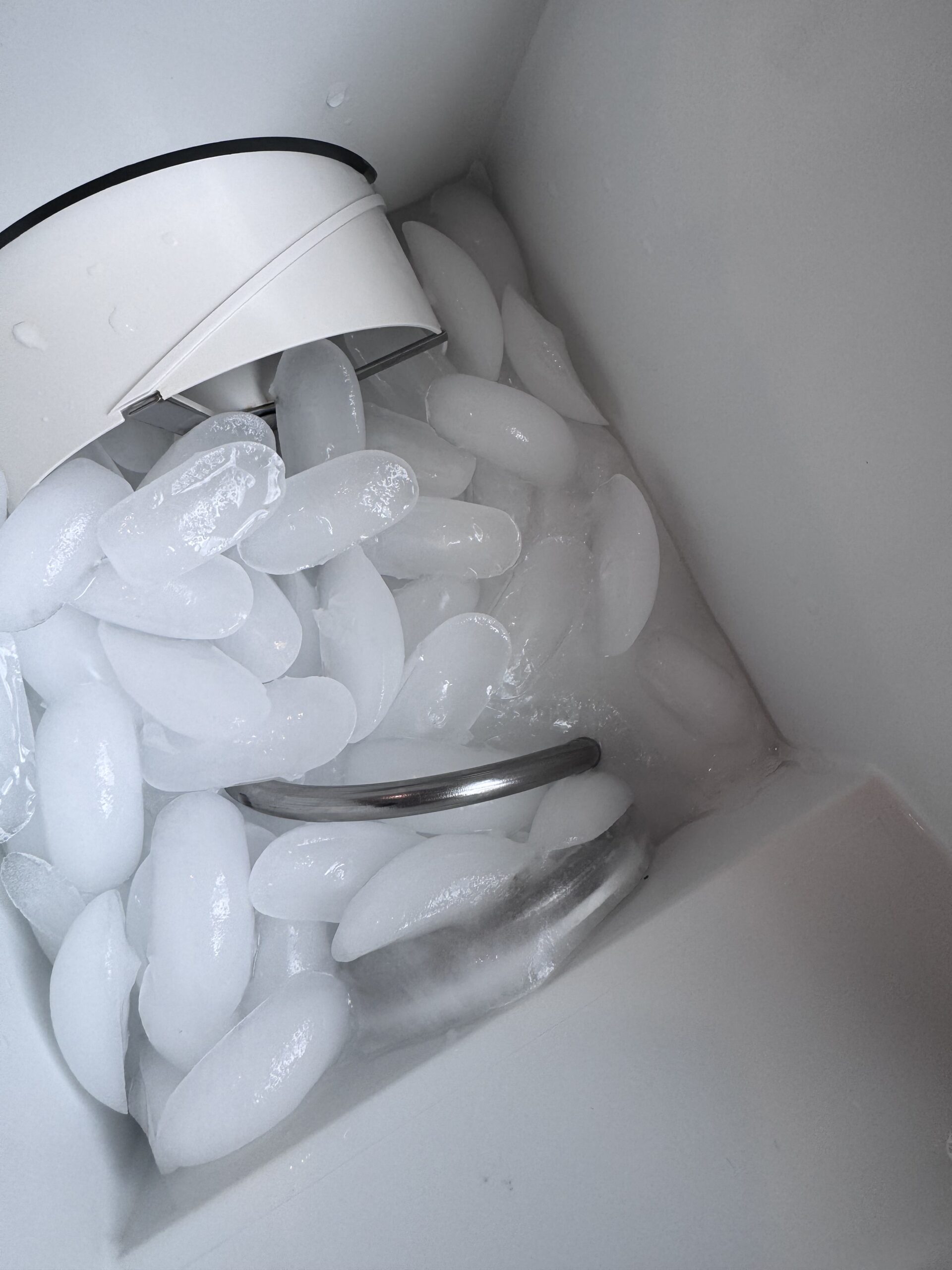
We also found that the leaking water had affected the switches responsible for the ice maker and auger motor system.
These switches are designed to be actuated correctly when the ice bin is in place.
After repeated exposure to water and freezing conditions, they were no longer functioning normally.
Why the Ice Maker and Switches Needed to Be Replaced
In this repair, it was not enough to simply melt the ice and put everything back together.
Yes, in theory, someone could defrost the fill area, reinstall the existing ice maker, and get temporary operation back.
But that would not solve the root cause.
The old Sub-Zero ice maker itself was still mechanically capable of cycling.
The bigger issue was the long-term mineral buildup in the fill path.
After nearly twenty years of use, that calcium and scale buildup is not something that can be fully cleaned out in a way that guarantees reliable long-term performance.
Even if the throat is temporarily opened, water can remain, refreeze, and create the same issue again.
That is why we made the professional decision to replace the entire ice maker assembly rather than attempting a short-term partial fix.
This approach protects the customer from a repeat failure and reduces the chance of another service call for the same issue.
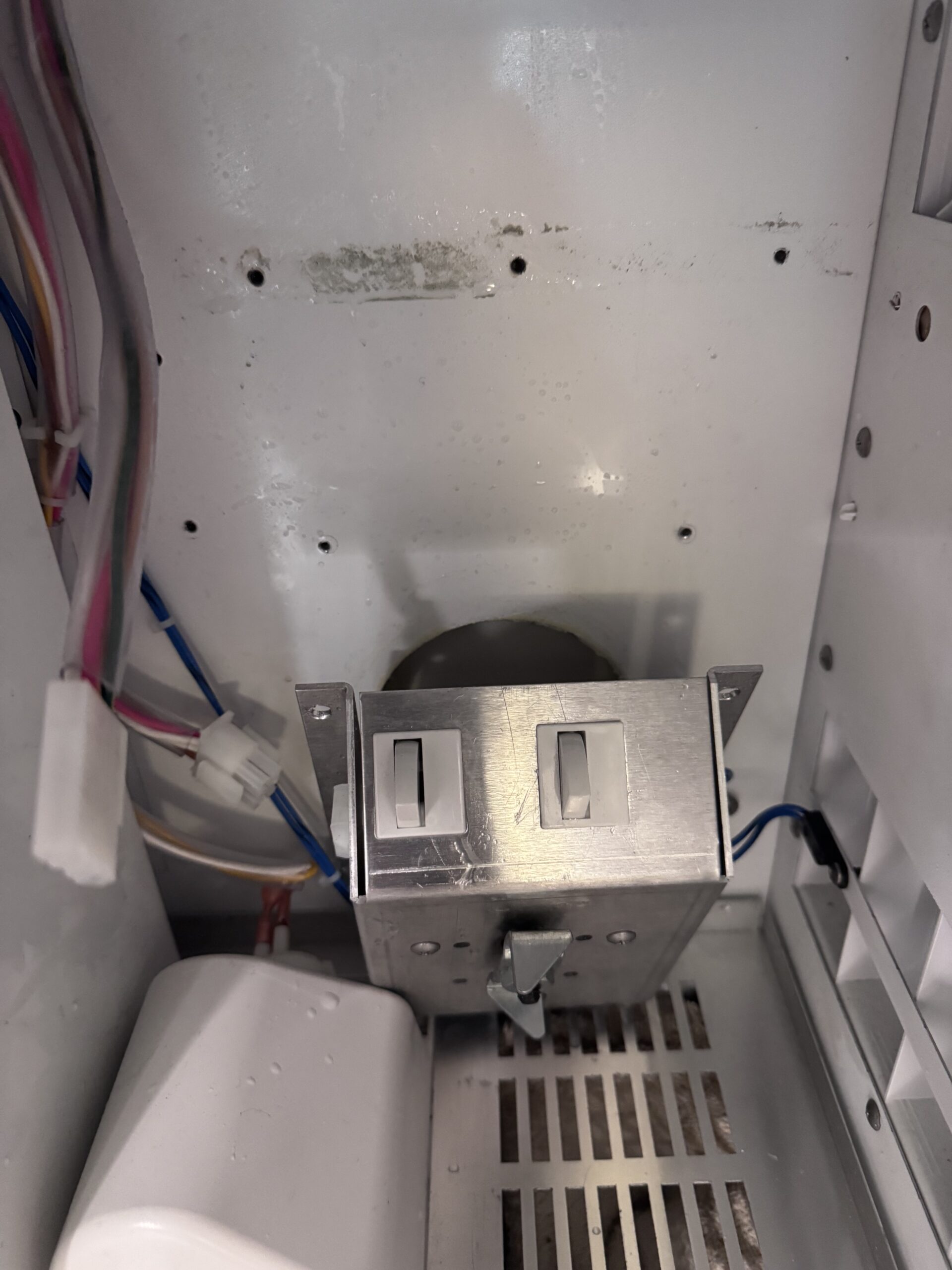
The water damage had also affected both switches associated with the ice maker and auger motor operation.
Instead of moving and responding normally, they remained effectively stuck in the pressed position after water intrusion.
Once that happens, switch performance becomes unreliable.
Because these switches help determine correct ice maker and bin-related operation, replacing them was the right step as part of a complete repair.
Updated Sub-Zero Ice Maker Design
Another important detail in this job is that the modern replacement Sub-Zero ice maker is slightly updated compared to the original factory version.
When replacing the old unit, the new design also requires additional components, including the proper connector and the level arm that monitors the amount of ice in the bin.
That shutoff arm is important because it helps the system stop ice production when the bin is full.
Without the proper matching parts, the new ice maker installation would not be complete.
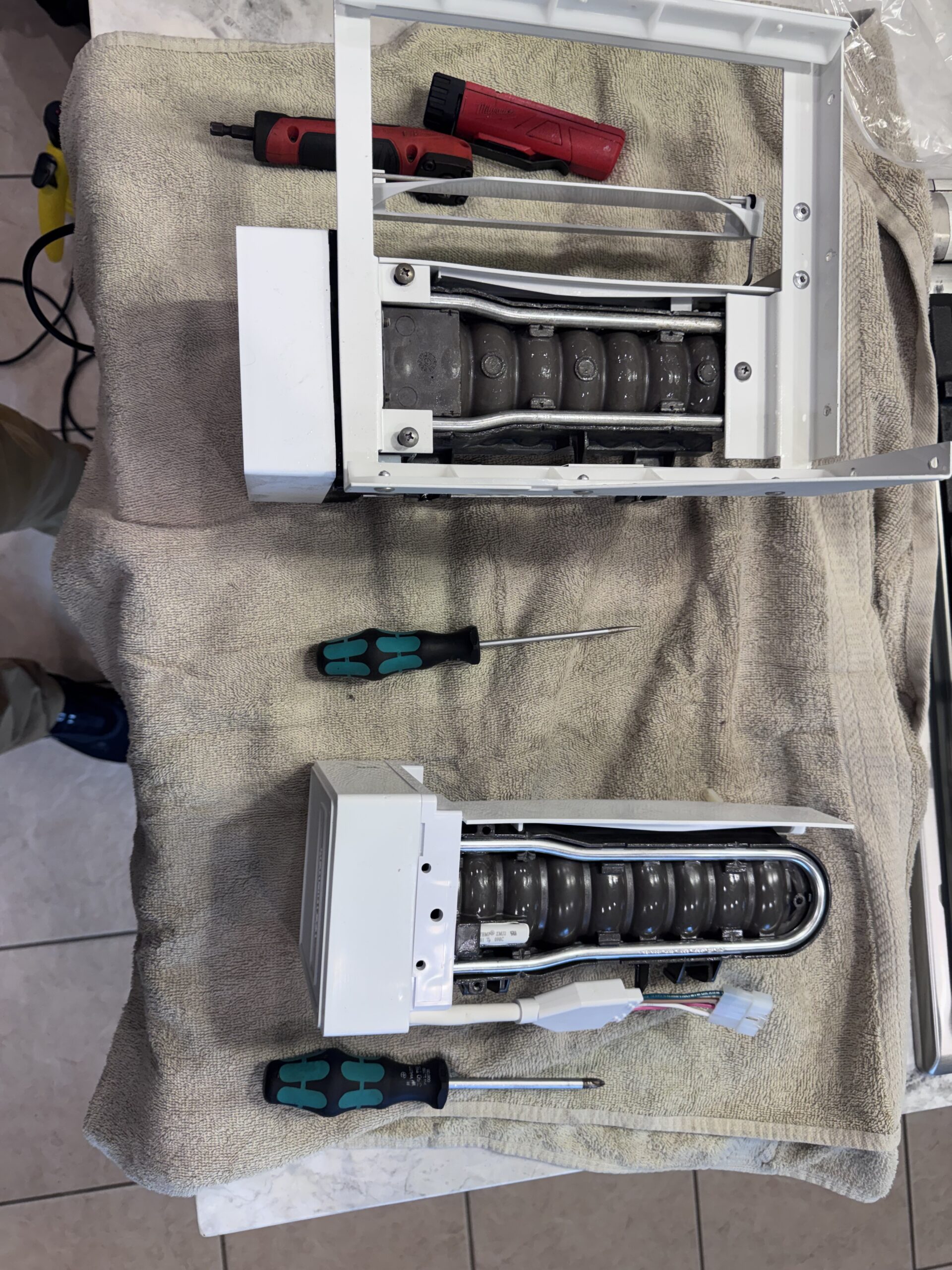
Using the updated assembly is often the best choice on older Sub-Zero refrigerators because it improves reliability and helps restore proper operation for the long term.
Ice Buildup Cleanup Took Time Too
This repair was not just an ice maker swap.
A large part of the work involved removing the accumulated ice caused by the water overflow.
Ice had formed on shelves, around the auger motor area, around the ice bin section, and on the bottom of the freezer compartment.
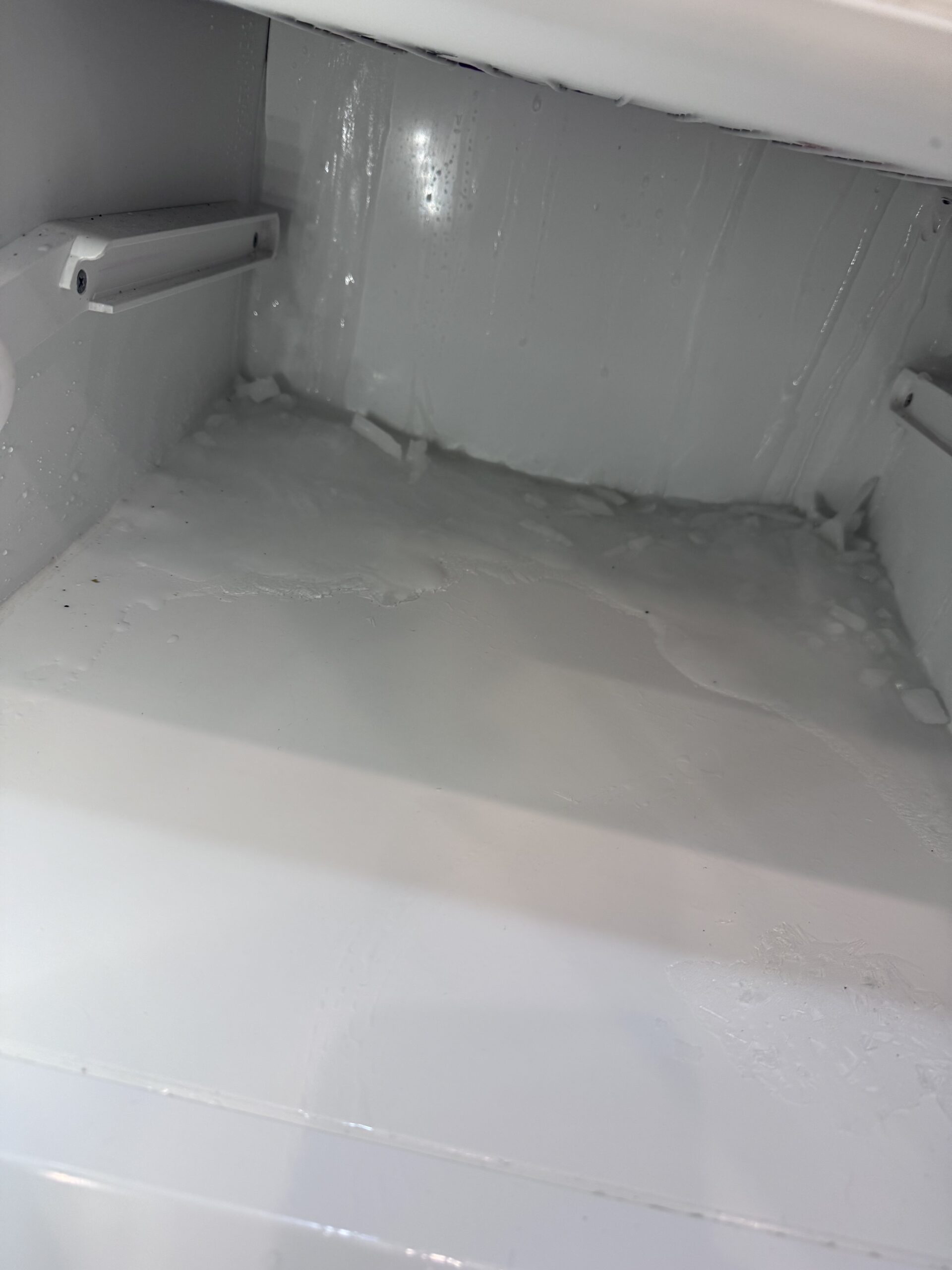
Some of that ice had to be carefully melted, while thicker pieces had to be broken and removed manually.
This step matters because leftover ice can interfere with normal airflow, affect the fit of components, and create future moisture problems inside the freezer.
In total, the entire repair took about two hours.
A significant part of that time was spent clearing frozen water and restoring the compartment to proper condition before the new parts were installed.
Testing the New Sub-Zero Ice Maker
After installing the replacement Sub-Zero ice maker, the updated connector, and the related shutoff arm components, we tested the water fill and checked for leaks.
The new system filled correctly, without spilling water outside the mold area, and operated as intended.
This confirmed that the root cause had been addressed.
Water was now entering the ice maker correctly, the switches had been replaced, and the overflow issue had been eliminated.
We also explained to the customer that a newly installed ice maker typically needs 24 to 48 hours to return to full normal ice production.
That is completely normal.
The important thing immediately after repair is to verify proper fill, correct cycling, and the absence of leaks.
Can You Just Melt the Ice Instead of Replacing the Ice Maker?
This is a fair question, and many homeowners ask it.
In some cases, a temporary defrost can get an ice maker working again.
But in older Sub-Zero refrigerators, especially units approaching twenty years of service, mineral buildup in the fill path tends to return.
That means the customer may get a short-lived result and then face the same problem again.
For that reason, replacement was the better long-term solution in this case.
It saved the customer from repeated callbacks, recurring overflow, and ongoing ice accumulation inside the freezer.
Common Signs You Need Sub-Zero Ice Maker Repair
If you own a built-in Sub-Zero refrigerator, watch for these warning signs:
- Sub-Zero ice maker not making enough ice
- Water leaking into the freezer
- Ice forming on freezer shelves or walls
- Frozen water around the ice bin
- Auger area icing up
- Ice clumping together in the bin
- Intermittent or inconsistent ice maker operation
These symptoms often point to a failing ice maker, restricted fill inlet, leaking water path, damaged switches, or a related water delivery problem.
Catching the issue early can help prevent more extensive freezer icing and additional component damage.
Why Houston Homeowners Call HomeFix Appliance Repair for Sub-Zero Problems
At HomeFix Appliance Repair, we work on premium built-in refrigerators and understand the repair differences between standard units and high-end brands like Sub-Zero.
A proper diagnosis matters.
Many ice maker problems look simple from the outside, but once the covers come off, the real cause may involve water overflow, hidden switch damage, and years of mineral buildup.
Our goal is not just to get the refrigerator working for a day or two, but to perform a repair that makes sense for the customer long term.
That is especially important in Sub-Zero refrigerator repair in Houston, where homeowners expect premium appliances to perform at a high level and need experienced service when something goes wrong.
If your Sub-Zero ice maker is not making ice, is leaking water, or is causing ice buildup in the freezer, professional diagnosis is the best next step.
Problems like this rarely resolve on their own, and temporary defrosting often does not address the real cause.
FAQ: Sub-Zero Ice Maker Repair in Houston
Why is my Sub-Zero ice maker making only a small amount of ice?
Low ice production is often caused by restricted water flow, a partially blocked fill area, switch issues, or a failing ice maker assembly.
In older Sub-Zero units, mineral buildup is a common cause.
Why is there ice on my freezer shelves if the freezer is still cold?
Ice on shelves usually means water is leaking or overflowing inside the freezer rather than entering the ice maker correctly.
The freezer temperature may still be normal, but the water path is not.
Can a Sub-Zero ice maker leak water and still make some ice?
Yes. That is exactly what happens in many cases.
Some water reaches the mold, but some spills outside the assembly and freezes elsewhere in the compartment.
How long does Sub-Zero ice maker replacement take?
The part replacement itself is often straightforward, but total repair time depends on how much secondary ice buildup must be removed.
In this case, the full repair took about two hours.
How long until a new Sub-Zero ice maker starts working normally?
Most new ice makers need around 24 to 48 hours to reach normal production after installation.
Is it better to defrost the old ice maker or replace it?
On older units with significant calcium and mineral buildup, replacement is usually the better long-term solution because the blockage often returns after a temporary defrost.