

A clogged garbage disposal can affect a dishwasher when both share a drain: wastewater may stop flowing out, leaving standing water or unpleasant odors. Learning how to prevent dishwasher clogs in The Woodlands starts with simple habits, such as scraping food off dishes and cleaning the dishwasher filter.
That connection is easy to miss. A dishwasher may seem to be the problem even when a blockage at the disposal inlet or in the shared drain is slowing drainage. Regular filter cleaning, proper detergent use, and a clear drain path can help limit buildup before it disrupts a cycle.
This guide explains how to spot disposal-related drainage trouble, which cleaning routines can help prevent clogs, and how to disconnect power before inspecting the appliance. It also covers when standing water, leaks, or recurring slow drainage call for professional attention.
Key Takeaways
- If the sink drains slowly or backs up after a dishwasher cycle, the blockage may be in a shared drain path rather than inside the appliance.
- Run hot water at the sink briefly before starting a cycle, and avoid pouring boiling water into the dishwasher.
- Before inspecting for a clog, empty the dishwasher and disconnect its power supply.
- Follow the owner’s manual when removing and rinsing the filter, and clear food debris from spray-arm openings.
- Stop DIY troubleshooting if water leaks onto the floor or into nearby cabinets, or if drainage problems keep returning.
1. Can a clogged garbage disposal affect the dishwasher?
Yes. If your dishwasher drains through a garbage disposal, a blockage at the disposal inlet can slow or stop wastewater flow. Water may remain inside the dishwasher after a cycle, and dishes may come out with a cloudy film. A sink that backs up during or after washing can also point to a shared drainage problem, not just a dirty dishwasher filter.
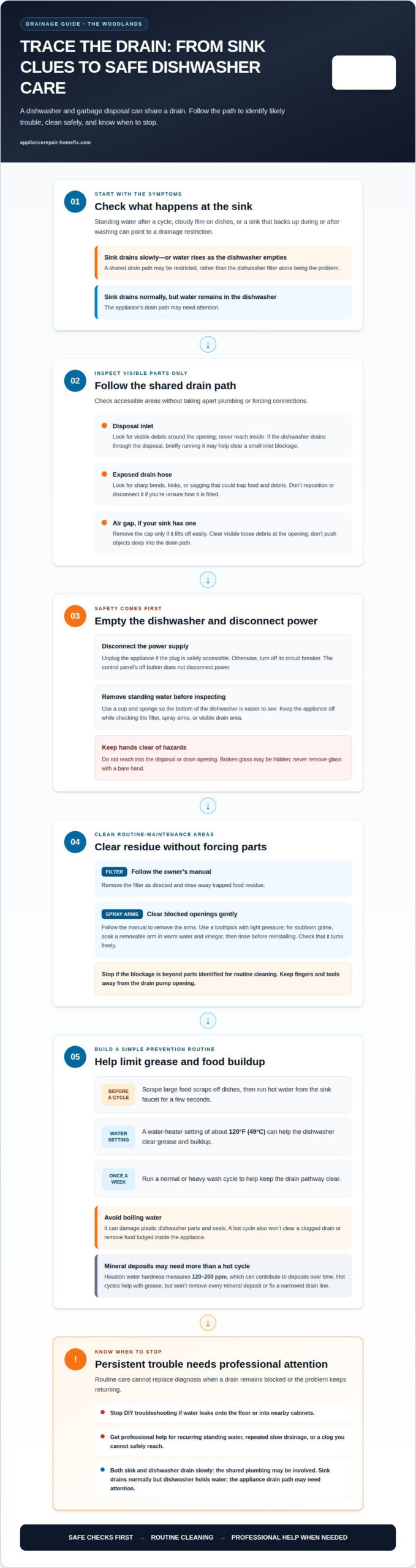
Start by checking the kitchen sink. Run the faucet and see whether water drains freely. If it drains slowly, or water rises while the dishwasher empties, the shared drain path may be restricted. Look for visible debris around the disposal opening, but never reach inside. If the dishwasher drains through the disposal, briefly running it may help clear a small blockage at the inlet.
Next, inspect the visible drain connection without taking apart the plumbing. A kinked or sagging dishwasher drain hose can trap food and debris. A missing high loop or a partially blocked disposal can also interfere with draining. Check only exposed sections of hose and note any sharp bends or sagging. Don’t force the hose into a new position or disconnect it if you’re unsure how it is fitted.
Check the air gap if your sink has one. This small fitting near the faucet helps prevent dirty water from flowing back into the dishwasher. Remove its cap only if it lifts off easily, then look for visible food debris around the opening. A blocked air gap can interrupt drainage or cause water to spill around the fitting. Clear loose debris from the opening, but don’t push objects deep into the drain path.
Before inspecting the dishwasher, empty it and disconnect its power supply. Follow the owner’s manual to find and remove the filter, then rinse off visible food residue. Check the tub for standing water, but don’t reach into the disposal or handle broken glass. These checks can help distinguish a clogged filter from a disposal or drain-line issue.
If the sink drains normally but the dishwasher still holds water, the appliance’s drain path may need attention. If both fixtures drain slowly, the shared plumbing may be involved. Recurring standing water, a leak, or a clog you can’t safely reach calls for professional help. For an appliance-side issue, dishwasher drainage troubleshooting can help identify whether the dishwasher is failing to drain properly.
2. Hot water cycles for grease and mineral buildup
Warm water can help move grease and soap through the dishwasher’s drain path. Before starting a cycle, run hot water from the sink faucet for a few seconds. This helps the dishwasher begin with warmer water instead of filling with cooler water first. It’s a simple step, especially after washing greasy dishes, but it won’t clear a clogged drain or remove food debris lodged inside the appliance.
Use the water heater setting as another part of routine care. A setting of about 120°F (49°C) helps the dishwasher clear grease and buildup. Avoid turning the temperature up without a reason. Boiling water isn’t a safe substitute: it can damage plastic dishwasher parts and seals. Use the appliance’s normal or heavy wash setting, and run one of those cycles once a week to help keep the drain pathway clear.
Hard water can leave mineral deposits in dishwasher drain lines. Houston water hardness measures 120–200 ppm, which can contribute to deposits over time. A hot cycle helps with grease, but it won’t remove every mineral deposit or fix a narrowed drain line. Keep an eye on how the appliance drains. If drainage gradually slows despite regular cycles, look for another cause rather than relying on hotter water.
Standing water needs a separate response. If water has pooled inside the tub, remove it with a cup and sponge before inspecting the drain area. This makes the bottom of the dishwasher easier to see and helps you spot food debris or residue near the filter. Don’t pour boiling water into the tub. If water returns after a wash, the drain may still be blocked, so another hot cycle alone may not help.
Keep the steps in order: run the sink faucet briefly, load dishes without large scraps, then choose a normal or heavy cycle. Use the dishwasher’s regular settings rather than adding extreme heat. If you see mineral residue, remember that routine hot-water use supports drainage but cannot guarantee a clear line. Persistent standing water or repeated slow draining points to a problem that needs more than a temperature adjustment.
These habits can support routine care, but they don’t replace diagnosis when a clogged dishwasher keeps holding water. For recurring appliance drainage trouble, dishwasher repair support can help identify what’s preventing the cycle from draining properly.
3. Turning off dishwasher power before unclogging
Before inspecting or unclogging a dishwasher, empty it and disconnect its power supply. Unplug the appliance if the plug is safely accessible. If it isn’t, turn off the dishwasher’s circuit breaker. The control panel’s off button alone doesn’t disconnect power. Keep the appliance off while inspecting the filter, spray arms, or visible drain area.
Once the power is off, remove standing water with a cup and sponge. Check the dishwasher filter according to the owner’s manual, then rinse away trapped debris. Avoid reaching into the drain opening, where broken glass or sharp food scraps may be hidden. If you see glass, don’t remove it with your bare hand. Stop if the blockage is beyond the parts the manual identifies for routine cleaning.
Follow the manual’s directions to remove the spray arms. Clear clogged holes with a toothpick, applying light pressure to avoid damaging the openings. For stubborn grime, soak a removable spray arm in warm water and vinegar, then rinse it before reinstalling. Check that it turns freely once back in place. Keep fingers and tools away from the drain pump opening.
Choose a cleaning method based on where the clog appears. A baking soda and vinegar solution, hot water with dish soap, or a dishwasher cleaner may help with different types of buildup. Don’t pour chemical drain cleaners into the dishwasher or sink, since they can damage appliance components. For drain cleaning, use water no hotter than 140°F. Boiling water can harm plastic parts and seals.
If a drain hose is exposed, inspect it for a sharp kink or visible blockage. Don’t pull out the dishwasher or disconnect plumbing to reach a hose you can’t access safely. A clogged hose can be disconnected and flushed with hot water to clear the obstruction, but this involves handling fittings and water. Stop if the connection is difficult to reach, damaged, or leaking.
After clearing accessible debris, reinstall the filter and spray arms as directed by the manual. Restore power only when the interior is dry and all parts are secure. Run an empty cycle without dishes or detergent to flush the drain and see whether water leaves the tub. If the dishwasher still drains slowly, the blockage may be deeper than routine household cleaning can reach.
4. When to call a plumber or appliance technician
Call a professional when basic filter cleaning and visible checks don’t restore proper draining. An appliance that repeatedly leaves water in its tub may have a blocked drain hose, a failing pump, or another internal fault. Dishwashers in Houston homes that are over five years old can develop drainage problems beyond simple clogs. Recurring trouble deserves attention, especially if each cycle leaves more water behind.
A dishwasher clog usually affects the appliance first: water remains inside, or the cycle ends without draining. A plumbing drain problem is more likely if the kitchen sink also drains slowly, backs up, or gurgles. If standing water in the dishwasher occurs alongside sink symptoms, the shared plumbing may be involved, rather than just the dishwasher filter.
Call a plumber when several fixtures have drainage trouble or the blockage appears deep in the plumbing. Food particles and grease can collect beyond the dishwasher’s accessible filter or drain hose, where household checks can’t reach. A plumber can inspect and clear deeper lines with tools suited to the obstruction. Don’t keep running cycles if the sink backs up while the dishwasher drains.
An appliance technician is the right fit when the sink drains normally but the dishwasher still drains slowly after accessible debris is cleared. A kinked or clogged hose can restrict flow; the pump or another appliance part may also need inspection. Tell the technician whether water remains after every cycle, whether the problem began suddenly, and whether you’ve noticed unusual sounds. Those details help narrow down the appliance-side cause.
Stop DIY attempts if you find water under the dishwasher, on the kitchen floor, or inside nearby cabinets. A leak can spread beyond the visible puddle, so avoid running another cycle to test it. If water remains standing for more than 24 hours, contact a drainage specialist instead of waiting for another cycle to clear it.
Before calling, note which fixtures are affected, when the backup occurs, and whether the dishwasher drains at all. For example, record whether the sink backs up only during a wash or stays slow afterward. Mention visible hose damage or recurring buildup, but don’t disconnect plumbing you can’t safely access. These observations help distinguish a drain-line blockage from an appliance fault and focus the inspection on the likely source.
Choose a professional based on the symptoms: problems with both the sink and dishwasher point toward shared plumbing, while isolated dishwasher symptoms point toward the appliance. If both are affected, describe both rather than guessing which part failed. Clear details help the professional decide where to begin and whether the obstruction is inside the dishwasher or farther along the drain.
5. Habits to prevent dishwasher clogs
Build a short cleanup routine around the parts that catch residue first. Scrape large food scraps into the trash or garbage disposal before loading dishes. Dishwashers can handle small particles, but large chunks can collect in the filter and drain. Check the filter monthly, or every two weeks if your household runs the machine daily. Remove it according to the owner’s manual, rinse away food debris, and reinstall it securely.
Use the detergent type and amount recommended for your dishwasher. Too much detergent, or a product not meant for dishwashers, can create excess suds and leave residue. That buildup can interfere with drainage, especially in hard-water areas. Follow the detergent label and appliance manual instead of adding an extra scoop for heavily soiled dishes. Using the right amount helps prevent soap residue from accumulating in the tub and drain path.
Give the machine a deeper clean about once a month, or every 30 wash cycles. Place 2 cups of vinegar in a bowl on the bottom rack, then run a full cycle without detergent. This routine can help reduce odor and buildup. Wipe the door gasket and edges monthly, where residue can collect. Clear clogged spray-arm nozzles with a toothpick, then check that the arms can rotate freely.
Keep hot water in the routine, not boiling water. Run the sink faucet briefly before starting a wash so the cycle begins with warmer water. A normal or heavy wash setting once a week can help keep the drain pathway clear. If using a baking soda and vinegar drain rinse, measure 1/4 cup baking soda and 1/2 cup vinegar. Never pour chemical drain cleaners into the dishwasher or sink, since they can damage dishwasher components.
Before leaving home for a while, clean the filter, run a rinse cycle, and leave the dishwasher door slightly open to limit odors. Make these steps part of a regular routine, such as checking the filter during monthly kitchen cleanup. A clean filter, measured detergent, and clear spray arms reduce the food particles and residue that contribute to blockages. If clogs keep returning despite these habits, the appliance may need attention.
HomeFix: Refrigerator Repair
HomeFix provides Dishwasher Repair when standing water or recurring drainage problems persist after routine cleaning. Call an appliance technician if the filter is clear but the dishwasher still drains slowly, or if water leaks beneath the unit. Dishwasher repair can address appliance-side faults that household cleaning can’t resolve. If the kitchen sink also drains slowly or backs up, the problem may involve plumbing beyond the dishwasher and require a plumber.
For recurring appliance drainage trouble, HomeFix dishwasher repair is a practical next step. Contact HomeFix to discuss your dishwasher repair needs.
Keep Your Dishwasher Routine on Track
Make dishwasher care part of your regular kitchen routine, rather than waiting for a backup. A quick check during cleanup can help you catch changes early, such as slower drainage or an unusual smell after a cycle. Keep a note of recurring symptoms. That record can help distinguish a one-time obstruction from a problem that keeps returning.
For households focused on preventing dishwasher clogs in The Woodlands, the next step is simple: keep up with safe maintenance and seek appliance help when the issue persists. HomeFix provides Dishwasher Repair, along with Refrigerator Repair, Washer Repair, and Dryer Repair. Choose professional dishwasher service when routine cleaning hasn’t restored proper drainage or the appliance shows signs of a fault.
With a steady routine and the right support when needed, you can keep your kitchen running smoothly.
Frequently Asked Questions
Can a clogged garbage disposal affect the dishwasher?
Yes. If the dishwasher shares the disposal’s drain connection, a blockage there can stop wastewater from leaving the appliance. Pay attention to when symptoms occur: a sink backup during a dishwasher cycle suggests a shared drainage issue. If the sink drains normally but the dishwasher repeatedly retains water, the fault may be within the appliance’s own drainage path.
How do I keep my dishwasher drain from clogging?
Keep large food scraps, excess detergent, and residue from building up in the drain path. Scrape plates before loading, use the detergent amount recommended for your machine, and follow its manual for filter care. For households learning how to prevent dishwasher clogs in The Woodlands, noticing changes in drainage early can help distinguish routine upkeep from a recurring fault.
How often should I clean my dishwasher filter?
For clog prevention in Houston, clean the filter monthly; households running the dishwasher daily should clean it every two weeks. Check the owner’s manual for the correct removal and replacement method, since filter designs differ. If food residue remains after rinsing, clean the filter more carefully rather than scraping it with a sharp or abrasive tool.
What causes a dishwasher to clog?
Clogs can form when food particles collect in the filter, drain pump, hose, or disposal connection. Large scraps, broken glass, and detergent residue can restrict water flow. A kinked or sagging hose may also prevent proper draining, even when the filter looks clean. The blockage’s location matters because a drain-line obstruction may extend beyond the dishwasher.
What causes dishwasher clogs and how can they be prevented?
Most preventable blockages start when material enters the drain path or residue builds up over time. Scrape large scraps from plates, choose the correct detergent, and keep the filter and spray-arm openings clear according to the appliance manual. If the same clog returns after cleaning, don’t assume food is the only cause; a hose restriction or appliance fault may remain.
How often should you clean a dishwasher filter and how?
Clean the filter monthly, or every two weeks if the machine runs daily. First, consult the owner’s manual for instructions on releasing and removing the filter. Rinse it under water and gently clear trapped particles with a soft brush. Before reinstalling it, check that no debris remains around its seat, then secure it as the manual directs.
Should dishes be rinsed or scraped before loading a dishwasher?
Scrape large food pieces into the trash or disposal before loading. Dishwashers can handle small food particles, so you don’t need to pre-rinse every trace from each plate. For example, clear a large portion of leftover food, then load the dish. This reduces debris entering the filter while letting the machine handle ordinary residue.
What dishwasher-safe items and foods can clog the drain?
A dish or utensil being dishwasher-safe doesn’t mean loose scraps should go down the drain. Large food chunks can block the filter or drain, while broken glass or other particles can lodge in the drain pump. Remove visible scraps from plates and cookware before loading. If glass breaks inside the appliance, avoid reaching into the drain area with bare hands.


