You open the fridge and find it warm, putting the food inside at risk. If you’re asking, “why is my fridge not cooling,” the cause could be a setting, blocked airflow, or a part that needs repair.
Start with safe checks before assuming the worst. Confirm the temperature setting, move food away from air vents, and make sure the door closes fully. These steps may reveal a simple problem without taking the fridge apart. If it still isn’t cooling, the symptoms can suggest possible causes, but they can’t confirm which component has failed.
This guide covers common reasons a refrigerator stays warm, safe checks you can make, and ways to protect food while you decide what to do next. HomeFix technicians diagnose residential refrigerators on-site and provide a written estimate before work begins, so you can review the recommended repair before moving forward.
Key Takeaways
- If you’re wondering “why is my fridge not cooling,” start by checking the temperature setting, clearing air vents, and making sure the door closes fully.
- Warm compartments, unusual noises, and frost buildup can point to different problem areas, but symptoms alone can’t confirm a failed part.
- Limit door openings, record appliance temperatures if you can, and use current USDA or FDA guidance to make food-safety decisions.
- Compare what you observe with common causes to decide whether a safe check may help or professional diagnosis is needed.
- HomeFix diagnoses residential refrigerators on-site and provides a written estimate before repair work begins.
Why Is My Fridge Not Cooling? Start With These Safe Checks
A warm fridge can disrupt meals and raise an immediate question: is the problem a simple setting, or is the refrigerator failing? If you’re asking “why is my fridge not cooling,” begin with checks you can make without tools or removing parts.
These observations may reveal an accidental change or an obstruction, but they can’t confirm that a fan, control, or other component has failed. A refrigerator moves heat through a cooling system, as explained in this overview of how a refrigerator works. Diagnosing a fault inside that system may require professional testing.
Check the power, settings, and refrigerator door
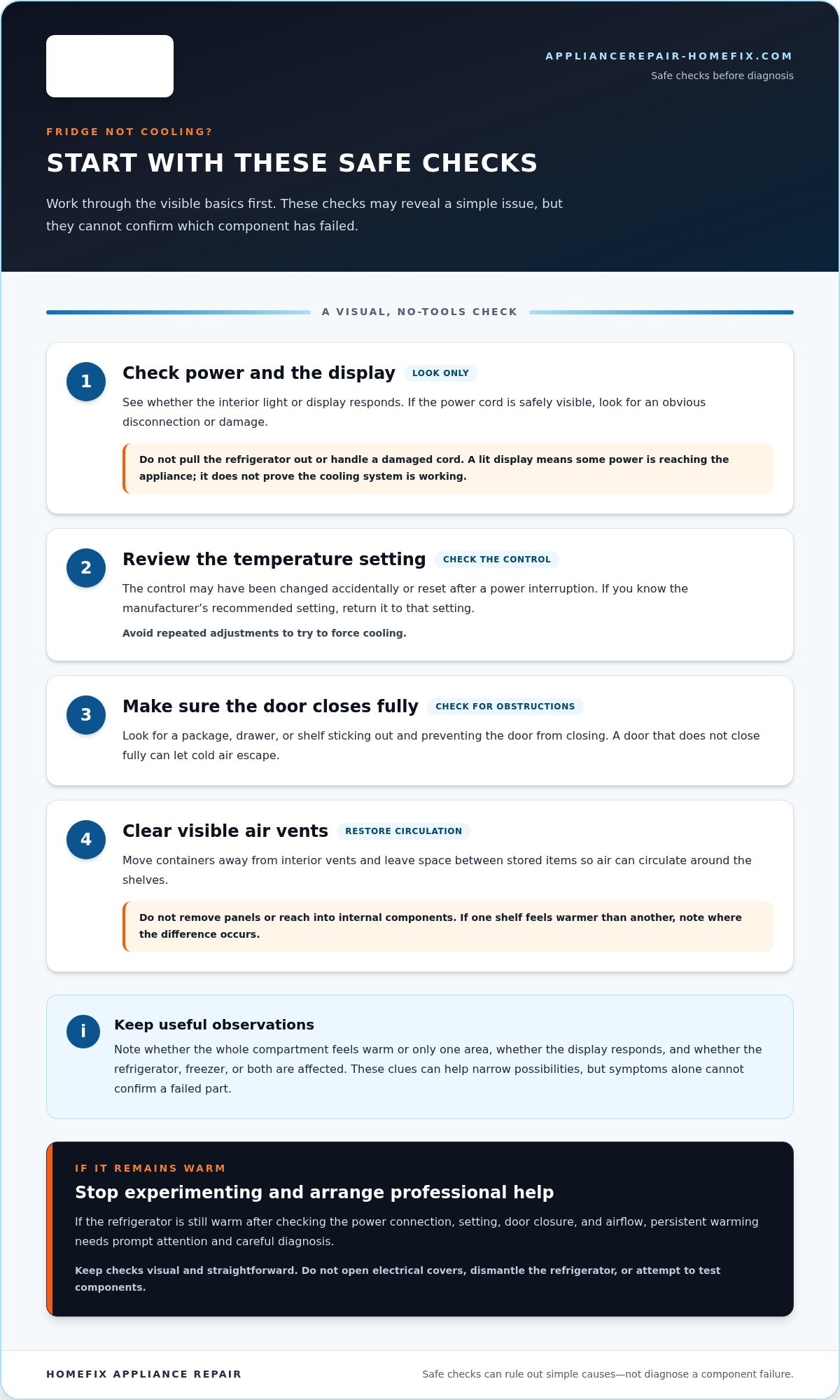
Start with what you can see. Check whether the interior light or display responds. If the power cord is safely visible, look for an obvious disconnection or damage. Don’t pull the refrigerator out or handle a damaged cord. A lit display shows that some power is reaching the appliance, but it doesn’t prove the cooling system is working.
Next, check the temperature control. It may have been changed accidentally or reset after a power interruption. If you know the manufacturer’s recommended setting, return the control to it and avoid repeated adjustments. Then check the door opening: a package, drawer, or shelf sticking out can stop the door from closing fully and let cold air escape.
Make sure cold air can circulate inside
Look for interior air vents and move containers that block them. Leave space between stored items so air can circulate around the shelves. Don’t remove panels or reach into internal components. If one shelf feels warmer than another, note where the temperature difference occurs. It’s useful information, but it doesn’t identify a failed part on its own.
- Check whether the control has been moved from its usual setting.
- Clear visible vents and anything preventing the door from closing.
- Note whether the light or display responds and whether the whole compartment feels warm or only one area.
Keep your checks visual and straightforward. Don’t open electrical covers, dismantle the refrigerator, or attempt to test components. These steps can create a safety risk and make the problem harder to diagnose.
Persistent warming needs prompt attention and careful diagnosis. If the refrigerator remains warm after you’ve checked the power connection, setting, door closure, and airflow, arrange professional help instead of continuing to experiment. These checks can rule out a few simple causes, but they can’t establish which component is faulty. HomeFix provides residential refrigerator repair with on-site diagnostics to identify the problem.
Common Reasons a Refrigerator Stops Cooling
A refrigerator can feel warm for several reasons, and the same symptom may come from different faults. Restricted airflow, a fan problem, a control issue, or a sealed-system fault can all interfere with cooling. The pattern offers clues, not a confirmed diagnosis. For an additional overview of common reasons a refrigerator stops cooling and troubleshooting, consider how each possible issue may affect what you observe.
Airflow, fan, and condenser-related problems
Cold air has to circulate through the compartments. A blocked vent can limit that movement, while a malfunctioning fan may keep air from reaching parts of the refrigerator as expected. If one area feels warmer than another, note which compartment or shelf is affected and whether the pattern changes. That information can help narrow the possibilities, but it can’t identify the faulty part by itself.
Dust around accessible condenser areas may interfere with the refrigerator releasing heat. Follow the appliance manual for any cleaning it recommends. Don’t remove covers or reach near moving parts, wiring, or other electrical components. If the condenser area isn’t safely accessible, leave it alone and describe what you’ve noticed to the technician.
Temperature controls, compressor, and sealed-system faults
An incorrect temperature setting can reduce cooling, while a control-system problem may stop the refrigerator from responding as expected. If you’ve checked the setting, avoid repeatedly changing it to force cooling. Record what the control displays and whether the refrigerator’s behavior changes.
The compressor circulates refrigerant through the cooling system to move heat out of the refrigerator. Clicking or humming can offer clues about the appliance’s operation, but neither sound proves the compressor has failed. Electrical or control problems can produce similar symptoms, so sound alone isn’t enough to diagnose the cause.
Refrigerant and sealed-system issues require proper diagnostic tools and should be left to qualified technicians. Don’t handle refrigerant, open sealed components, or attempt electrical testing. A refrigerator that runs without cooling may have a serious fault, but only an on-site assessment can distinguish between possible causes.
Use your observations to describe the issue clearly rather than treating them as a do-it-yourself diagnosis. Note whether the refrigerator, freezer, or both are warm; when unusual sounds occur; and whether the cooling problem is getting worse. These details help a technician focus the inspection. If safe checks haven’t resolved the issue, professional refrigerator repair can help identify what’s disrupting the cooling cycle.
Match the Symptoms to the Likely Fridge Cooling Problem
The pattern can help answer “why is my fridge not cooling,” but it can’t identify a failed part by itself. Note which compartments are affected, where frost appears, and whether a new sound started around the same time as the temperature change. Use these observations to narrow the possibilities, not as a substitute for inspection.
| Symptom | Possible area involved | Safe observation | Next step |
|---|---|---|---|
| Whole fridge is warming | Power, controls, airflow, or cooling system | Check whether the display responds and whether both compartments feel warmer than usual. | Recheck visible settings. If warming persists, arrange diagnosis. |
| Refrigerator warm, freezer cold | Airflow between compartments or a fan | Look for blocked vents and note whether several refrigerator shelves are affected. | Clear visible obstructions. If the pattern remains, seek professional assessment. |
| New clicking, buzzing, or rattling | Fan, compressor, or another operating component | Note the sound, when it occurs, and whether cooling changed at the same time. | Don’t identify a failed part by sound alone. Arrange diagnosis if cooling is affected. |
| Frost buildup | Airflow, door sealing, or defrost operation | Notice where frost collects and whether the door closes without obstruction. | Record the location and seek help if frost returns or cooling declines. |
When the freezer is cold but the refrigerator is warm
This difference may point to restricted airflow or a fan issue, since cold air may not be reaching the refrigerator compartment as expected. Check only what’s visible: note whether food blocks a vent and whether the problem affects one shelf or several. Don’t remove panels or try to test a fan by hand. The pattern can guide diagnosis, but it doesn’t confirm the cause.
When both compartments are warm or the fridge makes new noises
If both compartments are warming, a power, control, or cooling-system problem may be involved. Clicking, buzzing, and rattling are observations, not standalone diagnoses. Write down when the noise started, whether it comes and goes, and whether cooling changed at the same time. Avoid opening covers or handling electrical components. A technician can assess the symptoms alongside the refrigerator’s operation.
Frost location and sound timing can make your description more useful, but similar symptoms can come from different faults. Share what you observed rather than guessing which part has failed. HomeFix performs on-site diagnostics for residential refrigerators and provides a written estimate before work begins. If cooling remains unstable, professional refrigerator repair can help determine the next step.
What to Do While Your Fridge Is Not Cooling
A warm refrigerator calls for two priorities: protect food and avoid making the problem worse. If you’re still wondering “why is my fridge not cooling,” follow these steps while arranging help. Stick to visible checks and record what you find.
- Limit door openings. Keep the refrigerator and freezer doors closed as much as possible. Each opening lets cold air escape and makes it harder to track whether temperatures are changing.
- Check and record temperatures. If you have an appliance thermometer, note the readings in the refrigerator and freezer. Record when you took them so you can share whether temperatures are steady or rising.
- Protect perishables. Use current USDA or FDA food-safety guidance to decide whether food should be kept or discarded. Don’t rely on smell or appearance alone to judge whether food is safe.
- Arrange help if cooling doesn’t return. If the refrigerator stays warm or temperatures continue to rise, stop troubleshooting and arrange professional diagnosis.
Protect food and track temperature changes
Take readings without leaving the doors open longer than needed, and note which compartment you measured. A reading gives you a clearer record than touch alone, but food-safety decisions should follow current official guidance. Check USDA or FDA recommendations for advice on specific foods and how long they may have been outside safe temperature conditions.
Avoid risky repairs and preserve useful details
Safe observations include noting temperatures, sounds, and visible obstructions. Repairs involving wiring, controls, internal components, or sealed cooling-system parts require qualified service. Don’t bypass controls or open panels. Stop immediately if you notice a burning smell, damaged wiring, or a leak, or if the area you need to inspect isn’t safely accessible.
Before arranging service, write down the refrigerator’s model number, when the symptoms began, which compartments are affected, and any temperature readings or new sounds. This timeline can help a technician understand how the problem has changed. In Houston-area homes, keep the refrigerator doors closed during warm conditions, and don’t move the appliance or block accessible ventilation while troubleshooting.
HomeFix technicians diagnose residential refrigerators on-site and provide a written estimate before work begins. Share your notes and observations so the issue can be assessed without guesswork.
When to Call for Refrigerator Repair in Houston
Arrange professional diagnosis if safe checks haven’t restored cooling, temperatures keep rising, or both the refrigerator and freezer are warm. Don’t wait for a complete shutdown if the appliance is getting worse. The question “why is my fridge not cooling” can’t be answered reliably from a sound or temperature pattern alone. Several faults can look alike, and testing helps identify the cause before repair work is recommended.
What a refrigerator diagnostic visit can clarify
HomeFix technicians assess the refrigerator’s symptoms and operation on-site, then explain what they find. You’ll receive a written estimate before work begins, so you can review the proposed repair before deciding how to proceed. Technicians receive ongoing brand-specific training, and repairs use high-quality or OEM replacement parts.
The standard diagnostic fee is $89. If you complete the repair, the fee is reduced to $69 and applied toward the repair cost. HomeFix provides a three-month labor warranty and a one-year parts warranty on most replacement parts. Share the model number, when cooling changed, any temperature readings, and the sounds or frost you observed. Those details can help focus the assessment, but diagnosis comes from inspecting and testing the appliance, not symptoms alone.
HomeFix provides residential refrigerator repair across Greater Houston, including Houston, Katy, The Woodlands, Sugar Land, Cypress, Pearland, and Fulshear. Service is also available in Memorial. For details, visit the residential refrigerator repair page.
Arrange local refrigerator service
HomeFix offers three-hour appointment windows, with same-day or next-day service. When arranging service, have your model number and a brief description of the cooling issue ready. Mention whether the freezer is still cold, whether both compartments are warm, and when any new noise began.
If a technician’s assessment points to a compressor issue on an LG refrigerator, HomeFix also provides LG refrigerator compressor replacement in Houston. The right repair depends on the diagnosis, so don’t assume this or any other component is the cause before the appliance has been checked.
To arrange service, book online or call HomeFix at (346) 489-7171. A clear description of what you’ve observed helps the team understand the issue and plan the next step.
Book refrigerator repair online
Take the Next Step Toward a Reliable Fridge
A refrigerator that stops cooling can disrupt meal plans and everyday routines. Once you’re asking “why is my fridge not cooling,” avoid getting stuck in trial-and-error checks. A clear diagnosis gives you a sound basis for deciding what to do next.
Professional repair moves the process from suspicion to an informed decision. You don’t need to identify the faulty part yourself. Share what you’ve noticed, review the proposed work, and decide how to proceed with a better understanding of the problem. That’s more useful than repeatedly changing settings or attempting repairs that could create new risks.
HomeFix provides on-site refrigerator diagnostics across Houston, Katy, The Woodlands, Sugar Land, Cypress, Pearland, and Fulshear. Getting the issue assessed can bring clarity to a frustrating household disruption, even before you know what repair it may require.
Schedule your refrigerator repair with HomeFix and take the next step toward restoring reliable cooling.
Frequently Asked Questions
Is it safe to keep food in a refrigerator that is not cooling?
It depends on how warm the food has become and for how long. Use an appliance thermometer if available, and check current USDA or FDA guidance before deciding whether perishable food is safe to keep. Don’t rely on smell or appearance alone. If you’re unsure how long food has been above a safe temperature, follow official food-safety advice rather than taking a chance.
Can I unplug my refrigerator to reset it?
You can unplug a refrigerator only if the cord and outlet are safe to access, but a power reset may not fix the underlying cooling problem. Check your owner’s manual for model-specific reset instructions before trying it. Avoid repeatedly unplugging and reconnecting the appliance, especially if it’s already warm inside. If you see damaged wiring or smell burning, don’t touch the cord; arrange professional help.
How long does a refrigerator take to cool after being plugged in?
Cooling time varies by refrigerator model, its starting temperature, and the conditions around it. Check the owner’s manual for the manufacturer’s guidance, and use an appliance thermometer to monitor progress instead of relying on how cold the shelves feel. Keep the doors closed while it cools. If the temperature isn’t moving toward the recommended range or the appliance remains warm, arrange repair service.
What temperature should a refrigerator be?
Set the refrigerator to 40°F or below, the USDA’s recommended maximum temperature for safe food storage. A refrigerator’s dial may use numbers or settings rather than degrees, so verify the actual temperature with an appliance thermometer. Place it where it can give a useful reading without blocking food or airflow. If the reading stays above 40°F despite the control setting, the appliance may need attention.
Can dirty condenser coils make a fridge stop cooling?
Yes. Dust buildup around accessible condenser areas can interfere with heat release and affect cooling. Check your owner’s manual before cleaning, since the location and safe method vary by model. Don’t remove covers or reach near wiring, fans, or other moving parts. If the coils aren’t safely accessible, or cleaning as directed doesn’t improve cooling, leave further checks to a refrigerator technician.
Why is my freezer cold but my refrigerator warm?
A cold freezer with a warm refrigerator may point to restricted airflow between compartments or a fan-related issue. Check whether food is blocking visible vents, then note if the whole refrigerator section or only certain shelves feel warm. Don’t remove internal panels or test a fan yourself. If the temperature difference continues, a technician can inspect the refrigerator to identify the cause.
When should I call a refrigerator repair technician?
Arrange professional service if the refrigerator stays warm after basic checks, cooling gets worse, or both compartments are warm. Stop troubleshooting if you notice a burning smell, damaged wiring, or a leak. HomeFix provides residential refrigerator repair for households in Houston, Katy, The Woodlands, Sugar Land, Cypress, Pearland, and Fulshear. A technician can assess the appliance on-site and explain the recommended next step.