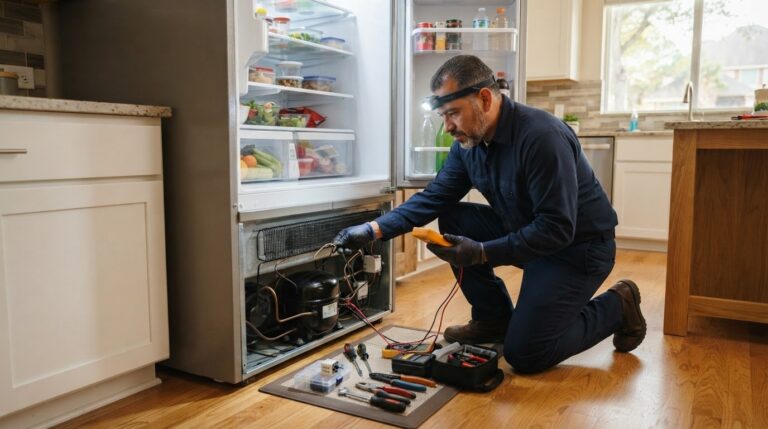
Samsung Refrigerator is Not Cooling
If your Samsung refrigerator is not cooling, you’re not alone. Many owners of Samsung appliances experience this frustrating issue. While a lack of cooling in a Samsung refrigerator can seem alarming, it’s often due to a few common problems that you can troubleshoot on your own or with professional help.
1. Check for Frost Buildup
One of the main reasons for a Samsung refrigerator not cooling is frost buildup on the evaporator coils. When these coils are covered in frost, cold air cannot circulate properly, resulting in a Samsung refrigerator not cooling.
How to Check:
- Open the refrigerator and inspect the back wall inside. If frost is visible, this could be causing the cooling issue.
- For a quick check, run a forced defrost cycle. Press the “Energy Saver” and “Alarm” buttons simultaneously for about 8 seconds until you hear a “DingDong” sound. This will initiate a defrost.
If frost buildup is indeed the problem, you may need to replace parts like the defrost sensor or the heater. If you’re unsure, a Samsung refrigerator repair technician can inspect and replace faulty components.

2. Inspect the Evaporator Fan
The evaporator fan is essential for circulating cold air inside the refrigerator. If this fan fails, you’ll likely notice the Samsung fresh food section not cooling.
Signs of a Faulty Evaporator Fan:
- Your refrigerator is quiet, and no air is flowing from the vents.
- Only the freezer may be cold, while the fresh food area stays warm.
To replace the fan, you may need to consult a Samsung refrigerator repair professional, as it involves disassembling parts of the fridge.
3. Defrost Sensor Issues
The defrost sensor detects frost levels on the evaporator coils and activates the defrost heater. If the sensor is faulty, frost buildup can occur, causing your Samsung refrigerator to not cool.
How to Identify:
- You may see frost on the top part of the evaporator while the bottom stays frost-free. This uneven frost pattern suggests a sensor issue.
Replacing a defrost sensor involves locating it near the evaporator coils, removing the frost, and carefully replacing the sensor. If this task seems complex, calling a professional for a Samsung refrigerator repair is advisable.
4. Blocked Drain Hole
A blocked drain hole can also cause frost buildup and cooling issues. If the drain is blocked, water cannot exit during the defrost cycle, leading to frost accumulating on the coils.
Solution:
- Locate the drain hole at the bottom of the evaporator. Use a steamer or warm water to clear any ice blocking it.
- Ensure the drain clip is firmly attached and centered over the hole.
If the drain clip is out of place, gently adjust it so it fits securely in the drain hole. For persistent issues, seek Samsung refrigerator repair assistance.
5. Main Control Board Problems
If all else fails, the main control board might be the culprit. This board controls the cooling system, and a malfunction can lead to a Samsung refrigerator not cooling.
Indications of a Control Board Issue:
- Erratic cooling where the refrigerator intermittently stops cooling and starts again.
- Other issues, like the display not working or temperature fluctuations.
In such cases, replacing the control board may be necessary. Control board replacement can be technical, so it’s best handled by a Samsung refrigerator repair expert.
How to Prevent Cooling Issues in Your Samsung Refrigerator
Preventing cooling issues in your Samsung refrigerator is easier than it seems. Follow these steps to keep your refrigerator in top shape:
- Regularly Defrost: Manually defrost your refrigerator at least once a year.
- Clean the Condenser Coils: Dust and debris on condenser coils can affect cooling efficiency.
- Avoid Overloading: Too much food blocks air vents, making it harder to cool properly.
- Check Door Seals: Worn-out seals allow warm air to enter, affecting cooling.
By following these tips, you can reduce the risk of experiencing Samsung refrigerator cooling issues. However, if the problem persists, contact a Samsung refrigerator repair service for professional help.
A Samsung refrigerator not cooling can be fixed by addressing common issues like frost buildup, faulty fans, or a defective defrost sensor. If you’re not comfortable troubleshooting these issues yourself, it’s always best to consult a professional Samsung refrigerator repair technician.