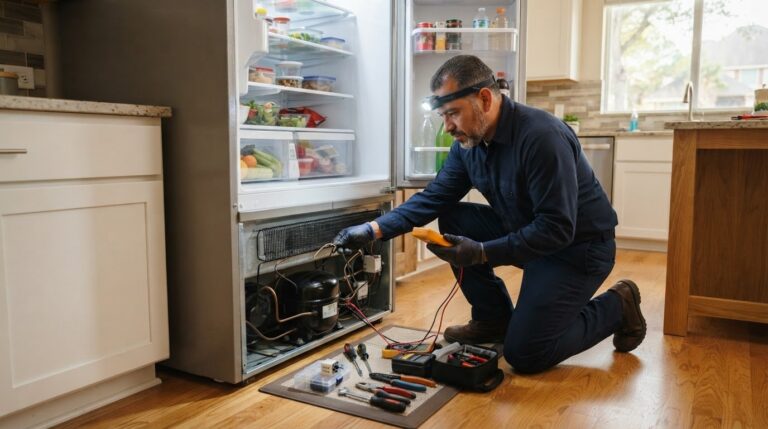
What if the clicking or humming you hear isn’t coming from a failed compressor? If you’re searching how to tell if refrigerator compressor is bad Pearland, start with this: warm food, unusual sounds, and weak cooling are clues, not a diagnosis. Several refrigerator parts can cause similar symptoms, so replacing the compressor based on noise alone may lead to the wrong repair.
It’s stressful when groceries are warming and the cause isn’t clear. Because compressor trouble can involve a major repair, it helps to know which signs are worth noting and what else could be responsible before deciding what to do.
This guide explains symptoms that deserve attention, including when clicking or humming may suggest a problem and why those signs can also point to a faulty start relay or overload. You’ll learn what a technician checks during refrigerator diagnostics and when it’s time to stop troubleshooting and arrange service in Pearland. A professional diagnosis helps identify the cause before repair work begins, and you’ll receive an upfront written estimate before work starts.
Key Takeaways
- Use cooling problems and unusual sounds as clues, not proof of compressor failure; other parts can cause similar symptoms.
- Learn how a technician evaluates cooling performance, operating sounds, and related components before identifying the fault.
- Compare persistent cooling trouble with possible airflow or fan issues to make sense of what your refrigerator is doing.
- Before scheduling repair, confirm the temperature settings and make sure food or containers aren’t blocking interior vents.
- If you’re searching “how to tell if refrigerator compressor is bad Pearland,” see how HomeFix’s local refrigerator diagnosis can help identify the cause before repair work begins.
How to Tell If a Refrigerator Compressor Is Bad in Pearland
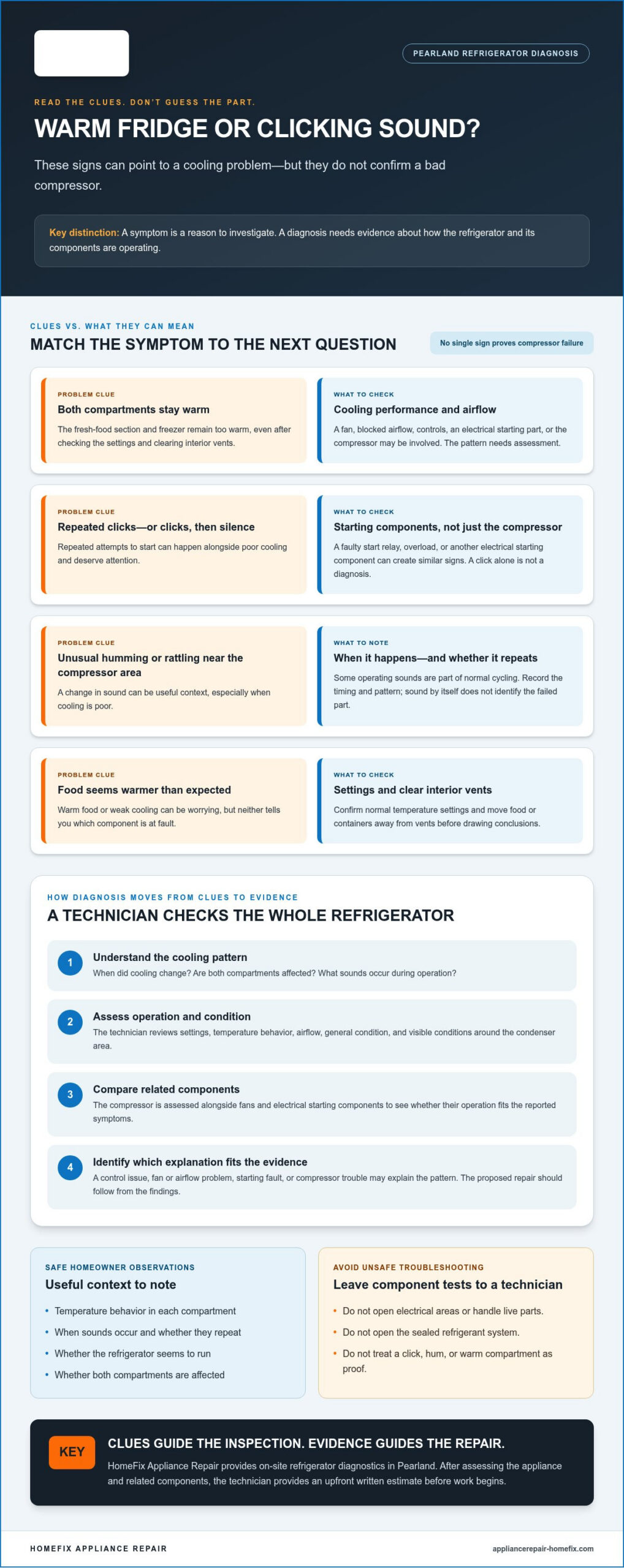
To tell whether a refrigerator compressor may be failing, look for a pattern: both the fresh-food and freezer compartments remain too warm, and the problem continues even with normal temperature settings and clear interior vents. Repeated clicking, humming, or rattling near the compressor area can add to the concern. But none of these symptoms, alone or together, confirms compressor failure. They’re reasons to investigate, not a diagnosis.
The compressor is a key part of the cooling cycle. It pressurizes refrigerant and helps circulate it through the refrigerator’s sealed system, where the refrigerant absorbs heat inside and releases it elsewhere. How Compressor Refrigerators Work provides a helpful overview of this cycle. A problem elsewhere in the refrigerator, however, can produce similar symptoms.
Which symptoms can point to a failing compressor?
Pay attention to the pattern over time, not just one moment. If both compartments stay warm after you’ve confirmed the settings and moved food away from the vents, the refrigerator may not be cooling properly. Repeated attempts to start, clicks followed by silence, or unusual humming or rattling from the compressor area also warrant attention, especially if cooling is poor. Note when the sounds occur, whether they repeat, and whether both compartments are affected. That context can help a technician assess the problem.
A warm refrigerator by itself doesn’t identify the failed component. The cause could involve airflow, a fan, controls, or an electrical starting part rather than the compressor. Likewise, some operating sounds are part of normal cycling. A change in sound is useful information, not proof.
Why a symptom checklist cannot confirm compressor failure
Fans move air through the compartments, controls signal when cooling is needed, and starting components help the compressor begin operating. A fault in any of these areas can interfere with cooling or create clicking and humming that seem like compressor trouble. Blocked airflow can also leave food warmer than expected even when the underlying cause isn’t a failed compressor.
Homeowners can note temperatures, sounds, and whether the refrigerator seems to run. A technician can assess those clues alongside the refrigerator’s condition and findings from component checks. A sound or warm compartment is an observation; a diagnosis needs evidence about how the system and its parts are operating.
A compressor warning sign is evidence to investigate, not proof that the compressor has failed. Don’t label the compressor bad based on one symptom or an online checklist. If the problem persists, professional refrigerator diagnostics can help separate compressor trouble from a similar fault before repair decisions are made. For Pearland homeowners asking how to tell if refrigerator compressor is bad Pearland, the clearest answer is to treat symptoms as clues and have the cause properly assessed.
How a Technician Diagnoses a Refrigerator Compressor Problem
A reliable compressor diagnosis starts with the whole refrigerator, not a guess based on one sound. A technician gathers information about the cooling problem, checks how the appliance is operating, and considers other parts that can create similar symptoms. This sequence helps show whether the compressor is implicated or whether another fault better explains what’s happening.
What the initial inspection and tests can reveal
The technician may begin by asking when cooling changed, whether both compartments are affected, and what sounds occur during operation. They’ll review the control settings and assess temperature behavior, airflow, and the refrigerator’s general condition. Visible conditions around the condenser area can also provide useful context. These observations help guide the next checks, but they don’t prove a compressor fault on their own.
Next, the technician assesses the compressor alongside the fans and electrical starting components. They look at how these parts behave as the refrigerator runs and whether their operation fits the reported cooling pattern. A fan that isn’t moving air properly or a starting component that isn’t working as intended may affect cooling or cause repeated start attempts. Don’t open electrical areas or handle live parts to investigate.
How a diagnosis rules out other refrigerator faults
Cooling trouble can come from several sources. A control issue may affect when cooling is called for. A fan or blocked airflow may prevent cold air from reaching a compartment. An electrical starting problem may keep the compressor from starting normally. The technician compares these possibilities with the refrigerator’s behavior instead of treating a click, hum, or warm compartment as a final answer.
A sound diagnosis compares measured system behavior with several possible fault sources, rather than treating one symptom as proof. The proposed repair should follow from findings that support it. If the evidence points to a fan, control, or starting component, replacing the compressor may not address the cause. If the findings support compressor trouble, the technician can explain why before work begins.
HomeFix Appliance Repair performs on-site refrigerator diagnostics in Pearland. Technicians assess the appliance’s operation and related components, then provide an upfront written estimate before work begins. You can review the recommended repair before deciding how to proceed. You don’t need to open the sealed refrigerant system or test electrical parts yourself.
For homeowners researching how to tell if refrigerator compressor is bad Pearland, professional assessment is the practical next step when cooling problems persist or the refrigerator repeatedly attempts to start. HomeFix refrigerator diagnostics and repair can help identify the cause and clarify the recommended repair.
Bad Compressor or Another Fault? Compare the Clues
A refrigerator can show signs of weak cooling or repeated starting without the compressor being the cause. Comparing the symptom with plausible alternatives is more useful than matching one sound to a part. The clues below are suggestive, not conclusive. A technician weighs them alongside the refrigerator’s operating behavior and component checks.
Compressor trouble versus starting-component or electrical issues
A click near startup can happen when the refrigerator attempts to run, but it doesn’t identify which part is at fault. The compressor may be involved, or a starting component or electrical issue may be preventing normal operation. Sound patterns can vary, so don’t use a click, hum, or pause to name a failed part. Electrical testing belongs with a qualified technician, not a homeowner using improvised tools.
Compressor trouble versus fan or airflow problems
A fan helps move air through the refrigerator, so a fan problem or restricted airflow may leave one or both compartments warmer than expected. That can resemble a larger cooling failure, even though the compressor isn’t necessarily the cause. A technician can assess fan operation and airflow as part of the diagnosis without asking you to dismantle panels.
| Clue | Possible alternatives | Sensible next step |
|---|---|---|
| Both compartments remain warm | Compressor trouble, control or electrical fault, or another cooling-system issue | Note how long cooling has been weak and arrange a professional assessment if it persists. |
| Clicking as the refrigerator tries to start | Starting-component or electrical trouble; compressor trouble is also possible | Record when the clicks happen. Don’t open electrical areas or test live parts yourself. |
| One area cools poorly while another seems less affected | Fan operation or restricted airflow may be involved | Keep interior vents clear and report which compartment is warmer. |
| Unusual humming or rattling near the compressor area | Compressor operation, another vibrating part, or a starting issue | Describe the sound and whether it changes during operation; let a technician inspect it. |
Warm compartments alone can’t separate compressor trouble from other faults in the cooling system. The pattern still matters: whether one or both compartments are affected, whether the sound occurs during startup, and whether the issue continues. These details help direct an inspection, but they don’t replace it. Avoid pulling panels off to look for fans or electrical parts. Observe and describe what’s happening instead.
For anyone searching how to tell if refrigerator compressor is bad Pearland, use the comparison to organize your observations, not as a home diagnosis. A technician can check the competing explanations and recommend a repair based on the findings. That helps prevent treating a fan, airflow, or starting issue as compressor failure.
What Pearland Homeowners Can Safely Do Before Scheduling Repair
You can gather useful information without opening the refrigerator or trying to diagnose its compressor. Keep your checks simple: confirm the settings, look for blocked vents, and note what you observe. These details help a technician understand how the problem is developing, but they can’t confirm which component has failed.
Safe checks that do not require opening the appliance
Use this short checklist. Stop if you notice a safety concern.
- Confirm the temperature settings. Check that the refrigerator and freezer controls haven’t been changed accidentally. Avoid repeated adjustments, which can make it harder to track whether cooling is improving.
- Check the interior vents. Move food containers away from vents so air can circulate. Don’t remove covers or reach into openings.
- Check the doors. Make sure both doors close fully and nothing is preventing a complete closure.
- Record what you notice. Note which compartment feels warm, when clicking or humming occurs, and whether cooling has changed since you first noticed the issue. Mention any recent changes in how the refrigerator is being used.
- Protect perishable food. If food is warming, limit how often you open the doors and move items to another reliably cold storage option if available. Don’t rely on the refrigerator to keep food safe if it isn’t cooling properly.
Keep your hands away from wiring and electrical parts. Don’t bypass safety devices, handle refrigerant lines, or try to force a compressor to start. Avoid repeatedly resetting or cycling a refrigerator that keeps attempting to start without cooling. That behavior needs assessment, not improvised repair.
When to stop troubleshooting and arrange service
Arrange professional service if poor cooling continues after you’ve checked the settings and cleared visible obstructions. Repeated startup noises, worsening temperatures, or a pattern of cooling that comes and goes are also good reasons to stop testing and get the appliance assessed. A warm compartment won’t tell you whether the compressor or another part is responsible.
Stop using the refrigerator and seek prompt service if you notice a burning smell, visible electrical damage, or unusual heat. Don’t touch damaged wiring or attempt to inspect internal components. Share what you observed and when it happened with the technician.
If you’re searching how to tell if refrigerator compressor is bad Pearland, these safe checks can help you describe the symptoms, but they can’t confirm compressor failure. A technician can assess the refrigerator and identify whether the issue involves the compressor or another component. For continued cooling problems, arranging refrigerator repair is a practical next step.
Schedule refrigerator repair in Pearland and share the symptoms you’ve noticed.
Getting a Refrigerator Compressor Diagnosis in Pearland
Persistent cooling trouble or repeated startup sounds can make a compressor seem like the obvious cause. But fans, controls, and electrical starting components can produce similar symptoms. HomeFix Appliance Repair provides on-site refrigerator diagnosis and repair in Pearland and nearby Houston-area communities, helping homeowners get a clearer answer before choosing a repair. HomeFix serves Houston, Katy, The Woodlands, Sugar Land, Cypress, Pearland, and Fulshear.
What to expect from HomeFix refrigerator service
A technician assesses the refrigerator’s cooling performance, operating sounds, and overall condition. They consider the compressor alongside other parts that affect cooling, including fans and starting components. This helps distinguish a compressor fault from a similar issue. A symptom alone doesn’t determine the recommended repair.
HomeFix technicians are certified, licensed, and background-checked. They provide an upfront written estimate before work begins, so you can review the recommended repair before deciding how to proceed. If the diagnosis supports a compressor-related repair, the technician can explain the findings. For LG appliances, HomeFix also provides LG refrigerator compressor replacement.
Service vehicles stock common replacement parts to help minimize delays when a repair is needed. Repairs use original replacement parts. Having common parts on hand can help move the work forward, but the right next step depends on what the technician finds during the assessment.
If you’ve been searching how to tell if refrigerator compressor is bad Pearland, bring your observations to the visit. Share which compartments are warm, when unusual sounds happen, and how the cooling has changed. Those details give the technician useful context, while the diagnosis relies on the refrigerator’s condition and component checks, not a sound or symptom by itself.
Schedule service for a refrigerator in Pearland
Book refrigerator service online or by phone. Same-day service is available in most ZIP codes, and appointments include three-hour arrival windows. When scheduling, share which compartment is warm, when the unusual sounds occur, and how long the cooling problem has been happening.
HomeFix assesses the refrigerator before recommending a repair. A compressor replacement isn’t assumed in advance. The diagnosis determines whether the compressor or another component needs attention, and the upfront written estimate lets you review the proposed work before it begins. The diagnostic fee is $89 → $69 (special), and the fee is waived when a repair is performed.
Schedule refrigerator service in Pearland online
Get a Clear Answer Before Choosing a Repair
If you’re still wondering how to tell if refrigerator compressor is bad Pearland, remember that symptoms can point toward a problem, but they can’t identify the failed part by themselves. The next step isn’t to assume the compressor needs replacement. It’s to get a diagnosis that helps you understand what’s causing the cooling trouble and what repair is recommended.
HomeFix Appliance Repair’s certified, licensed, and background-checked technicians assess the refrigerator before recommending work. You’ll receive an upfront written estimate before repairs begin, and repairs use original replacement parts. Same-day service is available in most ZIP codes, with three-hour arrival windows. HomeFix provides a 90-day warranty on all repairs.
Don’t let uncertainty about the compressor delay a proper assessment, especially if food is warming or the refrigerator’s operation is getting worse. Schedule service and take the next step toward a clear repair plan.
With the cause identified, you can move forward with greater confidence.
Frequently Asked Questions
Can a refrigerator run but still have a bad compressor?
Yes. Lights, a display, or a fan may still operate even if the compressor isn’t cooling effectively. You might hear the refrigerator running while the freezer softens or the fresh-food compartment warms. Those observations show that the appliance has power, but they don’t establish which part has failed. Note what still works and what doesn’t, then share those details during a professional assessment.
Does a clicking refrigerator always mean the compressor is bad?
No. Clicking can occur as the refrigerator attempts to start, but the sound doesn’t identify the failed part. A starting component or another electrical issue may be involved, and the compressor itself may not be the cause. Notice whether the click repeats, whether it’s followed by humming, and whether cooling changes. Don’t remove covers to investigate the sound; leave internal checks to a technician.
How do I tell if the compressor or the start relay is failing?
You can’t reliably distinguish them by sound alone. A refrigerator that clicks and then fails to cool could have a problem with the start relay, another electrical component, or the compressor. If you’re looking up how to tell if refrigerator compressor is bad Pearland, remember that a technician needs to assess the starting components and compressor operation to narrow down the cause. Don’t handle wiring or attempt an improvised electrical test.
Is it safe to keep using a refrigerator with a suspected bad compressor?
If it isn’t maintaining cold temperatures, don’t rely on it to protect perishable food. Keep the doors closed as much as possible and move vulnerable items to another dependable cold-storage option if you can. Arrange an assessment rather than repeatedly restarting the appliance. If you notice a burning smell, visible electrical damage, or unusual heat, stop using it and seek service promptly.
Can I test a refrigerator compressor myself?
Don’t test the compressor by opening electrical compartments, touching wiring, bypassing safety devices, or handling refrigerant lines. These checks can expose you to electrical hazards or damage the refrigerator, and an informal result may not identify the actual fault. You can safely write down when the appliance clicks, whether it runs, and which compartment is warm. Share those observations with a technician for diagnosis.
What happens if a refrigerator compressor stops working?
If the compressor stops supporting the cooling cycle, the refrigerator may no longer remove enough heat to keep its compartments cold. Food can warm, and the freezer may begin to soften. The appliance’s lights or display might still work, so those signs don’t confirm that cooling is functioning. Protect perishable food and arrange an assessment to determine whether the compressor or another component is responsible.
Does HomeFix repair refrigerator compressors in Pearland?
Yes. HomeFix provides residential refrigerator diagnostics and repair in Pearland, including assessment of suspected compressor problems. A technician evaluates the refrigerator before recommending work, since similar symptoms can come from other components. If the findings point to a compressor fault, the recommended repair and upfront written estimate are provided before work begins. Schedule refrigerator service online or call (346) 489-7171.