A steady refrigerator buzz doesn’t automatically mean a major failure. If you’re searching “refrigerator making a buzzing noise Pearland,” the sound may be part of normal operation. But a new, persistent, or louder noise deserves attention, especially if the refrigerator isn’t cooling as it should.
Start by noticing when the buzz happens, how long it lasts, and whether anything else has changed. These clues can help distinguish routine operating sounds from a problem that needs diagnosis. You can make a few safe visual checks without opening panels or touching internal parts.
Pearland’s heat and humidity can put extra strain on refrigerators, so take a buzz seriously if it comes with changing temperatures or other unusual symptoms. HomeFix provides on-site refrigerator diagnostics in Pearland and across Greater Houston, with a written estimate before work begins.
Key Takeaways
- A brief hum during a normal cycle can be routine. A persistent or unusually loud buzz may need inspection.
- Use the sound pattern and any cooling changes as clues, not as a definite diagnosis.
- If your refrigerator is making a buzzing noise in Pearland, note when it happens, how long it lasts, and whether cooling has changed.
- Persistent noise paired with reduced cooling deserves attention because food may spoil if the refrigerator isn’t keeping items cold.
- HomeFix serves Pearland with refrigerator diagnostics, written estimates before work begins, and same-day or next-day service with three-hour arrival windows.
Refrigerator Making a Buzzing Noise in Pearland: Which Sounds Are Normal?
A refrigerator buzz can come from normal operation or from a part that needs inspection. A brief hum that starts and stops as the appliance runs may be routine. A persistent, unusually loud buzz, especially one that’s new or getting louder, deserves closer attention. First note when the sound occurs and whether the refrigerator is cooling normally.
Sound alone can’t confirm the cause. A compressor and fans are among the refrigerator components that operate as the appliance moves heat and air. The sound’s timing, changes in volume, and the refrigerator’s performance offer more useful clues than the sound by itself.
A brief, familiar operating sound is less concerning than a new or persistent buzz paired with cooling problems.
When refrigerator buzzing may be part of normal operation
You may hear a short hum as the refrigerator cycles, or a brief buzz while water is dispensed or ice is made. These sounds should stop rather than continue without a break. A sound that starts and stops can be part of an operating cycle. Continuous buzzing or frequent repeated bursts may signal a change worth monitoring.
Notice whether the sound changes when you open the refrigerator door. Some sounds may become quieter or stop, while others remain. This observation can help you describe the noise, but it doesn’t identify a faulty part on its own. Keep the door open only briefly to avoid warming the interior.
When a buzzing noise deserves closer attention
Pay attention if the buzz suddenly gets louder, returns repeatedly, or lasts longer than it used to. Cooling changes matter too. If food feels warmer than usual or the refrigerator can’t maintain its normal temperature, don’t dismiss the noise as routine. A buzz paired with a cooling change is a stronger reason to arrange an inspection than sound alone.
Also note leaks, unusual warmth around the appliance, or visible frost. These symptoms don’t prove that a particular component has failed, but they’re useful details to report during diagnosis. Avoid removing panels or reaching near internal parts to track down the sound.
What Could Make a Refrigerator Buzz? Check the Sound and Symptoms
A buzz can offer clues, but it can’t identify a failed part by itself. Where the sound seems to come from, whether it’s brief or continuous, and what the refrigerator is doing at the same time all matter. Similar sounds can have different causes across refrigerator models, so treat these patterns as observations to share during diagnosis, not as a repair verdict.
Buzzing near the back: compressor or condenser fan clues
A low sound from the rear may come from the compressor or condenser fan as the refrigerator runs. A short, familiar hum with steady cooling may simply reflect normal operation. A new, louder, or persistent buzz is more concerning, especially if the refrigerator also seems warmer than usual or struggles to maintain its temperature. Vibration against a wall or nearby surface can make operating sounds more noticeable too.
Keep the check visual and hands-off. Don’t remove access panels or handle electrical components to locate the source. If cooling seems impaired, the USDA advises keeping a refrigerator at Safe Refrigerator Temperature, 40°F or below, to help protect food.
Buzzing inside the cabinet: fan, ice maker, or water valve clues
A sound from inside the refrigerator may be related to the evaporator fan, which moves cold air through the cabinet. Notice whether the noise changes or stops when you open the door, but don’t assume this proves the fan is faulty. Door and fan behavior varies by model, and the sound may have another source.
A brief buzz or hum can also occur while an ice maker produces ice or a water valve operates during filling. Note whether the noise happens around those events or continues between them. Repeated or ongoing buzzing combined with poor cooling, unusual frost, or other performance changes deserves professional attention.
Sound, timing, and cooling symptoms together help guide diagnosis. Record when the buzz starts, how long it lasts, whether it changes with the door, and any effect on cooling. This gives a technician more useful information than a sound description alone. HomeFix diagnoses refrigerator issues in Pearland. Learn more about refrigerator repair service.
Safe Checks for a Buzzing Refrigerator Before You Book Repair
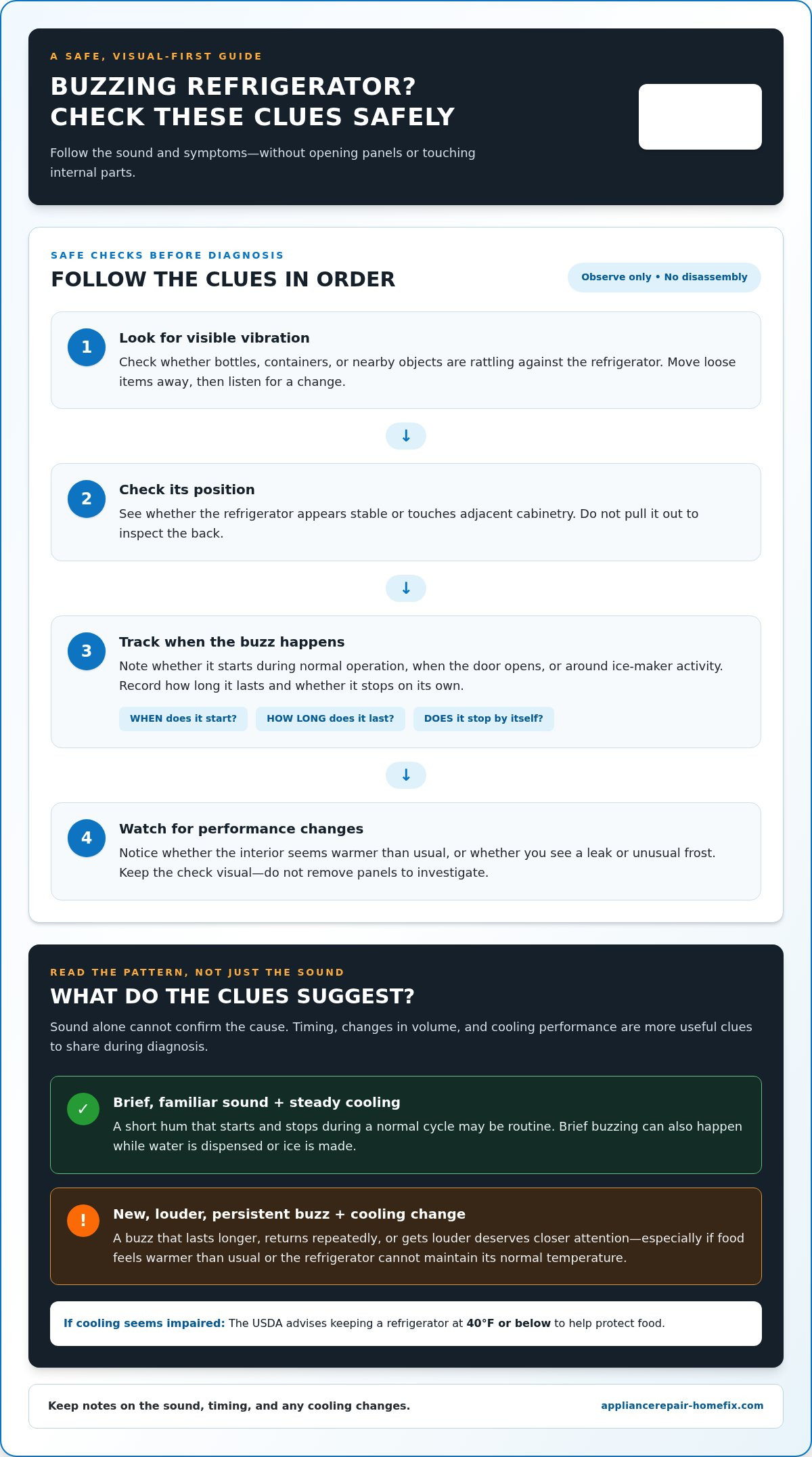
Start with safe observations, not a hands-on inspection. Look for obvious vibration and note when the buzz happens. Don’t open the refrigerator or touch internal parts. These checks can help you describe the issue without risking damage.
Simple checks that don’t require taking the refrigerator apart
- Look for visible vibration. Check whether bottles, containers, or nearby objects rattle against the refrigerator. Move loose items away and listen for a change.
- Check the refrigerator’s position. See whether it appears stable or touches adjacent cabinetry. Don’t pull it out to inspect the back.
- Note when the buzz occurs. Record whether it starts during normal operation, door opening, or ice-maker activity, how long it lasts, and whether it stops on its own.
- Watch for performance changes. Notice whether the interior seems warmer than usual or if you see a leak or unusual frost. Don’t remove panels to investigate.
These observations can help distinguish a rattle from a sound that continues regardless of nearby items or normal activity. Penn State Extension offers practical maintenance advice to keep it working efficiently. Follow your refrigerator’s care instructions, and don’t reach behind the appliance to access components.
When to stop troubleshooting and arrange service
Stop if buzzing persists alongside poor cooling, a leak, unusual frost, or another noticeable change. Don’t disassemble the refrigerator or touch wiring, fans, or sealed cooling-system parts. Avoid moving a connected refrigerator if doing so could strain its water line.
Before arranging service, note the brand and model, where the sound seems loudest, when it occurs, how long it lasts, and any cooling changes. Share those details with the technician rather than attempting a hands-on fix. See refrigerator repair service.
When Pearland Homeowners Should Get Refrigerator Buzzing Diagnosed
A brief operating sound that stays the same and comes with steady cooling may not need immediate attention. A buzz that’s new, persistent, getting louder, or occurring alongside performance changes is different. If food doesn’t seem as cold as usual, arrange a diagnosis rather than waiting for the sound to stop on its own.
Don’t assume every buzz means the compressor has failed. Fans, the ice maker, a water valve, or vibration can also be possible sources. The sound provides clues, but inspection is needed to identify what’s actually happening. Continuing to use a refrigerator that isn’t cooling properly can put perishable food at risk of spoiling.
Signs that make a service appointment the practical next step
Arrange service if the buzz continues alongside inadequate cooling or repeated cycling. Also report leaks, strong vibration, and sounds that are growing louder or changing. These symptoms don’t point to one definite cause, and they don’t all carry the same urgency. Describe what you’re observing so the issue can be assessed based on the full picture.
If cooling has changed, limit how often you open the door while arranging service. Keep track of any temperature changes, when the noise occurs, and whether it comes and goes. Don’t take the refrigerator apart to investigate. Share your observations instead.
What to expect from refrigerator diagnosis in Pearland
A technician uses your reported symptoms to guide an on-site inspection and identify the source of the noise. Possible areas for diagnosis include a fan, compressor, ice-maker system, or vibration. This helps distinguish between possible causes before recommending next steps. A sound description is useful, but it doesn’t replace an inspection.
HomeFix serves Pearland as part of Greater Houston. Technicians diagnose refrigerator issues and provide a written estimate before work begins, so you can review the recommended work before authorizing a repair. Share when the buzz happens and whether cooling has changed when arranging service.
Schedule refrigerator repair in Pearland
Schedule Refrigerator Buzzing Repair in Pearland with HomeFix
A new or persistent buzz is easier to assess when you can describe what happens along with it. HomeFix technicians use your reported symptoms to guide on-site refrigerator diagnostics, considering possible sources such as a fan, compressor, ice-maker system, or vibration. The sound offers clues, and an inspection helps identify the cause before repair is recommended.
HomeFix serves Pearland and communities across Greater Houston, including Houston, Katy, The Woodlands, Sugar Land, Cypress, and Fulshear. Same-day or next-day service is available with three-hour arrival windows. Before work begins, you’ll receive a written estimate so you can review the recommended work. Labor is covered by a three-month warranty, and most replacement parts have a one-year warranty.
Information to have ready when scheduling refrigerator repair
Share what you’ve noticed. Helpful details include the refrigerator brand and model number, if you can find it safely, and where the buzz seems loudest. Explain whether it starts and stops, how long it lasts, and whether it changes during ice-maker activity or when you open the door.
Also report any cooling problems, leaks, unusual frost, or other changes. These details help the technician focus the diagnostic process. Don’t move a connected refrigerator or remove panels to find the model label. Use information that’s easy to access safely.
Book a HomeFix refrigerator repair appointment
If the buzz persists or comes with cooling changes, arrange an inspection rather than guessing which part is responsible. Have your notes ready and schedule service online. Share the brand, model, and noise symptoms when booking so the team has a clear picture of the issue.
Schedule refrigerator repair in Pearland
Take the Next Step Toward a Quieter Refrigerator
A brief, familiar hum may be part of normal operation. A new or persistent buzz, especially alongside poor cooling, leaks, or unusual vibration, deserves attention. Note when the sound happens and what changes with it, but don’t open panels or try to diagnose internal parts by touch. Sound patterns offer clues, not a confirmed answer.
If your refrigerator is making a buzzing noise in Pearland, HomeFix technicians can inspect the appliance and identify the cause. HomeFix serves Pearland with same-day or next-day service and three-hour arrival windows. You’ll receive a written estimate before work begins. Labor is covered by a three-month warranty, and most replacement parts have a one-year warranty.
Share the refrigerator’s brand, model, and symptoms when arranging service. A clear description gives the technician useful information before the visit and helps you understand the next steps.
Take the guesswork out of a persistent buzz. Book a HomeFix refrigerator repair appointment.
Frequently Asked Questions
Is it normal for a refrigerator to make a buzzing noise?
Yes, some buzzing or humming can be part of normal refrigerator operation. A brief sound that starts and stops as the appliance cycles, dispenses water, or makes ice may be routine, especially if it hasn’t changed and cooling remains steady. A buzz that’s suddenly louder, continues, or happens with performance changes deserves attention. The sound alone can’t confirm which component is responsible.
Can a buzzing refrigerator still be safe to use?
A buzz alone doesn’t show whether a refrigerator is safe to use. If it’s cooling normally and the sound is brief and familiar, monitor it and note any changes. If food feels warmer than usual or the refrigerator isn’t maintaining its temperature, perishable items may spoil. Limit door openings and arrange a diagnosis. Don’t open panels or touch wiring or internal parts to investigate the noise.
What makes a refrigerator buzz when the door is closed?
A buzz with the door closed may come from normal operation or a component that needs inspection. The compressor, a fan, or vibration against nearby cabinetry are all possible sources. If the sound seems to come from inside the cabinet, note whether it changes when you open the door. That observation can help describe the symptom, but it doesn’t identify the cause. Models can produce similar sounds for different reasons.
Can an ice maker cause a refrigerator to buzz?
Yes, an ice maker or water valve can make a brief buzzing sound during ice production or water filling. Notice whether the noise happens around those activities and then stops, or continues between cycles. A repeated or persistent buzz may have another cause, particularly if cooling changes too. Record when you hear it and any related symptoms. Avoid removing panels or reaching into the ice-maker assembly.
When should I call for refrigerator repair in Pearland?
Arrange repair if the buzz is new, persistent, or getting louder, especially alongside poor cooling, repeated cycling, leaks, or strong vibration. A steady, brief operating sound with unchanged performance may be monitored, but don’t ignore a change in temperature. HomeFix serves Pearland and diagnoses refrigerator issues, with same-day or next-day service and three-hour arrival windows.
How does a technician find the cause of a buzzing refrigerator?
A technician uses your description of the sound and any cooling or other symptoms to guide an on-site inspection. They assess possible sources, such as a fan, compressor, ice-maker system, or vibration, to help distinguish between causes instead of guessing from the noise alone. HomeFix provides a written estimate before work begins, so you can review the recommended repair before authorizing it.