

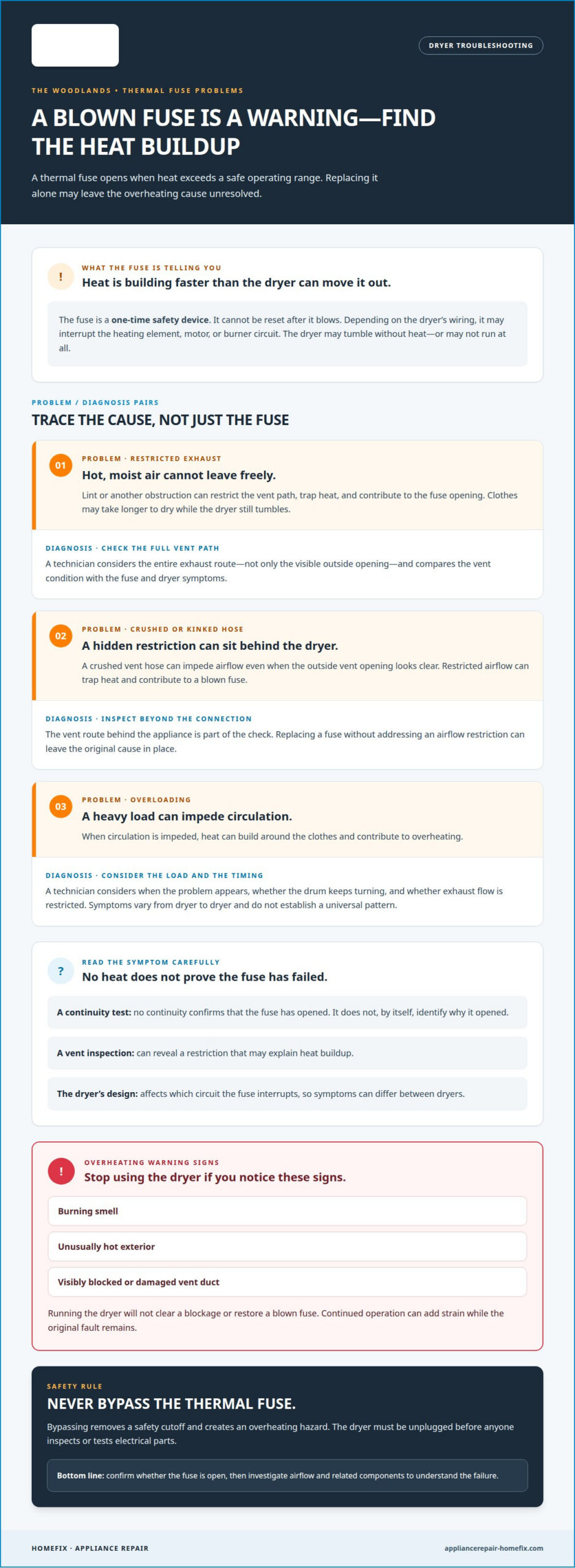
A blown thermal fuse is a warning, not a complete diagnosis. Common dryer thermal fuse problems in The Woodlands often involve overheating caused by restricted airflow. The fuse is a one-time safety device, so it cannot be reset after it blows. The dryer may still run without heat, or it may stop running altogether.
A dryer that won’t heat is frustrating, but replacing the fuse alone may not fix the cause. A continuity test can show whether the fuse is open, while a broader diagnosis can identify restricted airflow or another faulty component.
This article explains what the thermal fuse does, how overheating can blow it, and what a continuity test reveals. You’ll also learn what a professional checks when symptoms suggest a different dryer problem and when to arrange repair in The Woodlands.
Key Takeaways
- A thermal fuse is a one-time safety component, so replacing it alone may leave the cause of the failure unresolved.
- Restricted exhaust flow, a crushed vent hose, or heavy loads can contribute to overheating and recurring fuse problems.
- Continuity testing helps identify a failed fuse, while symptoms such as no heat can also point to other faulty parts.
- A professional diagnosis can assess the fuse, airflow, and related components before repair decisions are made.
- HomeFix provides dryer repair when a persistent heating problem or repeated fuse failure needs professional attention.
What is a dryer thermal fuse and what does it do?
A dryer thermal fuse is a one-time safety device that opens when temperatures become unsafe. It cannot be reset after it blows. Most dryers have three temperature sensors, with the thermal fuse serving as the final safety device. It is usually mounted on the blower housing or exhaust duct, where it can respond to heat moving through the dryer.
When the fuse opens, it interrupts an electrical path. Depending on the dryer’s wiring, that can stop the heating element, the motor, or both. For example, an electric dryer may tumble without producing heat, or it may not run at all. These symptoms can suggest a fuse problem, but they don’t identify the cause on their own.
Thermal-fuse failures can occur across dryer brands and models. Accurate diagnosis depends on the appliance’s wiring and component layout, not just its brand. A technician uses the model information to locate the fuse and trace its electrical connections.
Electric and gas dryers use different heating systems, even though both may have a thermal fuse. In an electric dryer, the fuse can interrupt power to the heating element or motor. In many gas dryers, a blown fuse cuts power to the burner circuit. The drum may still tumble, but the igniter won’t light.
A faulty electric heating element can also cause a no-heat symptom. If its coil breaks, the dryer may not produce heat even when the thermal fuse has continuity. A technician can test the element with a multimeter and distinguish that failure from an open fuse. Checking related electrical connections helps identify which component has interrupted operation.
That distinction matters when repairing an electric dryer with a blown thermal fuse. Replacing the fuse without identifying why it opened can leave the overheating problem unresolved. A professional traces the circuit, checks the fuse and related components, and assesses airflow. The dryer must be unplugged before anyone inspects or tests electrical parts.
In The Woodlands, no heat, a stopped drum, or a dryer that runs without heating can help start the troubleshooting process. None of these symptoms proves the thermal fuse has failed. A continuity test can establish whether the fuse is open, while checks of the heating element, wiring, and airflow help explain the failure and guide the repair.
Blown thermal fuses caused by overheating
A thermal fuse can blow when excessive heat pushes the dryer beyond its safe operating range. Depending on which circuit it interrupts, the dryer may still run without heat. Never bypass the fuse: doing so removes a safety cutoff and creates an overheating hazard.
Overheating and Fuse Failure
Overheating occurs when heat builds faster than the dryer can move it out. The fuse opens to interrupt operation and limit further temperature rise. A blown fuse may therefore signal a separate airflow or temperature-control problem. Replacing it without finding the cause can leave the appliance exposed to the same conditions.
Common Causes of a Blown Fuse
Restricted exhaust is a common cause. Lint or another obstruction can prevent hot, moist air from leaving the dryer, and a crushed vent hose behind the appliance can also restrict airflow. Overloading can impede circulation and allow heat to build around the clothes. Because each condition can contribute to overheating and a blown fuse, diagnosis should include the vent path and load size.
Symptoms can vary from one dryer to another. A dryer might stop heating after several loads, while another may shut off soon after starting. These examples don’t establish a universal pattern. They show why a technician considers when the problem appears, whether the drum keeps turning, and whether exhaust flow is restricted.
Symptoms of a Blown Fuse
A dryer that runs without producing heat may have a blown fuse, but that symptom alone doesn’t confirm it. In many gas dryers, the drum can tumble while the igniter fails to light because the fuse interrupts the burner circuit. Depending on the electrical design, a fuse can also interrupt power to the motor, preventing the dryer from running.
Other signs can point to overheating. If you notice a burning smell, an unusually hot exterior, or a visibly blocked or damaged vent duct, stop using the dryer immediately. Running it won’t clear a blockage or restore a blown fuse. Continued operation can add strain while the original fault remains.
A technician compares these signs with the dryer’s wiring and exhaust path. For example, a fuse with no continuity confirms that it has opened, while a vent inspection can reveal a restriction. The diagnosis should also account for whether the dryer is gas or electric, since the fuse affects different circuits.
Don’t bridge or bypass a blown fuse to keep the dryer operating. The fuse is a safety device, and bypassing it removes its protection against excessive heat. Arrange professional dryer repair when the fuse has failed or overheating signs appear.
Need Expert Dryer Repair in The Woodlands Today?
A clogged vent can restrict exhaust, trap heat, and contribute to thermal fuse failure. Restricted airflow can also leave clothes damp or cause a no-heat symptom, so the vent path matters during diagnosis.
Restricted Exhaust Airflow
Restricted exhaust airflow prevents hot, moist air from leaving the dryer freely. The trapped heat can raise internal temperatures until the thermal fuse opens. A kinked or crushed hose behind the dryer can cause this restriction even when the outside vent opening looks clear. A technician considers the entire exhaust route, not just the visible connection.
Airflow clues can help explain a fuse failure. For example, clothes may take longer to dry as exhaust becomes restricted, even while the dryer continues tumbling. If the fuse later opens, replacing it without addressing the airflow problem leaves the original cause in place. Diagnosis should connect the fuse condition with the vent path and the dryer’s symptoms.
Lint Buildup and Clogged Vents
Lint buildup is loose fiber that accumulates in the filter, hose, or vent and narrows the route for exhaust. A clogged vent can reduce airflow enough to trap heat and contribute to a blown thermal fuse. Cleaning the lint filter after every load helps maintain airflow, while a dryer vent line should be cleaned at least once a year.
Blocked venting can occur beyond the lint filter. A long or obstructed exhaust route may collect lint where it isn’t visible during routine use. A technician can inspect the vent connection and route, identify buildup or a crushed section, and determine whether restricted airflow helps explain the dryer’s symptoms.
Signs vary by appliance. Damp clothes after a cycle can point to poor exhaust flow, while no heat may occur after the thermal fuse opens. Neither symptom alone proves that the vent is clogged. A professional considers how the dryer operates alongside the fuse and exhaust path to distinguish airflow trouble from another fault.
Keep the lint filter clear after each load and avoid pushing the dryer tightly against its vent hose. A crushed hose can restrict exhaust even when the lint screen is clean. If the dryer has recurring airflow symptoms or a fuse has failed, a technician can evaluate the vent route and related parts. Schedule a dryer assessment to have the problem diagnosed.
The Woodlands dryer repair service advertises that professional vent cleaning can improve efficiency by up to 50%. It recommends dryer vent cleaning every 12-18 months for performance and safety, particularly when drying takes longer or airflow appears restricted. Regular attention to the exhaust route can help address buildup that routine lint-filter cleaning cannot reach.
Vent maintenance also has a safety role: dryer vent buildup causes over 15,000 home fires annually, as reported by the NFPA. If you notice recurring damp loads, excess heat, or a failed thermal fuse, have a qualified technician inspect the vent and dryer together. A focused assessment can help identify whether airflow is contributing to the problem and what repair or cleaning is appropriate.
Professional testing of dryer fuse continuity with a multimeter
A multimeter continuity test tells a technician whether the thermal fuse’s electrical path remains intact. The dryer must be unplugged before electrical parts are inspected or tested. No continuity means the fuse has blown, but the result doesn’t explain why. For homeowners facing common dryer thermal fuse problems in The Woodlands, that distinction matters: the test identifies a failed component, while further diagnosis looks for its cause.
Testing starts by identifying the fuse using the dryer’s model information and wiring layout. The technician accesses the component and isolates its electrical connections before testing across its terminals. Isolation helps prevent other circuit paths from affecting the result. If the meter shows no continuity, the fuse is open and cannot be reset.
A continuity result is only one part of the diagnosis. A dryer that tumbles without heat could have an open fuse, a failed heating element, or another electrical fault. The technician compares the reading with the appliance’s operation and traces the affected circuit. This helps distinguish a fuse failure from another problem with similar symptoms.
Thermal Fuse Testing and Replacement
After confirming a blown fuse, the technician investigates what may have caused it to open. Restricted airflow, a damaged vent hose, or a faulty temperature-control component can contribute to overheating. Replacing the fuse without addressing the cause can lead to another failure, so the diagnosis includes relevant airflow and component checks.
For common dryer thermal fuse problems in The Woodlands, the replacement must match the dryer’s model and circuit position. The technician connects the part according to the appliance’s wiring and then checks operation. Replacing the fuse alone doesn’t establish that the original problem has been corrected.
Thermistor Diagnosis and Continuity Testing
A thermistor senses temperature, so a technician evaluates its readings differently from a fuse’s continuity result. The technician checks its electrical response against the requirements for that dryer model. A meter reading alone cannot confirm a failure without considering the model and test conditions.
This distinction matters when a dryer heats inconsistently or stops early. An open fuse indicates an interrupted electrical path, while an abnormal thermistor response may point to a sensing issue. The technician interprets each result alongside the wiring and operating symptoms, then checks whether another fault explains the findings.
Multimeter testing requires access to electrical parts inside the appliance. If the dryer has a burning smell or shows signs of overheating, stop using it and arrange a professional inspection. Testing the fuse, sensor, heating circuit, and airflow helps base the repair decision on the dryer’s actual condition.
Professional dryer diagnosis and repair
A reliable diagnosis connects dryer symptoms with test results and the appliance’s wiring. A blown thermal fuse is a finding, not always the root cause. The technician checks what stopped working, which circuit the fuse protects, and whether another fault explains the failure. This helps ensure the repair addresses more than one part of the problem.
The inspection starts with the dryer’s reported behavior. The technician distinguishes a drum that tumbles without heat from one that won’t start. They note whether heating stopped during a cycle, whether the dryer shuts off early, and whether the problem recurs. These details help focus electrical testing on parts connected to the symptom.
Next, the technician evaluates the fuse and related components. A continuity test establishes whether the fuse has opened. In an electric dryer, a failed heating element can also stop heat production, and a multimeter can help test it. The technician considers wiring connections and the dryer’s model layout when interpreting results, rather than treating one meter reading as a complete diagnosis.
Gas dryers require different checks. Failed igniter coils or valve solenoids can prevent the gas valve from opening, leaving no sustained flame or heat. A failed cycling thermostat or high-limit thermostat can also cause no heat, inconsistent heating, or premature shutdown. Because these symptoms overlap, the technician compares component tests with the dryer’s operating pattern before recommending a repair.
A licensed technician should handle gas dryer valve components and ignition systems. These repairs involve parts that control gas flow and ignition, so guessing at a replacement can leave the actual fault unresolved. The technician identifies the failed component and checks related operation as part of the repair.
Running a dryer repeatedly after it stops heating won’t restore heat and can cause secondary damage. If the appliance stops producing heat again after a repair, that repeat failure provides useful diagnostic information. It may point to a remaining airflow restriction, a temperature-control fault, or another component that needs attention. The technician uses that pattern to revisit the diagnosis.
In The Woodlands, a professional repair should address both the failed part and its underlying cause. A clear explanation connects the symptom, test result, and proposed repair. For example, an open fuse alongside restricted airflow calls for attention to both findings, not just a fuse replacement. Accurate diagnosis matters as much as the replacement part.
HomeFix: Dryer Repair
HomeFix diagnoses dryer problems when a fuse fails, heating stops, or the appliance repeatedly shuts down. The repair process addresses the symptom and checks for related causes, such as restricted exhaust airflow or a faulty component. This helps determine whether the thermal fuse is the only failed part or a sign of a wider problem.
Arrange professional repair if the dryer has no heat, a burning smell, or repeated fuse failures. Share what the appliance does, when the symptom began, and whether it still tumbles. These details help focus the diagnosis in The Woodlands.
Contact HomeFix to schedule dryer repair
Take the Next Step Toward Reliable Dryer Operation
For homeowners dealing with common dryer thermal fuse problems in The Woodlands, the next step is a clear repair assessment. Share the dryer’s model information and describe what happens during a cycle. Note whether it stops, continues tumbling without heat, or develops the same symptom after a repair. These details help the technician focus the inspection.
Keep the dryer out of use if you notice a burning smell or an unusually hot exterior. A recurring problem deserves attention before another cycle adds strain. A professional diagnosis lets you make a repair decision based on the dryer’s actual condition, not symptoms alone.
A straightforward assessment is a practical first step toward getting laundry back on track.
Frequently Asked Questions
What are the common symptoms of a blown dryer thermal fuse?
A dryer may stop heating, stop running, or tumble without producing heat. The exact symptom depends on which electrical circuit the fuse interrupts. For example, a gas dryer may tumble while its burner fails to light. Other failed parts can cause similar signs, so they don’t confirm a blown fuse on their own. A technician can compare the symptoms with electrical test results.
What causes a dryer thermal fuse to blow repeatedly?
Repeated fuse failure usually means the condition that caused overheating remains unresolved. Restricted exhaust, lint buildup, or a crushed vent hose can continue trapping heat after a replacement. A faulty temperature-control component can also contribute. If a new fuse opens again, stop running the dryer and arrange an assessment. The repair should identify the recurring cause, not just replace another fuse.
How does a professional test a dryer thermal fuse with a multimeter?
A technician disconnects the dryer from power, then accesses and isolates the fuse for testing. A multimeter checks the electrical path across the fuse terminals. No continuity indicates an open fuse. The technician interprets that result alongside the dryer’s wiring and symptoms, because it identifies the fuse’s condition but doesn’t explain why it opened.
How does a professional replace a dryer thermal fuse safely?
A professional disconnects power before accessing the dryer’s internal electrical parts. The technician identifies the correct fuse for the appliance, removes the failed component, and installs its replacement according to the dryer’s wiring. Before returning the dryer to use, the technician considers the cause of the failure and checks operation. A licensed technician should handle gas dryer repairs involving ignition or valve components.
Where can I find a qualified dryer repair technician near The Woodlands, Texas?
HomeFix provides residential dryer repair in The Woodlands, Texas, as well as Houston, Katy, Sugar Land, Cypress, Pearland, and Fulshear. Contact HomeFix if your dryer stops heating, repeatedly shuts down, or develops a recurring fuse problem. Share the appliance’s model information and symptoms to help the technician diagnose the issue. HomeFix also repairs washers and refrigerators, but dryer service is the right option for thermal fuse concerns.


