

If you have a “refrigerator freezer cold but fridge warm Houston” problem, cold air may not be reaching the refrigerator compartment properly. A cold freezer doesn’t necessarily mean the whole appliance has failed.
While you investigate, protect perishable food. Check for items blocking the air vents and make sure the doors close properly, but don’t remove panels or handle electrical parts. Keep refrigerated food at or below 40°F. Discard perishable food that has been above 40°F for more than two hours.
This guide covers common causes, such as blocked vents, a faulty fan, a stuck damper, or frost buildup, along with safe checks you can try. It also explains when to stop troubleshooting and arrange a diagnosis. HomeFix serves Houston and nearby communities, with written estimates provided before repair work begins. Same-day or next-day scheduling may be available, depending on availability.
Key Takeaways
- A refrigerator freezer cold but fridge warm Houston problem often points to restricted airflow, not necessarily a complete cooling-system failure.
- Use noises, frost, and temperature changes as clues, not proof that a specific part has failed.
- Start with visible checks. Stop before removing panels or handling electrical components.
- Prioritize food safety over repeated resets, and follow current FDA guidance when deciding what to keep or discard.
- Know what a technician may inspect and what to expect before approving repair work.
Why Is the Freezer Cold but the Refrigerator Warm?
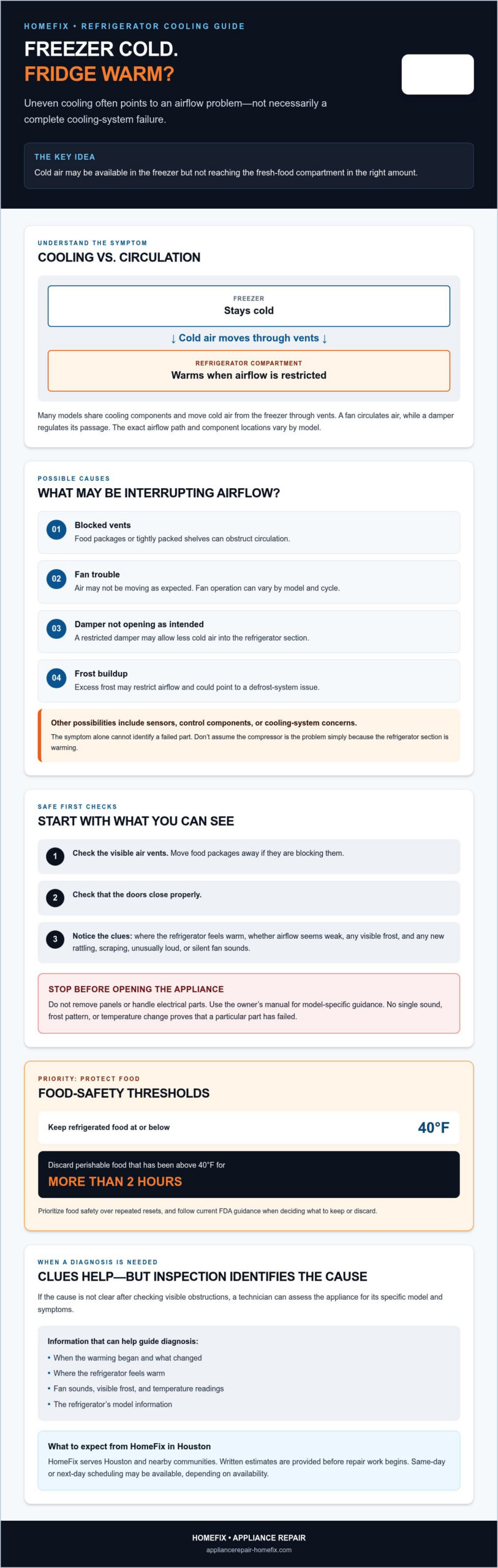
When the freezer stays cold but the fresh-food compartment warms, the appliance is cooling unevenly. That doesn’t automatically mean it has stopped making cold air. Many models use shared cooling components, with airflow controlling how much cold air reaches each compartment. If that airflow is restricted, the freezer can remain cold while the refrigerator gets too warm.
Many refrigerators move cold air from the freezer into the fresh-food section through vents. The appliance’s design determines where the air travels and how it is regulated. For a general overview of how refrigerators work, including cooling and defrosting, see Wikipedia. For your refrigerator’s specific airflow path, consult the owner’s manual.
How air moves between refrigerator compartments
In models that share air between compartments, a fan circulates cold air, while an air damper controls the passage between the freezer and refrigerator. If the damper doesn’t open as intended, less cold air may reach the fresh-food section. The damper’s design and location vary by model, so check the manual rather than removing covers to look for it.
Why one compartment can warm while the other stays cold
Blocked vents, fan trouble, or frost buildup can restrict airflow. Food near a vent may feel especially cold, airflow may seem weak, or frost may be visible. These are clues, not confirmation of a particular fault. A sensor or another cooling-system issue can also contribute to uneven temperatures. Identifying the cause requires an inspection specific to the model.
The symptom alone can’t tell you whether a fan, damper, sensor, or other part has failed. Don’t assume the compressor is the problem simply because the refrigerator section is warming. If you’re searching for “refrigerator freezer cold but fridge warm Houston,” focus first on the difference between cooling and circulation. The freezer can remain cold even when air isn’t moving properly into the refrigerator. HomeFix technicians diagnose refrigerator problems, including airflow and defrost concerns. For brand-specific information, see Sub-Zero repair in Houston.
What Causes a Warm Fridge and a Cold Freezer?
When the freezer is cold but the refrigerator isn’t, check airflow first. Cold air may be available but not reaching the fresh-food compartment in the right amount. Blocked vents can impede circulation, while a damper that doesn’t open properly or an evaporator fan that isn’t moving air as expected can cause a similar pattern.
Blocked vents, an air damper, or an evaporator fan
Check whether food packages are pressed against the interior vents. A tightly packed shelf can obstruct circulation and contribute to uneven cooling. A stuck damper may also restrict airflow into the refrigerator section. Fan trouble is another possibility. A new rattling, scraping, or unusually loud sound, or a fan that seems silent, may offer useful clues, but sounds alone don’t confirm a fault. Fan operation can vary by model and operating cycle.
Note where the refrigerator feels warm and whether the pattern changes. For example, differences between shelves may help a technician understand how air is moving. Avoid removing panels to investigate hidden parts. Airflow paths and component layouts vary, so use the owner’s manual for model-specific guidance.
Frost buildup, sensors, and cooling-system faults
Excess frost around an internal area may restrict airflow and could point to a defrost-system issue. Visible frost alone doesn’t confirm the cause. A technician needs to inspect the appliance and consider its design and symptoms. Temperature sensors or control components may also be involved if the refrigerator isn’t responding as expected.
A cooling-system problem can also affect temperatures in different ways. Compressor or sealed-system concerns require professional assessment, not a guess based on the freezer feeling cold. A technician may consider the frost pattern, fan sounds, temperature readings, and model information to narrow down the cause. Tell them when the warming began and what changes you’ve noticed.
Protect food while arranging next steps. The USDA explains safe refrigeration practices for storing perishable food. If the cause isn’t clear after you check for visible obstructions, consider professional refrigerator repair. “Refrigerator freezer cold but fridge warm Houston” describes a symptom, but an on-site diagnosis is needed to identify the cause and determine whether a part has failed.
Which Safe Checks Can You Try Before Calling for Refrigerator Repair?
Start with checks that don’t require tools or opening the appliance. If the refrigerator is still warming, don’t keep resetting it or try to reach hidden components. These steps can help rule out simple airflow or door issues and provide useful details for a technician.
Check settings, vents, and refrigerator loading
Try these visible checks first:
- Confirm the temperature settings. Make sure the controls haven’t been changed accidentally. Check your owner’s manual for recommended settings and instructions for your model.
- Clear the air vents. Move food containers away from vents inside both compartments. Leave room for air to circulate rather than packing shelves tightly.
- Check the doors and seals. Make sure each door closes fully. Look for visible dirt, gaps, or damage along the gaskets, and note anything that could prevent a door from sealing.
These checks may help with a “refrigerator freezer cold but fridge warm Houston” symptom, but they can’t confirm whether a hidden component is working properly.
Inspect for frost and monitor temperatures safely
Look for visible frost inside the compartments, but don’t remove panels, chip at ice, or use sharp tools. If you see heavy frost or hear unusual sounds, record what you notice rather than trying to inspect behind interior covers.
Use an appliance thermometer to check temperatures, then compare your readings with the FDA’s safe food storage temperatures. The refrigerator should be at or below 40°F, and the freezer at or below 0°F. Follow current FDA guidance when deciding how to handle perishable food if the refrigerator is too warm.
Keep a short log for the service visit. Note the temperature in each compartment, when the problem began, any changes you made, and sounds such as rattling or scraping. Don’t remove covers or handle wiring, fans, or other electrical parts. If clearing vents and checking settings don’t help, arrange a professional inspection. HomeFix provides refrigerator repair, and your notes can help the technician assess the issue.
How to Protect Food and Know When to Stop Troubleshooting
Protect the food first. Repeated resets or prolonged troubleshooting won’t help if the refrigerator is staying too warm. Keep the doors closed as much as possible while checking temperatures, since frequent opening lets cold air escape. Use an appliance thermometer rather than relying on how the compartment feels, and follow the FDA’s guidance on safe food storage temperatures.
What to do with food while the fridge is warm
Keep refrigerated food at or below 40°F and the freezer at or below 0°F. If perishable food has been above 40°F for more than two hours, FDA guidance is to discard it. Don’t taste food to decide whether it’s safe. If you’re unsure how long it has been warm, use current food-safety guidance to make a cautious decision.
Track the temperature and how long the refrigerator has been outside the safe range. That information can help you make decisions about food instead of relying on a quick reset or a brief change in how cold the air feels. Prioritize perishable items and avoid repeatedly opening the doors while assessing the situation.
When continued DIY checks are not the right next step
Stop troubleshooting if the next step would involve removing panels, working on electrical parts, or accessing the sealed cooling system. Those tasks require professional assessment. Arrange help if the refrigerator temperature remains above the safe range after basic checks, starts warming again, or is accompanied by unusual or worsening noises.
A freezer that still feels cold doesn’t guarantee that food in the refrigerator section is safe. If you’re searching for “refrigerator freezer cold but fridge warm Houston,” focus on temperature readings and food safety first. Then arrange a diagnosis instead of repeating resets. A technician can inspect the appliance and determine whether an airflow or cooling-system issue needs repair.
How HomeFix Diagnoses Refrigerator Cooling Problems in Houston
A freezer that stays cold while the refrigerator warms gives a technician a useful starting point, but it doesn’t identify a failed part by itself. HomeFix technicians perform on-site diagnostics, taking the refrigerator’s model and symptoms into account. They can assess airflow and related components, such as the fan, damper, or defrost system, before recommending a repair.
What to prepare before a refrigerator service visit
A few details can help focus the inspection. Before the appointment, gather:
- The brand and model number, usually found on a label inside the refrigerator or freezer compartment.
- Temperature readings from each compartment and when you took them.
- When the problem began, and whether it comes and goes or has stayed consistent.
- Any changes or clues, such as visible frost, clicking, buzzing, rattling, or sounds that seem related to a fan.
- Checks you’ve already tried, such as clearing vents or confirming the temperature settings.
Don’t remove panels or try to reach internal parts to gather more information. Your observations are useful, but diagnosis should come from an inspection specific to the model.
Local scheduling, estimates, and repair follow-up
HomeFix serves Houston and nearby communities, including Katy, The Woodlands, Sugar Land, Cypress, Pearland, and Fulshear. Appointments use three-hour arrival windows. Same-day or next-day scheduling may be available, depending on availability. A technician explains the diagnosis and provides a written estimate before repair work begins, so you can review the recommended work before deciding how to proceed.
After an approved repair, HomeFix provides a three-month labor warranty and a one-year warranty on most replacement parts. Ask about the terms that apply to your specific repair and part. If you’re dealing with a “refrigerator freezer cold but fridge warm Houston” problem, sharing your readings and symptom history can help the technician investigate without guessing which component has failed.
To arrange a refrigerator service visit, share your observations and ask the technician to inspect the cooling issue on-site.
Schedule refrigerator service
Take the Next Step Toward Reliable Cooling
A cold freezer doesn’t rule out a problem affecting airflow to the refrigerator compartment. Check the settings, clear visible vent obstructions, and track temperatures, but don’t remove panels or handle electrical parts. If the refrigerator remains too warm or the problem returns, protect perishable food and arrange a professional diagnosis.
For a “refrigerator freezer cold but fridge warm Houston” issue, HomeFix technicians can inspect the appliance and assess possible airflow or cooling-system causes. Technicians receive ongoing brand-specific training, and you’ll get a written estimate before repair work begins. Repairs include a three-month labor warranty and a one-year warranty on most replacement parts.
With a diagnosis, you can decide on the next step based on the refrigerator’s actual condition.
Frequently Asked Questions
Why is my freezer cold but my refrigerator warm?
This often means cold air isn’t reaching the refrigerator compartment properly, even though the freezer is still cold. Possible causes include blocked vents, a fan problem, a stuck air damper, frost buildup, or a sensor issue. “Refrigerator freezer cold but fridge warm Houston” describes the symptom, not a confirmed diagnosis. The refrigerator’s model and an on-site inspection help identify the cause.
Can a blocked vent make the refrigerator warm while the freezer stays cold?
Yes. If food packages block vents, cold air may not circulate from the freezer into the refrigerator section as intended. Move items away from visible vents and avoid packing shelves too tightly. If the fridge stays warm after you clear the airflow path, another issue may be involved. A blocked vent is one possible cause, not proof that it’s the only problem.
How long can food stay in a refrigerator that is not cold?
Use an appliance thermometer. The refrigerator should stay at or below 40°F. Perishable food that has been above 40°F for more than two hours should be discarded. Don’t rely on smell or taste to judge whether food is safe. If perishable food is left at room temperature, the limit is two hours, or one hour when the surrounding temperature is above 90°F.
Is it safe to keep using a refrigerator when the freezer is cold but the fridge is warm?
The appliance may still run, but a cold freezer doesn’t mean food in the refrigerator is being kept safely cold. Check the refrigerator temperature with an appliance thermometer, keep the doors closed as much as possible, and follow current FDA food-safety guidance for questionable perishables. Avoid repeated resets or attempts to inspect internal parts. If the refrigerator remains above 40°F, prioritize food safety and arrange a diagnosis.
Can I fix a warm refrigerator compartment myself?
You can try basic checks that don’t involve dismantling the appliance: confirm the temperature setting, clear visible vents, make sure the doors close, and inspect the door seals. Consult the owner’s manual for model-specific guidance. Don’t remove panels, handle wiring, or work on the sealed cooling system. If these checks don’t help, a technician can assess the refrigerator and identify the cause safely.
When should I call a refrigerator repair technician in Houston?
Call if the refrigerator stays too warm after basic checks, the problem returns, or you notice unusual noises or heavy frost. HomeFix technicians diagnose refrigerators for residents in Houston and nearby communities, including Katy, The Woodlands, Sugar Land, Cypress, Pearland, and Fulshear. They inspect the appliance on-site and provide a written estimate before work begins.


