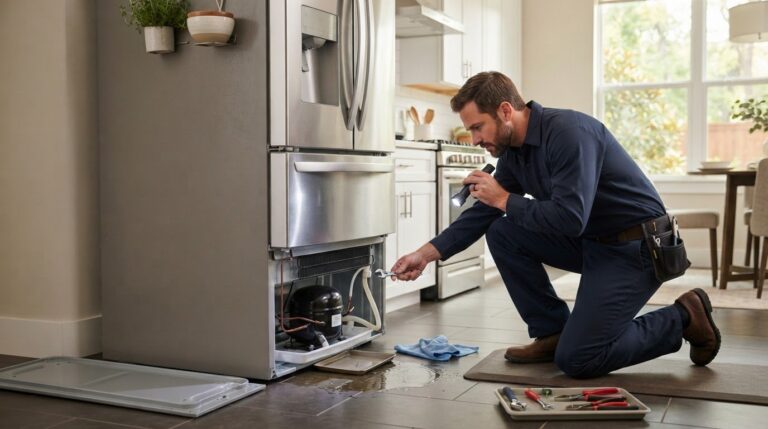
A puddle beneath the refrigerator often points to a clogged defrost drain or a problem with the drain pan or water line. To prevent refrigerator leaks in Cypress, inspect the pan and drain, and check visible water-line connections for moisture. Before clearing a clogged defrost drain, unplug the refrigerator. Warm water applied with a turkey baster can help flush it.
A leak can feel urgent, especially when water spreads across the kitchen floor. This guide explains how to spot common causes, inspect and clean the drain pan, and safely check the defrost drain. You’ll also learn when recurring frost, continued leaking, or an internal component problem calls for professional repair. Start with simple checks, then use the leak’s location and pattern to decide what to do next.
Key Takeaways
- Trace where the water appears to narrow down whether the leak may come from a drain, pan, or water-line connection.
- Inspect ice-maker lines and connectors for signs of aging, cracking, or moisture before a small leak spreads.
- Check the drain pan for damage and clean it carefully so it can collect water and allow it to evaporate.
- Look for other common leak sources, including a worn door gasket, loose filter connection, or faulty ice-maker part.
- Get professional repair help when leaking continues, frost returns, or the cause is difficult to reach safely.
1. Clogged defrost drains
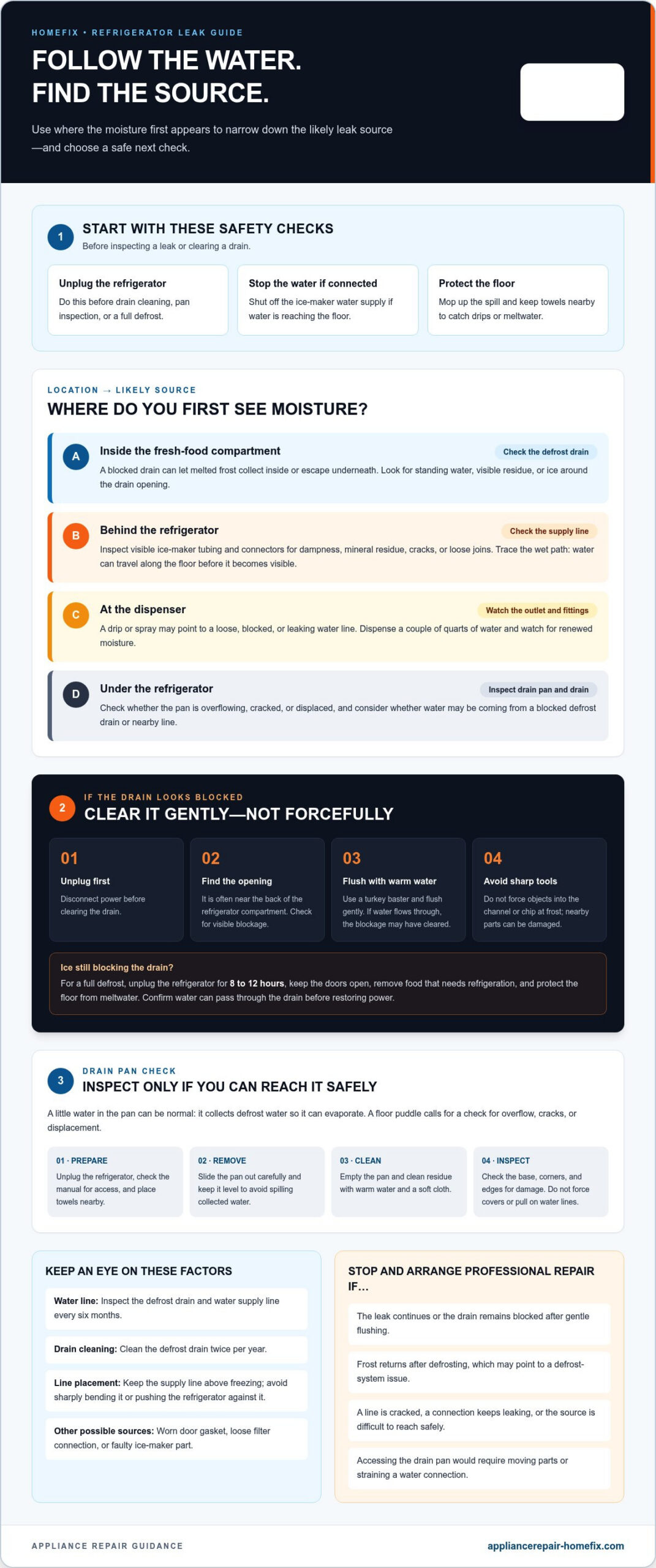
A clogged defrost drain can send water onto the kitchen floor instead of directing it to the drain pan. During a refrigerator’s defrost cycle, melted frost flows through this small channel. Food particles, ice, or other debris can block it, causing water to collect inside the refrigerator or escape underneath. Note where you first see moisture: water inside the fresh-food compartment can point to a blocked drain.
Before clearing the drain, unplug the refrigerator. Find the drain opening, often near the back of the refrigerator compartment, and check for visible blockage. Gently flush the drain with warm water using a turkey baster. If water flows through, the blockage may have cleared. Don’t force sharp objects into the channel, since they can damage the drain or nearby parts. Keep towels nearby to catch spills.
Ice can also block the drain, even when no food debris is visible. For a full defrost, unplug the refrigerator for 8 to 12 hours and protect the floor from meltwater. Keep the doors open during this process and remove food that needs refrigeration. Don’t use a sharp tool to chip away at frost. Once the ice has melted, inspect the drain opening and confirm water can pass through before restoring power.
Regular maintenance can catch restrictions before water spreads. Inspect the defrost drain and water supply line every six months, and clean the drain twice per year. Look for standing water, visible residue, or ice around the drain opening. Check the drain pan beneath the refrigerator for water or signs of overflow, too. A clean opening and an unobstructed path help melted frost reach the pan, where small amounts can evaporate.
- Unplug the refrigerator before drain cleaning or full defrosting.
- Flush a clogged drain gently with warm water using a turkey baster.
- Inspect for returning ice, standing water, or repeated moisture on the floor.
If frost returns after defrosting, the blockage may not be the only problem. A recurring buildup can signal an issue with the refrigerator’s defrost system, which may need professional repair. Stop repeating full defrosts if water keeps returning or the drain remains blocked after gentle flushing. For local context, see the Cypress appliance service-area page. A persistent leak can damage nearby flooring, so note when it appears and whether it follows a defrost cycle.
2. Why Is My Refrigerator Leaking Water?
If water reaches the floor, unplug the refrigerator, shut off the ice-maker water supply if connected, and mop up the spill. Then check for moisture near the water line, filter, dispenser, and refrigerator base to find where it starts.
An aging ice-maker supply line can crack or loosen at a connector, allowing water to escape behind the refrigerator. Inspect visible tubing and connections for dampness, mineral residue, or splits. Check where the line joins the refrigerator and the household water supply. A concealed leak may travel along the floor before appearing, so trace the wet path instead of assuming the nearest puddle marks the source.
Pay attention to the line’s material and placement. Refrigerator water-line installation guidance recommends copper tubing to help prevent off tastes and odors in water and ice. Whatever type is installed, keep the line in an area that stays above freezing. A frozen section can interrupt water flow, while thawing may reveal a weak connection or damaged tubing. Don’t pull or sharply bend the line when moving the refrigerator, as pressure can strain its connectors.
A dispenser that drips or sprays may point to a loose, blocked, or leaking water line. When troubleshooting a leaking dispenser, dispense a couple of quarts of water and watch the outlet and nearby fittings for renewed moisture. After a dispenser leak, let the refrigerator run for a full day and monitor the area. If water appears behind the unit rather than at the dispenser, inspect the supply connection and internal line instead of repeatedly using the dispenser.
Use this quick check to narrow down the source:
- Water behind the refrigerator: Inspect the ice-maker supply line and connectors.
- Water at the dispenser: Check for dripping and observe whether dispensing water changes the leak.
- Weak or interrupted flow: Look for a kinked or frozen supply line, and confirm its route stays above freezing.
After finding moisture, avoid pushing the refrigerator back against the wall until the line and connections are dry and secure. If a connection continues leaking, or the line is cracked or difficult to reach, stop using the ice maker and water dispenser. A persistent supply-line leak needs repair at its source; drying the floor alone won’t prevent more water from escaping. For a continuing refrigerator leak, professional refrigerator repair can address faults in the appliance’s water system.
3. Cleaning and inspecting drain pans
The drain pan sits beneath the refrigerator and catches water from the defrost process. It holds small amounts until they evaporate. A little water in the pan can be normal, but a puddle on the kitchen floor calls for inspection. Check whether the pan is overflowing, cracked, displaced, or receiving water from a nearby leak. A damaged pan can release water even when the defrost drain is clear.
Before cleaning, unplug the refrigerator and consult its manual for the drain pan’s location and access method. Some pans are accessible from the front; others require access near the lower rear panel. Don’t force a cover or pull on the water line to reach the pan. If you can’t access it without moving parts or straining a connection, stop and arrange a professional inspection.
For a pan you can safely reach, follow this sequence:
- Place towels around the refrigerator to catch drips during removal.
- Slide out the pan carefully, keeping it level so collected water doesn’t spill.
- Empty the water, then clean residue with warm water and a soft cloth.
- Dry the pan and inspect its base, corners, and edges for cracks or distortion.
- Return it to its original position and check that it sits flat beneath the drain outlet.
Check the seams and corners closely, where small cracks can be easy to miss. A hairline split, brittle area, or warped edge may let water escape onto the floor. Don’t rely on a surface patch to contain a damaged drain pan. A replacement needs to fit the refrigerator and sit correctly beneath the drain outlet. If the pan is cracked or difficult to remove, professional refrigerator repair can help identify the right fix.
After reinstalling the pan, check the floor and the space beneath the refrigerator for fresh moisture. Trace any new wet path toward the pan, water line, or nearby connection. A damp spot directly below a pan edge suggests overflow, poor placement, or damage; moisture near the water line points elsewhere. This distinction helps avoid mistaking a pan problem for a supply-line leak.
Pair a pan inspection with routine defrost-drain maintenance, but don’t assume a clean pan rules out a blockage. Restricted drainage can cause an overflow, while a cracked pan can leak even when the drain is open. The pan may sit behind a lower panel, so follow the model’s access instructions. Keep the floor dry and monitor the area after cleaning. If water returns, note where it appears and whether the pan contains water.
4. Common causes of refrigerator water leaks
To prevent refrigerator leaks in Cypress, start by locating the first damp spot. Moisture behind the refrigerator can point to a water-supply connection, while water inside the cabinet may suggest a blocked drain or defrost issue. Check whether the leak follows use of the dispenser or ice maker. Trace the wet path rather than assuming the nearest puddle marks the source.
Common causes include a cracked drain pan, condensation from a door gasket that doesn’t seal, an overfilled ice maker, or a loose internal water line. A damaged ice-maker inlet valve can also leak onto the floor. Look for frost, wet shelves, or drips near the freezer and refrigerator compartments. These clues can help distinguish a drainage issue from a water-line leak.
To reduce the risk of a water-line leak, unplug the refrigerator, shut off the water supply, and let the remaining water drain before connecting the line. Flush the tubing into a bucket or sink until the water runs clear, then connect it and secure a clamp around the supply line. After turning the water back on, inspect every connection before moving the refrigerator into place or reconnecting power. Installation guidance recommends flushing several gallons through the line to clear air and residual contaminants.
Check the water filter if moisture appears near its housing. A filter can leak if it’s cracked, the wrong size, or fitted with a loose connection. Replace it according to the manufacturer’s instructions, usually every 6 months. After installation, look for dampness around the filter and connection. Water can run down the cabinet and appear to come from another component.
Periodically inspect the ice-maker water line and connectors for aging, cracks, or moisture. Replace visibly damaged tubing rather than relying on a tightened fitting to stop a crack. Keep the line away from areas that can freeze. A frozen section can restrict water flow, and thawing may reveal a weak connection.
There’s no listed replacement interval for water lines. Inspect them periodically and replace damaged or cracked tubing; follow the filter maker’s instructions for filter changes. These checks are more useful than replacing an intact line on an arbitrary schedule.
Water left behind cabinets or beneath flooring can damage materials, and persistent dampness can create conditions where mold may grow. Mop up spills promptly, dry the area, and check for continued moisture. Preventing refrigerator leaks in Cypress also means acting when water returns after you check a filter, line, or valve. Stop using the ice maker and dispenser until the source is addressed.
5. When to call an appliance repair professional
Call a repair professional when a leak returns after basic checks, comes from an internal component, or can’t be traced safely. For homeowners preventing refrigerator leaks in Cypress, recurring moisture is a sign to stop repeating the same cleaning steps and find the source. Keep the refrigerator unplugged if water reaches its cord or outlet. Don’t pull it out if the water line is taut or difficult to see.
Recurring frost after a full defrost also calls for service. It can point to a fault in the refrigerator’s defrost system, which melting the ice won’t fix. Note where frost forms and whether water appears after a defrost cycle. This record helps a technician understand the pattern and assess the relevant components.
Arrange an inspection if water continues after you check accessible parts, or if a cracked pan, inlet valve, or internal connection needs attention. Preventing refrigerator leaks in Cypress means addressing a persistent leak at its source, not just drying the floor. Stop using the ice maker and dispenser if their supply connection continues to leak. Avoid moving the appliance if doing so could strain the tubing.
Use these signs to decide on your next step:
- A clear, one-time spill: Dry the floor and watch the area during normal refrigerator use.
- Water returns after a basic check: Arrange repair instead of repeating the same maintenance.
- Water near an outlet or cord: Stay clear of wet electrical parts and get help.
- Hidden moisture or recurring frost: Stop DIY work and share the pattern with a technician.
Before an appointment, note where the water first appeared and whether you had used the dispenser or ice maker. Record any recent filter change or refrigerator movement, too. These details can help narrow down the cause. Preventing refrigerator leaks in Cypress starts with noticing what changes before a leak appears, then acting when the problem persists or involves a hard-to-reach part.
Professional refrigerator repair can help diagnose leaks linked to internal lines, valves, or defrost-system faults. Contact a technician when basic checks haven’t stopped the leak or investigating it would mean handling electrical parts or forcing access.
Request refrigerator leak repair
That report is a reminder to treat a supply-line leak as more than a cleanup task, even when the visible water seems limited. If moisture is coming from the ice-maker connection, stop using the ice maker and arrange an inspection rather than waiting to see whether the leak grows.
When speaking with the technician, explain what you observed and where the water appeared in relation to the refrigerator and its water connection. Mention whether the leak seemed continuous or appeared after using the ice maker or dispenser. Keep clear of wet electrical areas, and don’t try to reach a concealed pipe by shifting the appliance. A timely professional assessment can help identify whether the line or another internal part needs attention and guide the repair.
HomeFix: Refrigerator Repair
HomeFix repairs refrigerators when a leak continues after basic checks or points to an internal part, such as a defrost-system fault or water inlet valve. Share where the water appears, whether frost returns, and which connections or drains you inspected. These details help focus on the likely source rather than just treating the puddle. Contact HomeFix when a leak is difficult to reach safely, keeps returning, or threatens flooring near electrical components. Our technicians can diagnose and repair refrigerator problems, including persistent leaks. Call HomeFix or book refrigerator repair online.
Build a Simple Leak-Prevention Habit
A practical approach to preventing refrigerator leaks in Cypress is to make leak checks part of ordinary kitchen care. Keep a brief note of any moisture, including where it appeared and whether it returned after cleaning. This record can reveal a pattern that’s easy to miss during a busy day. It also gives you a clear starting point if the refrigerator needs attention later.
Use that information to make a calm, informed decision. A one-time spill with an obvious cause may need only cleanup and observation. A leak that keeps returning, spreads, or remains difficult to trace deserves a closer look. Don’t wait for repeated water to disrupt your kitchen routine. Acting while the signs are clear can help you avoid guesswork and choose the right next step.
Stay observant, keep useful notes, and take the next step with confidence.
Frequently Asked Questions
Why Is My Refrigerator Leaking Water?
A refrigerator may leak because water can’t drain properly, or because a water-carrying part has loosened, cracked, or failed. The location offers a useful clue: moisture inside the fresh-food compartment can suggest a drainage issue, while dampness near the rear can point to a supply connection. Check whether the leak appears after using the dispenser or ice maker. Note the pattern before moving the refrigerator or changing settings.
When should I call a professional for refrigerator repair?
Call a repair professional if water returns after a basic inspection, the leak comes from an internal component, or you can’t safely reach the suspected part. Recurring frost after defrosting also deserves attention because the defrost system may need repair. If water is near the refrigerator’s plug or outlet, don’t touch wet electrical areas. Keep people away from the spill and arrange an inspection.
How do I unclog a refrigerator defrost drain safely?
Unplug the refrigerator before working on its defrost drain. Gently flush the drain opening with warm water using a turkey baster, and catch spills with a towel. Don’t push knives, wire, or other sharp objects into the channel, since they can damage nearby parts. If the drain stays blocked or ice quickly returns, stop and arrange an inspection rather than forcing water through the line.
What refrigerator leak-prevention maintenance should homeowners do regularly?
Build a simple schedule: inspect the water line and defrost drain every six months, and clean the drain twice per year. Check the door gasket monthly; wipe away grime and close the door on a paper strip to see whether it slips out easily. Replace the water filter according to its manufacturer’s instructions. Keep a note of moisture or frost so a recurring pattern doesn’t go unnoticed.
When should I call an appliance repair technician for a refrigerator leak?
Arrange a technician’s visit if the leak persists, returns after cleaning, or appears to come from a valve, internal line, or other hard-to-reach component. Before the appointment, record where water first appears and whether the dispenser or ice maker was used shortly beforehand. Share any recent filter changes or refrigerator movement. That timeline can help narrow down the source and focus the inspection.