The moment your refrigerator stops humming, the clock starts ticking on every perishable item inside. When cooling cuts out, taking quick action to stop spoiled food from broken fridge Pearland breakdowns can save your household from massive grocery losses. Staring at hundreds of dollars in meat, dairy, and produce while wondering if your appliance is completely ruined creates immediate, understandable stress. In Pearland’s warm, humid climate, rising indoor temperatures can push food into the bacterial danger zone faster than most homeowners realize.
You can protect your groceries and restore cooling fast with emergency food preservation steps and Pearland refrigerator repair solutions. Sticking to proven safety protocols keeps your family safe and takes the guesswork out of what you can salvage. This guide covers immediate thermal insulation steps to buy you valuable time, reliable rules to sort safe perishables from dangerous waste, and how to secure fast local diagnosis to get your kitchen running again.
Key Takeaways
- Act immediately within the critical four-hour window to stop spoiled food from broken fridge Pearland emergencies by keeping appliance doors sealed shut.
- Apply straightforward triage rules to separate safe pantry staples from hazardous meat, dairy, and leftovers exposed to temperatures above 40 degrees.
- Perform quick electrical and setting checks to rule out tripped breakers or thermostat mishaps before scheduling service.
- Learn how Pearland’s intense humidity and heat place extra strain on refrigerator components, speeding up potential spoilage.
- Secure fast local repair with same-day or next-day scheduling to restore reliable cooling and protect your household grocery investment.
Emergency Steps: The 4-Hour Rule to Stop Spoiled Food in Pearland
Mechanical failure requires immediate triage. When cooling hardware fails in your kitchen, you have a narrow operational window to protect your grocery investment. Taking quick, systematic steps will stop spoiled food from broken fridge Pearland breakdowns before bacteria can multiply across perishable shelves.
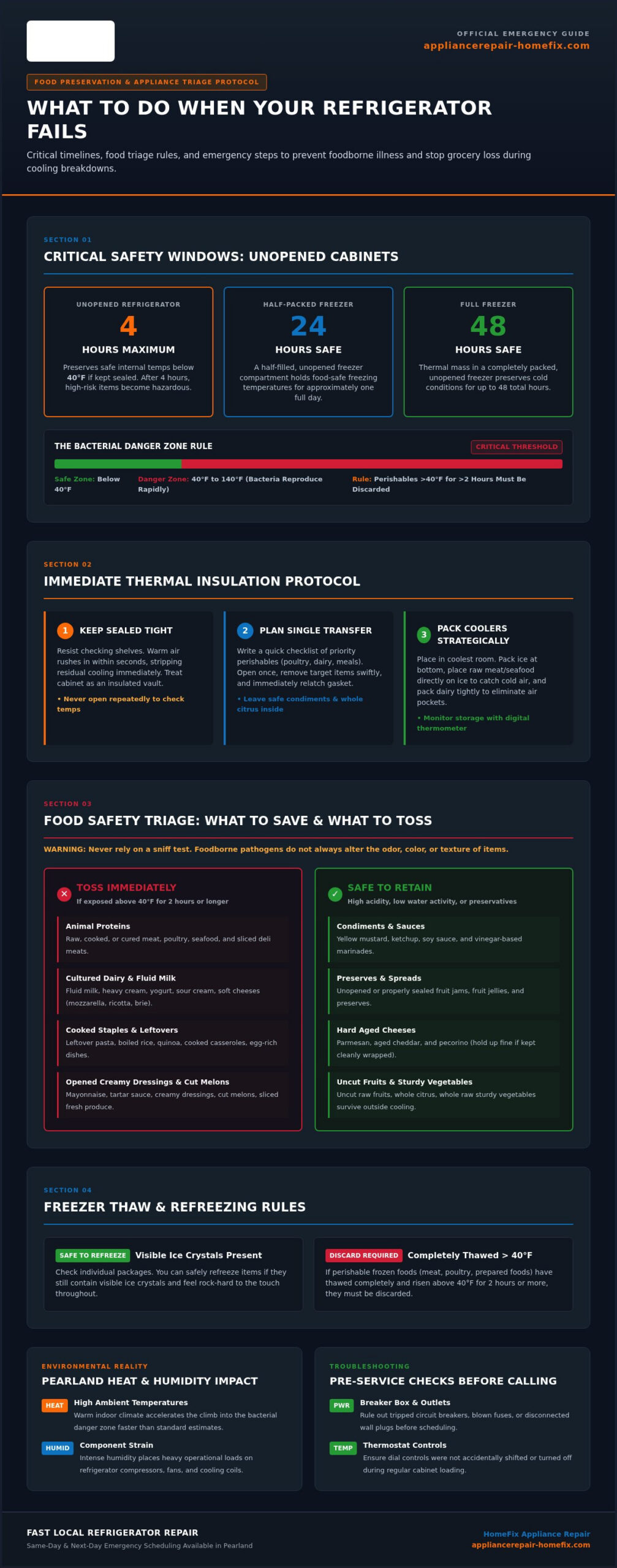
Establish a firm four-hour countdown starting the minute your cabinet loses active cooling. Food scientists confirm that an unopened cabinet preserves internal temperatures below 40 degrees Fahrenheit for approximately four hours. Once food enters the temperature danger zone between 40°F and 140°F, bacteria reproduce rapidly. After the four-hour mark, high-risk items like fresh meat, poultry, cut melon, and cooked leftovers become hazardous to consume.
Keep the Refrigerator Sealed Tight
Resist the urge to inspect shelves repeatedly. Every time the door opens, warm Texas air rushes in, stripping away residual cooling within seconds. Treat the cabinet like an insulated vault until you are ready to relocate supplies.
- Write a quick checklist: Note the exact locations of raw poultry, dairy cartons, and prepared meals before touching the handle.
- Execute a single transfer: Open the door once, remove your priority perishables immediately, and latch the gasket shut.
- Leave low-risk items: Keep sealed condiments, hard cheeses, and whole citrus inside rather than wasting cooler capacity on shelf-stable goods.
Deploy Emergency Coolers and Ice Packs
Heavy-duty insulated coolers serve as your frontline defense while waiting for appliance service. Set up your ice chest in the coolest room of your home, away from direct sunlight.
Pack the bottom with a solid layer of cubed ice or frozen gel packs. Place raw meats and seafood directly over this baseline to catch cold air and prevent juices from dripping onto other groceries. Pack dairy cartons, soft cheeses, and cooked leftovers closely together around additional ice blocks to eliminate air pockets. Verify that storage temperatures hold steady under 40°F using a calibrated digital kitchen thermometer probe inserted between packages. When implemented quickly, these thermal steps stop spoiled food from broken fridge Pearland failures and protect your family from foodborne illness.
Food Safety Triage: What to Save and What to Toss
Sorting through warming shelves requires strict, objective standards. Never rely on a sniff test. Dangerous foodborne pathogens do not always alter the odor, color, or texture of groceries. Following established standards on how to Keep Food Safe prevents painful gastrointestinal illness. Any perishable item exposed to temperatures above 40 degrees Fahrenheit for more than two hours belongs in the trash. Applying this rule systematically helps you stop spoiled food from broken fridge Pearland failures without taking unnecessary health risks.
High-Risk Perishables Requiring Immediate Disposal
Certain groceries degrade quickly and support explosive bacterial growth once internal temperatures climb. Toss the following items without hesitation if they sat above 40°F for two hours or longer:
- Animal proteins: Raw, cooked, or cured meat, poultry, seafood, and sliced deli meats.
- Cultured dairy and milk: Fluid milk, heavy cream, yogurt, sour cream, and soft cheeses like mozzarella, ricotta, or brie.
- Cooked staples: Leftover pasta, boiled rice, quinoa, and egg-rich casseroles.
- Opened dressings: Mayonnaise, tartar sauce, and creamy salad dressings.
Pantry-Stable Items Safe to Retain
Not everything in your refrigerator needs to go straight to the trash can. Foods with high acidity, low water activity, or natural preservatives tolerate temporary temperature spikes well.
You can safely keep unopened fruit jams, jellies, and preserves. Condiments like yellow mustard, ketchup, soy sauce, and vinegar-based marinades remain stable at room temperature. Hard cheeses such as parmesan, aged cheddar, and pecorino hold up fine if wrapped cleanly. Uncut raw fruits, whole citrus, and sturdy raw vegetables also survive safely outside cooling.
Freezer Thaw Guidelines and Refreezing Rules
Freezer compartments provide a substantially wider safety window. A full, unopened freezer maintains food-safe temperatures for approximately 48 hours. A half-packed freezer keeps frozen goods cold for about 24 hours.
Check packages individually before making a decision. You can refreeze items safely if they still contain visible ice crystals and feel rock-hard to the touch. If items have thawed completely but stayed under 40°F, cook them immediately instead of placing them back into freezer storage. Once warm air compromises your food supply, schedule prompt repair to get your system cooling again before stocking new groceries.
Quick Refrigerator Checks Before Calling for Service
Before assuming total mechanical breakdown, run through a few basic physical checks. A simple electrical trip or an accidental setting bump can mimic catastrophic system failure. Running through these troubleshooting steps helps you stop spoiled food from broken fridge Pearland situations if the issue stems from an easy fix. Remember that FDA food safety guidelines give you a strict time limit, so work efficiently while the doors remain closed as much as possible.
Verify Power Delivery and Thermostat Controls
Start with the electrical supply. Open the door briefly to verify whether the interior light turns on. If the cabinet stays dark, you are facing a power disruption rather than a failed sealed system.
- Check the circuit breaker: Head to your electrical panel. Locate the kitchen circuit and look for a switch sitting in a middle or tripped position. Flip it firmly off, then snap it fully back on.
- Test the outlet: Some kitchens route refrigeration through GFCI outlets. Check nearby counter receptacles to see if a ground fault button popped out.
- Inspect the dial: Tall grocery bottles can bump temperature wheels or touch pads. Make sure your controls are set to 37°F for the fridge and 0°F for the freezer.
Inspect Condenser Coils and Door Gaskets
Airflow restrictions often trigger sudden cooling losses. Pull the base grille or slide the unit forward to view the black condenser coils. A thick blanket of pet hair and household dust acts like insulation, preventing heat release and forcing the system into thermal overload. Vacuum the coils clean with a brush attachment.
Next, examine the rubber door seals along the perimeter. Look for torn corners, greasy residue, or loose magnetic strips that break the thermal barrier. Slide a dollar bill halfway through the door, close it, and tug gently. If the bill pulls out with zero resistance, your gaskets are leaking cold air.
Distinguish Fan Noise From Compressor Failure
Listen closely near the bottom rear and inside the freezer. You should hear the evaporator fan circulating air and a low, steady compressor hum. If you hear internal air moving but the cabinet stays warm, the cooling mechanism has stalled.
Pay close attention to rhythmic clicking sounds every two to three minutes. That sharp click indicates an overloaded compressor attempting and failing to start. When mechanical components stall completely, calling for professional refrigerator repair is the only reliable way to restore operation before spoilage occurs.
Why Pearland Heat and Humidity Accelerate Food Spoilage
Pearland’s humid subtropical climate creates distinct challenges for residential refrigeration. With average annual humidity sitting around 75% and summer temperatures frequently topping 90°F, ambient conditions force domestic cooling equipment to work harder than in drier climates. When hardware malfunctions occur during high heat, your margin of safety shrinks fast. Understanding how local weather patterns impact both food degradation and mechanical systems is essential to stop spoiled food from broken fridge Pearland incidents.
The Danger Zone in Coastal Texas Kitchens
Bacterial pathogens double in population every 20 minutes when food temperatures rest between 40°F and 140°F. While standard food preservation guidelines grant a four-hour window for an unopened unit, Gulf Coast heat erodes that buffer.
- Extreme indoor heat: If your air conditioning struggles or outdoor highs hit the 90s, indoor room temperatures can surge above 80°F. While maintaining reliable climate control with an HVAC contractor like Peters Heating & Cooling helps prevent kitchen temperatures from spiking, extreme room heat means milk, soft cheeses, and cooked meats become hazardous in just two hours instead of four.
- Moisture-driven contamination: Pearland’s intense humidity causes heavy condensation along door frames and gaskets when cooling stops. This moisture pooling creates an ideal breeding ground for airborne mold spores on exposed bread, fruit, and open leftovers.
Mechanical Strain Caused by Regional Weather
Coastal weather damages the appliance itself long before food starts to warm. Summer heat waves force condenser fans and compressors into prolonged, non-stop cycles, accelerating mechanical wear on motor bearings and start relays.
Severe thunderstorm activity across Brazoria County frequently triggers sudden voltage fluctuations and localized power flickers. CenterPoint Energy outage events and power grid sags introduce electrical spikes that can short out delicate digital inverter boards and main control assemblies. When an overworked compressor meets a sudden power surge, the internal motor windings can freeze entirely. To stop spoiled food from broken fridge Pearland failures during these weather events, you need fast professional diagnosis rather than waiting for internal temperatures to reach hazardous levels.
Schedule emergency refrigerator diagnostic service now
Fast Refrigerator Repair Solutions in Pearland
Emergency ice chests only buy you temporary peace of mind. To definitively protect your kitchen and restore food safety, you need professional mechanical intervention. HomeFix delivers reliable residential service across Pearland and the Greater Houston area, troubleshooting complex system breakdowns quickly. Prompt dispatch is the most effective long-term move to stop spoiled food from broken fridge Pearland disruptions before perishable losses escalate.
Prompt Local Response and Flexible Scheduling
Kitchen emergencies cannot sit on a waiting list for days. Technicians offer convenient same-day or next-day appointments throughout Pearland communities, from Shadow Creek Ranch to Silverlake. Every visit is booked within a predictable 3-hour arrival window, eliminating wasted afternoons spent waiting around your living room.
- Fully equipped service vehicles: Technicians arrive with genuine OEM parts and specialized diagnostic equipment to handle failures on the spot.
- Direct communication: You receive timely status updates so you know exactly when your technician will arrive at your door.
- Minimized downtime: Fast part changeouts ensure your appliance starts cycling refrigerant again before your cooler ice melts away.
Transparent Pricing and Strong Warranty Protection
Dealing with broken kitchen equipment should not involve confusing fee structures or high-pressure tactics. The standard $89 diagnostic fee drops to $69 and is applied directly toward the cost of your completed repair work. Technicians provide clear, upfront quotes in writing before lifting a wrench.
Every completed job comes backed by dependable protection. HomeFix covers all residential cooling repairs with a solid 3-month labor warranty and a full 1-year parts warranty. Utilizing manufacturer-approved replacement components protects internal circuits, prevents repeat breakdowns, and keeps your system running smoothly through heavy Texas heat waves.
Restore Your Refrigerator Without Delay
Act quickly before warm internal temperatures ruin expensive groceries or force you to toss out weekly meal prep. Factory-trained professionals bring extensive diagnostic experience on major brands, including Samsung, LG, Whirlpool, GE, and premium Sub-Zero built-in systems. Getting your cooling loop back to a calibrated 37°F is the single best way to stop spoiled food from broken fridge Pearland crises once and for all. You can easily schedule your Pearland appliance repair online at your convenience to secure your arrival window today.
Protect Your Kitchen and Restore Dependable Cooling Today
When unexpected cooling failures strike, immediate action makes all the difference. Keeping your appliance doors sealed buys four critical hours, while rapid cooler packing isolates vulnerable meats and dairy from Texas heat. Applying clear food safety standards eliminates uncertainty, ensuring you discard dangerous items before health risks emerge. Taking these fast steps helps you stop spoiled food from broken fridge Pearland disruptions and keeps your household safe.
Long-term food preservation requires prompt mechanical restoration. HomeFix provides factory-trained diagnostics for major brands like Samsung, LG, Whirlpool, GE, and Sub-Zero. Your standard $89 diagnostic fee drops to $69 and applies directly toward completed repairs, with every job protected by a 3-month labor warranty and a 1-year parts warranty.
Schedule same-day Pearland refrigerator repair with HomeFix
Don’t let refrigeration troubles derail your week. Local specialists are ready to restore your kitchen to peak performance quickly and reliably.
Frequently Asked Questions
How long can food sit in a broken refrigerator before spoiling?
An unopened refrigerator keeps food cold and safe for about four hours after cooling stops. Once internal temperatures rise above 40°F, bacteria grow rapidly. After two hours above 40°F, perishable items like poultry, beef, seafood, milk, and leftovers become hazardous. Keeping the doors closed is the fastest way to stop spoiled food from broken fridge Pearland breakdowns while you prepare ice or call for service.
Is food safe if my Pearland refrigerator stops cooling overnight?
Most perishable food is not safe if cooling stopped early in the night. An unopened cabinet protects food for roughly four hours, so an eight-hour failure exposes items to prolonged room temperature. High-risk foods like milk, deli meat, raw chicken, and soft cheeses should be tossed immediately. However, hard cheeses, unopened butter, whole fresh produce, and vinegar-based condiments can generally be saved.
Can I refreeze meat that thawed in a broken freezer?
You can safely refreeze meat only if it still contains visible ice crystals and feels completely cold to the touch. If meat has fully thawed but stayed below 40°F, do not refreeze it raw; cook it thoroughly right away. Discard meat entirely if it reached room temperature or spent more than two hours above 40°F, as refreezing will not eliminate bacterial toxins.
What temperature must my refrigerator maintain to keep food safe?
Your refrigerator should stay at or below 40°F, with 37°F considered the ideal setting for daily operation. Your freezer compartment should hold steady at 0°F. Temperatures between 40°F and 140°F represent the danger zone where bacteria multiply fast. Keep an inexpensive digital appliance thermometer on a middle shelf to track internal temperatures accurately during unexpected cooling disruptions.
What causes a refrigerator to suddenly stop cooling while the light stays on?
A refrigerator that lights up but does not cool usually has a failed start relay, a bad compressor, or a burned-out evaporator fan motor. Heavy dust build-up on condenser coils or a failed defrost control board can also shut down cooling loops while leaving interior lighting intact. Taking immediate diagnostic steps helps stop spoiled food from broken fridge Pearland issues before internal temperatures climb.
Will homeowners insurance cover spoiled food from a broken refrigerator in Texas?
Many Texas homeowners insurance policies provide food spoilage coverage, often ranging between $500 and $2,500 following a sudden mechanical breakdown or utility power outage. However, coverage depends on your policy terms and deductible. Take detailed photographs of spoiled groceries, keep receipts from emergency ice purchases, and check whether your deductible is lower than the total value of your lost groceries before filing a claim.
How fast can HomeFix technicians repair a refrigerator in Pearland?
HomeFix offers same-day or next-day service across Pearland with predictable 3-hour arrival windows. Technicians arrive fully prepared with OEM parts to diagnose and resolve cooling issues in a single visit. The standard $89 diagnostic fee is reduced to $69 and credited toward your completed repair, with all work backed by a 3-month labor and 1-year parts warranty.