A dishwasher flood often starts with a preventable problem: a loose connection, damaged door seal, drainage issue, or excess suds. To learn how to prevent a kitchen flood from a dishwasher in The Woodlands, inspect visible seals and connections, use detergent made for dishwashers, and watch for standing water or leaks. If water is spreading, stop the cycle and shut off the water supply if you can safely reach the valve.
Even a small leak can disrupt your kitchen, and its source isn’t always obvious. This guide explains common causes, how to check the door gasket and accessible connections, and when symptoms call for professional repair. You’ll also learn how detergent choice affects leaks and what to note if water appears, so you can respond promptly without guesswork.
Key Takeaways
- Notice where water appears and whether it is clean or dirty to help narrow down the likely source.
- Check the door gasket for trapped food, cracks, or deformation, and look over accessible supply and drain connections for leaks.
- Load dishes so they don’t block the spray arms or direct water toward the door vent.
- Use detergent made for automatic dishwashers and follow the amount recommended for your model.
- Stop using the dishwasher if it overfills, leaks underneath, trips a breaker, or keeps taking in water while off.
1. Why Did My Dishwasher Flood?
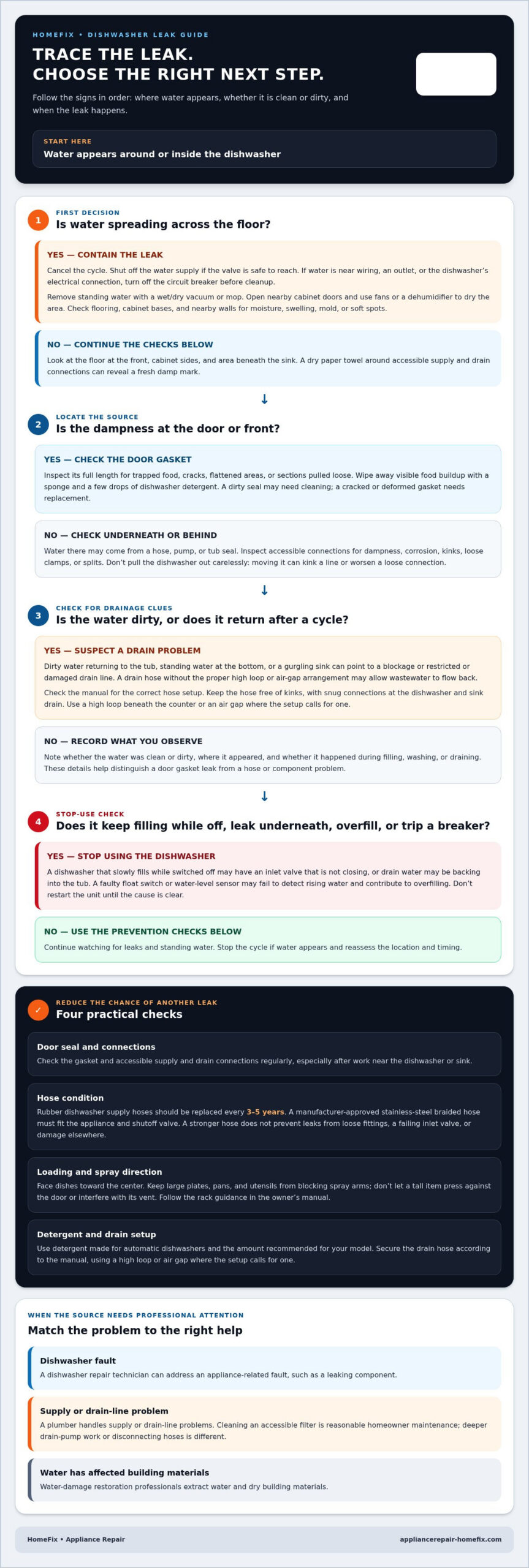
A dishwasher can flood because of a blocked drain, a faulty water-level control, a loose connection, or a leak near the door. Dirty water returning to the tub points to a drainage problem. Standing water at the bottom, a gurgling sink, or water returning after a cycle can also signal a blockage. A drain hose without a proper high loop or air-gap arrangement may allow wastewater to flow back. Understanding these causes helps homeowners prevent a kitchen flood from a dishwasher in The Woodlands.
Loading matters, too. Face dishes toward the center and keep large plates, pans, and utensils from blocking the spray arms. Don’t let a tall item press against the door or interfere with its vent. Check the owner’s manual for the rack layout and loading guidance for your model. A practical step in learning how to prevent a kitchen flood from a dishwasher in The Woodlands is to check that dishes won’t redirect spray toward the door before starting a cycle.
If a leak is spreading, cancel the cycle and shut off the water supply if its valve is safe to reach. If water is near wiring, an outlet, or the dishwasher’s electrical connection, turn off the circuit breaker before cleanup. Use a wet/dry vacuum or mop to remove standing water. Then open nearby cabinet doors and use fans or a dehumidifier to dry the area. Check the flooring beneath the appliance, cabinet bases, and adjacent walls for moisture, swelling, mold, or soft spots. Don’t pull the dishwasher out carelessly, since moving it can kink a line or worsen a loose connection.
A dishwasher that slowly fills while switched off may have an inlet valve that isn’t closing, or drain water may be backing into the tub. A faulty float switch or water-level sensor may also fail to detect rising water and contribute to overfilling. Stop using the unit if it keeps filling, leaks underneath, trips a breaker, or leaves standing water after cycles. Note whether the water was clean or dirty, where it appeared, and at what stage of the cycle. Those details help identify what to inspect next.
Leak-sensor, shutoff-valve, and installation prices depend on the equipment selected, model compatibility, and installation work. The price depends on the case and is provided after a quote request.
Texas homeowners insurance coverage depends on the policy wording, the leak’s cause, exclusions, and damage documentation. Record the leak’s location and timing, photograph affected areas, and review your policy terms with your insurer.
For an appliance fault, contact a dishwasher repair technician; a plumber handles supply or drain-line problems, while water-damage restoration professionals extract water and dry building materials. If the problem points to the dishwasher itself, the dishwasher repair service addresses appliance-related faults.
2. Dishwasher leaks from faulty seals, hoses, or components
A damp floor near the dishwasher door often points to the door gasket, while water underneath or behind the appliance may come from a hose, pump, or tub seal. Check the gasket across its full length. Look for trapped food, cracks, flattened areas, or sections that have pulled loose. Wipe away visible food buildup with a sponge and a few drops of dishwasher detergent. A dirty seal may only need cleaning, but a cracked or deformed gasket needs replacement. Replace it at the first signs of leakage.
Inspect accessible supply and drain connections regularly, especially after work near the dishwasher or sink. Look for dampness, corrosion, kinks, loose clamps, and splits. Don’t pull the dishwasher out carelessly to reach hidden hoses: moving it can kink a line, scratch flooring, or worsen a loose connection. If you find water near electrical wiring or the dishwasher’s connection, stop the cycle and cut power at the breaker before investigating further. Avoid touching wet electrical parts.
Rubber dishwasher supply hoses should be replaced every 3–5 years. For a flood-resistant supply connection, use a manufacturer-approved stainless-steel braided hose that fits the appliance and shutoff valve. Check the hose packaging and dishwasher manual for the correct connection size and installation directions. A stronger hose won’t prevent leaks caused by loose fittings, a failing inlet valve, or damage elsewhere, so inspect the connections after installation.
Secure the drain hose according to the dishwasher manual, using a high loop beneath the counter or an air gap where the setup calls for one. These arrangements help limit wastewater flowing back into the tub. Keep the hose free of kinks and make sure its connections at the dishwasher and sink drain are snug. If the dishwasher doesn’t drain or dirty water returns after a cycle, the drain line may be restricted or damaged and need repair or replacement.
Look over the dishwasher tub for cracks, splits, or holes, but don’t reach into sharp or inaccessible areas. A leak beneath the appliance may also come from a worn pump or tub seal, which requires more than cleaning an accessible filter. Note where water appears and whether it happens during filling, washing, or draining. Those details help distinguish a door gasket leak from a hose or component problem.
Homeowners should stop using the dishwasher if it leaks underneath, continues taking in water while off, or trips a breaker. For a suspected appliance fault, dishwasher repair service can address the leaking component; don’t restart the unit until the cause is clear.
Cleaning an accessible dishwasher filter is reasonable homeowner maintenance, but deeper drain-pump work or disconnecting hoses is a different matter. Contact a plumber at the first signs of leaking.
3. Inspecting dishwasher door seals and connections
To check for leaks, look around the dishwasher before and during a running cycle. Check the floor at the front, the cabinet sides, and the area beneath the sink. Use a dry paper towel around accessible supply and drain connections. A fresh damp mark can reveal a slow leak that’s hard to see. Stop the cycle if water appears, then shut off the supply valve if you can reach it safely.
Examine the door gasket from corner to corner. Look for food buildup, cracks, flattened sections, or a gasket that has pulled away from its channel. Wipe away debris with a sponge and a few drops of dishwasher detergent. Close the door and check whether it latches evenly. A loose or faulty latch may keep the door from sealing tightly, while a misaligned door can let water escape at the edges. Replace a cracked or deformed gasket rather than trying to reshape it.
Inspect visible plumbing connections beneath the sink and along the dishwasher’s accessible edges. Look for moisture, corrosion, loose clamps, kinks, and split hose surfaces. Check the drain hose connection at the sink or disposal, then look for a proper high loop or air-gap arrangement to limit wastewater backflow. Don’t pull the appliance out to reach hidden connections. That can kink a hose, scratch flooring, or worsen a loose fitting. Leave concealed connections for a technician.
Regular appliance and plumbing checks can catch small problems before they spread. Use this simple routine:
- Before running a cycle, clear food debris from the gasket and check that the door closes evenly.
- During a cycle, watch the front edge for drips and listen for sink gurgling.
- After the cycle, check the floor and the cabinet beneath the sink for dampness.
- Clean the accessible filter as directed in the owner’s manual, and clear a blocked sink air gap if your setup has one.
Maintenance also means noticing changes between checks. A new puddle, recurring moisture, standing water after a cycle, or dirty water returning to the tub points to a problem that needs attention. Keep the owner’s manual nearby for model-specific cleaning and troubleshooting steps. Don’t disconnect hoses or work on electrical parts during routine inspections.
Professional inspections can examine components that homeowners can’t safely reach, including hidden connections, the pump, and water-level controls. The recommended professional dishwasher inspection interval is at least once a month. Arrange service promptly if the dishwasher overfills, leaks underneath, trips a breaker, or continues taking in water while switched off. Don’t run it again until the cause is clear.
4. Using dishwasher-specific detergent in the recommended amount
Use detergent labeled for automatic dishwashers. Regular hand dish soap creates excessive suds, and foam can escape around the door or interfere with normal washing. Even a small amount of the wrong soap can produce more bubbles than the dishwasher can manage. Don’t substitute liquid dish soap, hand soap, or general-purpose cleaner for dishwasher detergent.
Follow the detergent package and your dishwasher owner’s manual for the right amount and placement. Detergent needs can vary with the product, load, and cycle. More soap won’t fix greasy dishes or poor cleaning. Excess detergent can leave residue, while too little may leave food behind. Measure each dose instead of filling the dispenser by guesswork, and use the compartment designed for your model.
Check the detergent tray before starting a cycle. Clear away hardened detergent or residue that could prevent the dispenser from opening properly. Make sure the tray is dry before adding powder or a tablet, and place the dose where the manual directs. Don’t put a tablet in the silverware basket unless your model’s instructions specifically allow it. A blocked or wet dispenser can affect detergent release and leave dishes unclean.
Clean the door seal as part of the same routine. Food caught along the gasket can prevent a tight seal and contribute to leaks near the hinges. Wipe visible debris with a sponge and a few drops of dishwasher detergent. Inspect the gasket as you clean. If it’s cracked or deformed, replace it rather than relying on repeated wiping. A clean seal still needs to sit evenly in its channel.
If suds appear at the door, stop the cycle and remove the foam before running the appliance again. Check which product went into the dispenser and whether you used the amount stated on the package. Don’t add more detergent to compensate for poor results. Instead, inspect the filter for food buildup and confirm dishes aren’t blocking the spray arms. These checks address common cleaning problems without adding more soap.
Keep detergent sealed and dry, away from moisture under the sink. Damp powder can clump, and a damaged container can expose detergent to spills or contamination. Store pods where children and pets can’t reach them, and handle them with dry hands. If the appliance manual permits, use its specified cleaning cycle and method. Avoid mixing cleaning products or pouring unapproved cleaners into the tray.
After correcting a detergent mistake, watch the next cycle for foam at the door and check the floor afterward. Repeated suds or leaking despite using the correct detergent may point to a seal or appliance fault, not a dosing issue. Stop using the dishwasher if water escapes, then identify the source before restarting it.
5. When to seek professional dishwasher repair
Stop using the dishwasher if it overfills, leaks underneath, or keeps taking in water while switched off. These signs can point to a failed inlet valve, water-level control, pump, or internal hose. A dishwasher that trips its breaker or leaves standing water after cycles also needs prompt attention. Don’t run another cycle to see if the trouble clears. Continued operation can send more water beneath the appliance and into cabinets.
Some checks are safe for homeowners. Clean the accessible filter, inspect the visible door gasket, and look for water around exposed connections. Don’t disconnect hoses, remove panels, or pull the dishwasher out to inspect hidden parts. These steps can worsen a leak, kink a line, or expose electrical components. A cracked tub, damaged wiring, or recurring leak needs professional diagnosis and repair.
Take these steps when a leak appears:
- Cancel the cycle and shut off the water supply if the valve is safely accessible.
- If water is near an outlet, wiring, or the electrical connection, turn off the circuit breaker.
- Keep clear of wet electrical parts, then remove standing water with a mop or wet/dry vacuum.
- Open nearby cabinet doors and use fans to dry the affected area.
- Note whether the water was clean or dirty, where it appeared, and which cycle stage had just occurred.
Your observations can help a repair technician narrow down the fault. Water at the door may point to a gasket or door adjustment. Water underneath may involve a pump, hose, or tub seal. Dirty water returning to the tub suggests a drainage issue. If the sink gurgles or water remains after a cycle, mention those symptoms during the service visit. Don’t use the appliance again until the cause of the flooding is clear.
After stopping the leak, check the floor, cabinet base, and nearby wall for moisture. Swelling, soft flooring, or a musty smell can signal water damage beyond the visible puddle. Appliance repair addresses the dishwasher fault; water extraction and structural drying address wet building materials. If water has reached hidden flooring or cabinets, include those areas in your cleanup plan.
Arrange dishwasher repair promptly for repeated leaks, overfilling, breaker trips, or water entering the tub while the appliance is off. A repair professional can test the controls and components without guesswork. Share your observations, and don’t restart the machine before the cause is identified.
Act quickly when you discover flooding rather than waiting to see if the water stops on its own. The first five minutes after discovering a kitchen flood are crucial for limiting water damage and reducing the risk of costly repairs. A dishwasher flood can result in repair costs of hundreds or even thousands of dollars, so a delay can have significant consequences.
If leakage is beginning at the door, arrange to replace the dishwasher door gasket when you first notice it; don’t wait for a larger puddle. Once immediate water risks are under control, tell the repair professional when the leak began and whether it has happened before. Addressing early signs promptly can help prevent a small fault from turning into a larger cleanup and repair problem.
HomeFix: Refrigerator Repair
HomeFix provides dishwasher repair when a leak, drainage fault, or repeated overfilling points to an appliance problem. Stop using the dishwasher until the cause of flooding is clear, especially if it leaks underneath, trips a breaker, or continues filling while off. Share where water appeared and what the dishwasher was doing. These details can help identify whether the issue involves a seal, hose, pump, or water-level control.
If water damage has reached cabinets or flooring, arrange appropriate water extraction and drying separately from the appliance repair. HomeFix also repairs refrigerators, washers, and dryers. Contact HomeFix to discuss a dishwasher problem or visit the HomeFix website.
Keep Your Kitchen Ready for the Next Cycle
Preventing a dishwasher flood starts with a routine you can repeat: notice changes, keep up with basic care, and stop using the appliance when a leak or fault appears. To prevent a kitchen flood from a dishwasher in The Woodlands, focus on catching small warning signs before they disrupt your household. If you suspect an appliance fault, professional dishwasher repair can identify what needs attention before you restart the unit.
HomeFix also offers refrigerator, washer, and dryer repair. Choose the service that fits the appliance causing trouble, and share the symptoms you’ve observed.
Take the next step with a clear plan, and keep your kitchen ready for the next cycle.
Frequently Asked Questions
Why Did My Dishwasher Flood?
A dishwasher floods when water enters faster than it drains or escapes through a failed seal or connection. Installation changes can also cause trouble, especially after a kitchen remodel, flooring replacement, garbage disposal installation, or dishwasher replacement. Notice whether flooding starts during filling, washing, or draining. That timing, along with whether the water is clean or dirty, helps distinguish an inlet issue from a drainage or leak problem.
What are the most common causes of dishwasher leaks and kitchen flooding?
Common causes include a damaged door gasket, loose or split hoses, a failing pump or water inlet valve, and a drainage restriction. Excess suds from hand dish soap can also push water or foam past the door. A float switch or water-level sensor that doesn’t detect rising water may contribute to overfilling. Check the owner’s manual for model-specific guidance, and don’t use the dishwasher again until the cause is clear.
What should you do immediately if a dishwasher floods your kitchen?
Stop the cycle and shut off the dishwasher’s water supply if the valve is safely reachable. If water is near wiring, an outlet, or the appliance connection, switch off the circuit breaker before approaching the wet area. Keep people and pets away from electrical hazards. Photograph the water’s location and any visible damage before cleanup, then remove standing water and open nearby cabinets to help expose damp areas.