A longer dishwasher cycle can be the more efficient setting. Most dishwasher cycles run for 1.5 to 4 hours, depending on the selected setting and operating conditions. If your dishwasher cycle takes too long in Fulshear, the timer alone doesn’t tell you whether there’s a problem.
It’s frustrating to wait on a load, especially when you expect a quick wash. But heavy-duty and sensor settings may take longer because they respond to soil levels or use extra time for washing and heating. This guide compares typical run times by setting, explains why efficient cycles can last longer, and shows how buildup or a clogged filter may affect performance. You’ll also learn what changes are normal and when a cycle that keeps running may point to a dishwasher issue.
Key Takeaways
- Most dishwasher cycles run for 1.5 to 4 hours, with the setting and operating conditions shaping the total time.
- Heavy-duty and high-temperature options can extend a wash, while quick cycles are intended for lighter loads.
- Longer cycles can use less water by washing over more time instead of relying on extra water.
- Food residue, mineral buildup, or a clogged filter can interfere with cleaning and affect cycle time.
- Learn which run-time changes are expected and when a cycle that keeps running may call for dishwasher repair.
Energy and water efficiency as reasons for longer cycles
Dishwashers may run longer to clean dishes while managing water use and heating. Cold incoming water, mineral deposits, or interrupted filling can also slow a cycle.
Efficiency and extended wash time
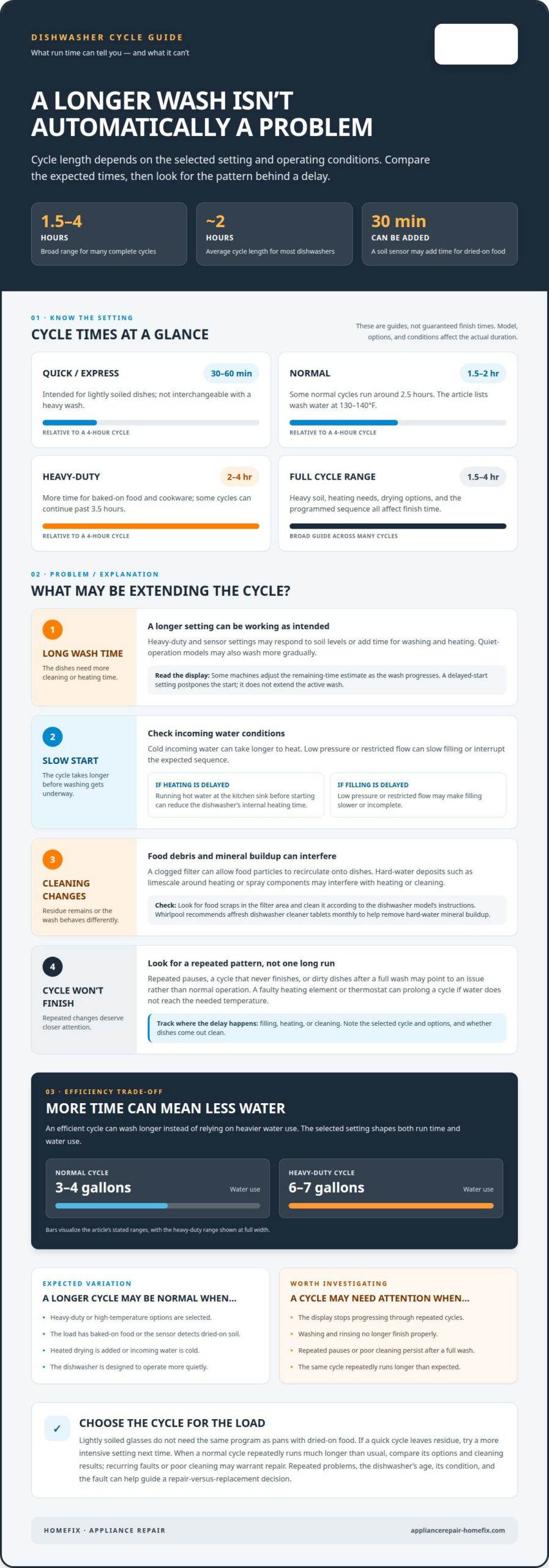
An efficient cycle can use less water by washing longer instead of relying on heavier water use. That tradeoff matters when a cycle seems slow but still cleans effectively. A normal cycle uses 3 to 4 gallons, while a heavy-duty cycle uses 6 to 7 gallons. The selected setting helps explain both run time and water use.
Hard water can leave mineral deposits, including limescale, on dishwasher parts. Buildup around the heating area or spray components may interfere with operation and make heating or cleaning take longer. Whirlpool recommends using affresh dishwasher cleaner tablets monthly to help remove hard-water mineral buildup. Persistent deposits may help explain a change in cycle behavior.
Water temperature also affects the time spent heating. A Normal cycle cleans with water at 130-140℉, so cold water entering the machine may require more heating before cleaning continues. Running hot water at the kitchen sink before starting the dishwasher reduces the time it spends heating water internally. Cold water entering the dishwasher may contribute to a delay at the beginning of a cycle.
Incoming water conditions
Incoming water conditions are the temperature and pressure of water reaching the dishwasher. They matter because the appliance needs to fill and heat water before washing can proceed. If the supply is cold, heating takes longer. If pressure is low, filling may be slower or incomplete, interrupting the expected wash sequence.
Household water temperature can vary with use. For example, after hot water has been used elsewhere, cooler water may reach the dishwasher first. A delayed-start setting is different: it postpones the cycle’s start rather than extending the active wash. Check the selected setting before judging the displayed finish time.
Low pressure or restricted flow can make filling take longer, while a hot-water delay can extend heating. If the same cycle repeatedly runs longer than expected, note whether the delay occurs during filling, heating, or cleaning. That pattern helps distinguish incoming-water conditions from a dishwasher fault. HomeFix’s dishwasher repair service addresses appliance problems affecting cycle operation.
Repair makes sense when a specific fault is disrupting cycles. Replacement may be worth considering when problems recur or cleaning remains poor. The appliance’s age, condition, and fault all help guide the decision.
A faulty heating element or thermostat can prolong a cycle if the water does not reach the needed temperature. The dishwasher may continue heating or pause before resuming the wash.
How long is a heavy-duty cycle?
A heavy-duty dishwasher cycle can run for 2 to 4 hours, depending on the model and selected options. Some heavy-duty cycles can continue past 3.5 hours. That longer run time is not automatically a fault. The load’s soil level, heating needs, drying choice, and the machine’s programmed wash sequence all affect when the cycle ends.
For comparison, a normal wash cycle typically runs for 1.5 to 2 hours, though some normal cycles last around 2.5 hours. Quick or express settings usually take 30 to 60 minutes. These are different programs, not interchangeable versions of the same wash. A quick cycle suits lightly soiled dishes, while heavy-duty settings provide more time for baked-on food and cookware.
Most dishwashers have average cycles of about 2 hours, while many complete cycles fall within a broader range of 1.5 to 4 hours. Treat those figures as a guide, not a countdown for every appliance. A model’s display, selected options, and operating conditions determine the actual finish time. For example, a heavy wash with heated drying can take longer than the same wash without that added option.
Quiet operation can also affect cycle length. A dishwasher designed to limit noise may wash more gradually, so it can run longer without indicating a breakdown. Still, watch for changes: repeated pauses, a cycle that never finishes, or dirty dishes after a full wash may point to a problem rather than normal quiet operation.
- Normal: typically 1.5 to 2 hours, with some cycles around 2.5 hours.
- Quick or express: 30 to 60 minutes, generally suited to lightly soiled dishes.
- Heavy-duty: about 2 to 4 hours, and sometimes beyond 3.5 hours.
Choose a cycle that matches the load instead of defaulting to Heavy. Lightly soiled glasses do not need the same program as pans with dried-on food. If a quick cycle leaves residue, try a more intensive setting next time. When a normal cycle repeatedly runs much longer than usual, note the selected options and whether the dishes come out clean. That helps distinguish an appropriate longer cycle from a change in performance.
Check the display before assuming the dishwasher is stuck. Some machines show remaining time, while others adjust the estimate as the wash progresses. A longer estimate after selecting heavy-duty or an added drying feature can be expected. If the display stops progressing through repeated cycles, or washing and rinsing no longer finish properly, dishwasher repair can address a cycle that isn’t completing normally.
Clogged filters, mineral buildup, and sensor film
Food debris, hard-water deposits, and residue on sensors can affect how a dishwasher washes. A soil sensor may add 30 minutes when it detects dried-on food.
Filter clogs and mineral buildup
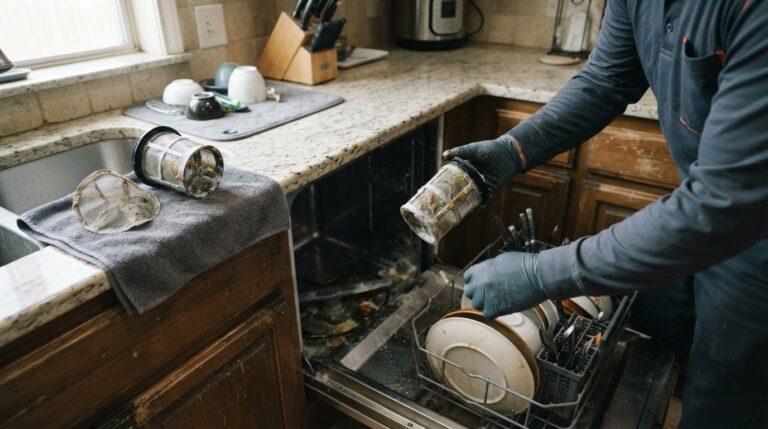
A clogged filter traps food particles, which can recirculate onto dishes and interfere with cleaning. If a cycle leaves residue, check the filter area for food scraps and clean it according to the dishwasher model’s instructions.
Hard water can leave mineral deposits on the dishwasher’s interior. Limescale around spray components or the heating area may make washing less effective. Cloudy glasses or white residue inside the tub can indicate mineral buildup, but they do not prove the filter is clogged. Check separately for trapped food.
Soil sensing and cycle timing
Soil sensors assess how dirty the wash water is and can adjust the cycle. This matters because a load with dried-on food can prompt more washing time. A sensor detecting dried-on food can add 30 minutes. The added time is part of the machine’s response to soil, rather than evidence by itself of a failed timer.
First-cycle sensor calibration is the initial assessment a model uses to set its wash response. During the opening part of a cycle, sensors can read water conditions and guide later cleaning steps. If the first cycle after a reset or installation runs differently, observe whether later cycles settle into a consistent pattern. Don’t assume every model calibrates in the same way.
Troubleshooting extended runs
When a cycle runs for hours, look for a repeatable cause before treating it as a fault. Note the selected setting, whether the cycle finishes, and whether the dishes are clean. Then check the accessible filter area for food debris and look for visible mineral film inside the tub. Follow the model’s care instructions before cleaning any component.
If a dishwasher runs for hours, check the selected cycle and options, then inspect the filter for trapped food. If it still fails to finish or cleaning remains poor, professional diagnosis may be needed.
Compare several cycles rather than judging from one load. A sensor may extend washing after detecting dried-on food, while residue can also point to poor water circulation or mineral buildup. Note whether the display advances and whether the dishwasher drains at the end. This pattern can help distinguish a normal sensor response from a recurring interruption.
A household may also have refrigerators with controls and sensors, but dishwasher cycle timing depends on its own wash system. Focus observations on the dishwasher: its displayed stage, filter condition, soil level, and final cleaning result. If those signs point to a persistent appliance problem, a technician can diagnose the cause without guessing from run time alone.
Why longer cycles can improve energy efficiency
A longer wash gives a dishwasher more time to clean without relying only on extra water or intense heating. That can help with heavily soiled dishes, but the selected setting still matters.
Dish load and sensor cycles
A sensor cycle adjusts washing based on the soil detected in the water. Dried-on food may call for more cleaning time than lightly soiled cups. For example, a sensor may extend washing after detecting residue from a casserole dish. Match the cycle to the load instead of expecting every setting to finish at the same time.
The load can affect sensor readings. A heavily soiled pan changes the water conditions more than rinsed glasses, so a sensor cycle may vary from one run to another. If dishes are consistently clean after a longer cycle, the extra time may reflect the program’s response rather than a malfunction.
Modern dishwasher cycle length
Modern dishwasher cycles can last longer because newer models are designed to use water and energy carefully. Cycles lasting 2 to 3.5 hours are longer than those of models produced ten years ago. That difference matters when comparing a current appliance with an older dishwasher or expecting every brand’s Normal setting to finish at the same time.
A longer wash can allow more time for cleaning without relying as heavily on intense heating or additional water. The dishwasher may move through wash and rinse stages at a measured pace. The displayed duration can also vary by model, cycle, and options. For a fair comparison, select the same setting and options each time.
Efficiency isn’t the only reason a cycle may run longer. A heavily soiled load, sensor response, and added drying can all contribute. A pots-and-pans cycle, for example, may take 2.5 hours. That duration reflects the demands of the selected wash, not a universal run time for every dishwasher or load.
To assess a long cycle, note the setting, options, load, and cleaning result across repeated runs. A longer sensor cycle that finishes with clean dishes differs from one that stops progressing or never completes. If the same setting takes longer each time and cleaning suffers, the change may indicate an operating issue.
Choose a cycle based on the dishes, not just the shortest displayed time. A quick setting may suit lightly soiled glassware, while baked-on food needs a more intensive wash. Matching the cycle to the load can help avoid running it again. Consider the finish time, cleaning result, and whether the dishwasher completes all programmed stages.
Dishwasher cycle run times by wash setting
The selected wash cycle and added options have a major effect on finish time. Use the ranges in this guide as a reference, then compare them with the cycle shown on your dishwasher. Quick and heavy washes serve different loads, so the shortest setting is not always the right choice.
- Prewash: typically 6 to 8 minutes. It rinses food from dishes before a later wash.
- Quick or express: usually 30 to 60 minutes. Many 30-minute express cycles don’t include drying.
- Sensor wash: typically 2 to 3.25 hours, with time adjusted to detected soil.
- Normal wash: Frigidaire lists approximately 150 to 180 minutes for this setting.
- Heavy wash: Frigidaire lists approximately 180 to 240 minutes.
These examples show why cycle names alone don’t give an exact finish time across brands. A Frigidaire Normal cycle may run for 150 to 180 minutes, while another model’s Normal setting can follow a different sequence. Check the dishwasher’s display and manual for the range tied to its specific model. Compare like settings, not just labels.
Added options can extend the base wash. A high-temperature wash adds 5 to 13 minutes, while heated drying can add 30 to 45 minutes. A dishwasher’s drying options typically take 30 to 90 minutes. Sani-rinse can add 5 minutes to 1 hour, depending on the setting and machine. That means the total time shown may include more than washing and rinsing.
For a lightly soiled load, quick wash may be suitable, but its shorter time may exclude drying. Use Normal for a regular mixed load, and choose Heavy when cookware has tougher soil. A sensor wash can vary because the appliance responds to what it detects. If a sensor detects dried-on food, it can add 30 minutes.
Sanitize options also affect timing. A sanitize cycle typically runs for 3 to 3.5 hours. The sanitize-rinse setting adds 15 to 20 minutes to a dishwasher cycle, while some sani-rinse estimates range from 5 minutes to 1 hour. These durations describe different setting references, so follow the terminology on your control panel rather than treating them as interchangeable.
To assess an unusually long run, note the cycle, added options, displayed time, and cleaning result. A Heavy wash with heated dry should take longer than Quick wash without drying. If the same setting repeatedly fails to finish or leaves dishes dirty, the pattern may signal a problem beyond normal cycle variation.
Get help with dishwasher repair
HomeFix: Dishwasher Repair
HomeFix repairs dishwashers when cycles repeatedly run far beyond the selected setting, stop before finishing, or leave dishes dirty. A long cycle can be normal for the chosen program, but persistent changes may point to a component or water-flow problem. A technician can assess the dishwasher and identify the cause.
Before arranging service, note the selected cycle and options, whether the display advances, and how the dishes look afterward. These details help describe the problem. If your dishwasher keeps running abnormally or fails to complete its wash, contact HomeFix.
Take the Next Step Toward Reliable Cycles
Use the dishwasher’s cycle pattern as a practical clue. Note whether the delay happens with one setting or across different loads, and whether the dishes come out clean. This information can help distinguish expected program behavior from a cycle that no longer completes normally.
If the dishwasher cycle takes too long in Fulshear and the problem keeps returning, arrange a repair assessment rather than relying on repeated resets. HomeFix repairs dishwashers, refrigerators, washers, and dryers in the Houston area, including Katy, The Woodlands, Sugar Land, Cypress, Pearland, and Fulshear. Describe the cycle, selected options, and cleaning result to give the technician a useful starting point.
Understanding the cycle pattern helps you choose the right next step and get dishwashing back on track.
Frequently Asked Questions
How Long Do Dishwashers Run?
Most dishwasher cycles run for 1.5 to 4 hours, depending on the model, setting, and options. A quick program may finish sooner, while a heavy or sensor wash can take longer. For example, a load of lightly soiled cups may suit a shorter program, while cookware with stuck-on food needs a more intensive wash. Compare the selected setting with the time shown on your dishwasher.
How long is a normal cycle?
A normal cycle commonly takes about 1.5 to 2 hours, though some models and conditions extend that time. Frigidaire Normal Wash is listed at approximately 150 to 180 minutes. The figures vary because brands use different wash sequences and options. If you’re comparing run times, use the same cycle and drying choice on each machine, rather than assuming every “Normal” button means an identical program.
How long is a quick wash?
A quick or express wash usually runs for 30 to 60 minutes. It’s intended for lightly soiled items, such as glasses used for water, rather than pans with dried food. Some 30-minute express cycles don’t include drying, so the dishwasher may stop washing before dishes feel fully dry. Check whether the program includes a drying phase before judging its total completion time.
How much time does the sanitize setting add?
A sanitize-rinse option can add 15 to 20 minutes to a dishwasher cycle. This is an added portion of the selected wash, not necessarily the full duration of a standalone sanitize program. The wording on controls differs across models, so identify whether your machine offers sanitize, sanitize rinse, or another related label. That distinction helps explain the displayed finish time after you select the option.
Why is my dishwasher cycle taking too long?
A cycle may take longer because of the selected setting, a soil-sensing response, added heating or drying, or water conditions. If your dishwasher cycle is taking too long in Fulshear, note whether the delay affects every setting or only certain loads. A sensor program, for example, may respond differently to a pot with dried-on food than to a lightly used plate. A cycle that repeatedly fails to finish needs attention.
How long should a normal dishwasher cycle take?
A normal cycle often takes around 1.5 to 2 hours, but some models run closer to 2.5 hours. The appliance’s control panel and selected options are more useful references than a single universal expectation. For a practical comparison, note the time shown at the start, the chosen drying option, and whether the dishwasher finishes. Repeated changes under the same conditions can help reveal an unusual pattern.
Do dishwasher cycles run longer with energy-saving settings or heated drying?
Energy-saving programs may use a longer wash sequence, and heated drying can extend the total run time. The effect depends on the appliance and selected options. For example, a wash without heated dry may finish sooner than the same wash with heated drying enabled. Change one option at a time and check the display to see what affects your dishwasher’s finish estimate.
Can a clogged filter, drain, or water inlet make a dishwasher cycle take longer?
Yes. A clogged filter can leave food debris circulating, while a drain problem can prevent water from clearing properly. A restricted water inlet may also interfere with filling and interrupt the wash sequence. If dishes remain dirty or water is left in the tub, note those signs along with the selected cycle. Persistent interruptions or incomplete cycles call for professional dishwasher diagnosis.