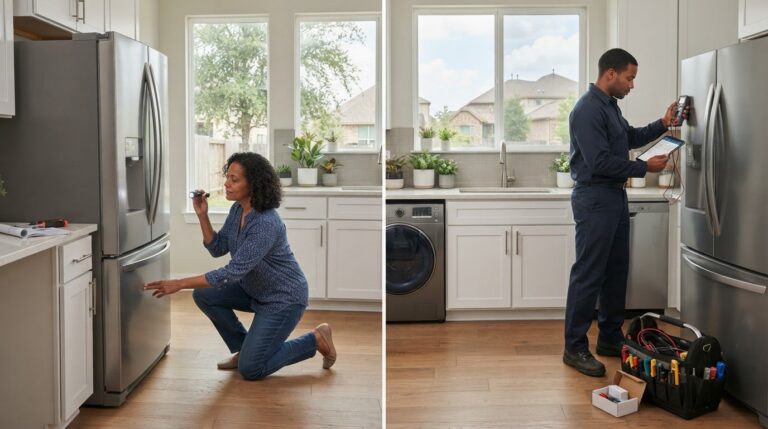
Your dishwasher isn’t failing because it is old; it is likely failing because it’s fighting a losing battle against Houston’s water. It is incredibly frustrating to open your machine only to find cloudy glasses and stuck-on food. You shouldn’t have to hand-wash your dishes after the cycle is already done. When you are constantly asking why is my dishwasher not cleaning, you are losing valuable time and wasting gallons of water every single week.
We know you want spotless dishes on the first wash without the extra labor. This guide will help you understand the “perfect storm” of hard water, loading errors, and common mechanical breakdowns. You will learn how Houston’s water hardness, often measuring 12.7 grains per gallon, creates mineral buildup that kills performance. We will show you how to troubleshoot the issue yourself or determine when it’s time to call a local repair specialist to get your kitchen back in order. Let’s get your appliance back to peak efficiency so you can stop scrubbing by hand.
Key Takeaways
- Identify whether your dishes have grit or film to pinpoint the exact cause of the residue.
- Stop pre-rinsing your plates. Modern sensors need food residue to calibrate the wash and solve the mystery of why is my dishwasher not cleaning.
- Clear clogged spray arm nozzles and deep clean your filter using basic household tools.
- Learn to spot mechanical failures in the water inlet valve or circulation pump before they lead to a total breakdown.
- Understand when a failing control board requires professional dishwasher repair to avoid permanent electrical damage.
Common Culprits: Why Your Dishwasher Is Leaving Residue
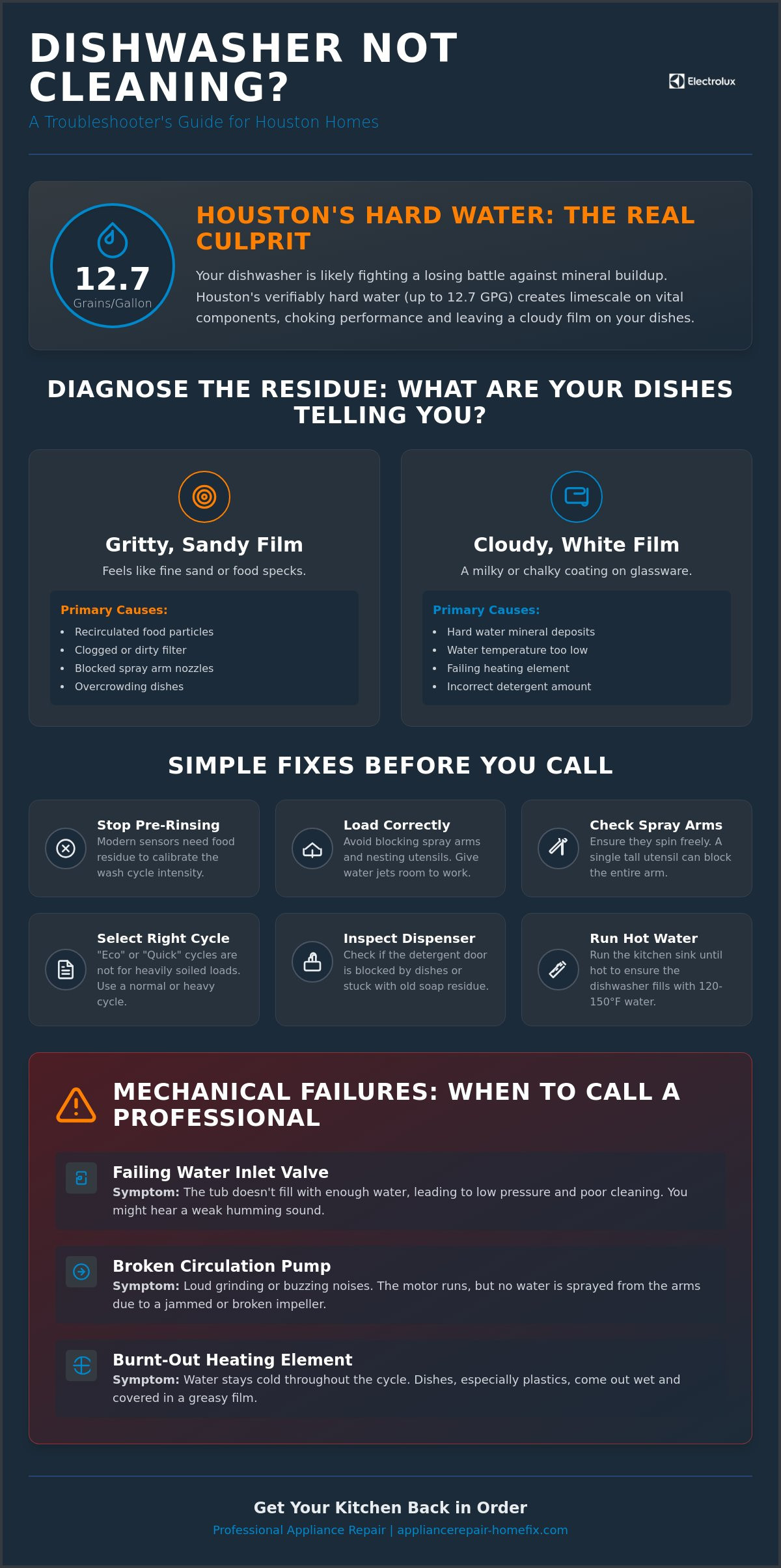
If you are staring at a rack of spotted plates and wondering why is my dishwasher not cleaning, start by looking at the residue itself. Different types of debris point to different failures. Gritty, sand-like particles usually mean food is being recirculated rather than drained. A cloudy white film suggests a chemical battle between hard water minerals and your detergent. Stuck-on food often means the water simply didn’t reach the dish. Identifying these symptoms is the first step toward a fix.
The detergent dispenser door is a frequent offender. If this door doesn’t pop open at the exact right moment, your dishes just get a long bath in plain hot water. Check for tall plates or long utensils in the lower rack that might block the door from swinging wide. Also, look for old detergent gunk around the latch. A sticky latch can prevent the door from releasing, leaving your soap trapped until the cycle ends.
Your dishwasher filter is the primary line of defense against “dirty soup” water. Most modern machines have a manual-clean filter at the bottom of the tub. If this mesh is clogged with hair, labels, or grease, the machine cannot move water efficiently. To get a better sense of How Dishwashers Work, you have to look at how they recirculate water through these filters during the wash. When the filter is blocked, the pump works harder but delivers less pressure to the spray arms.
Water temperature is the final piece of the residue puzzle. Grease and animal fats don’t dissolve in lukewarm water. Your dishwasher needs water at approximately 120 to 150 degrees Fahrenheit to break down heavy soils. If your water heater is set too low or the dishwasher’s internal heating element is failing, you will find a greasy film on your plastic items every time.
The Most Frequent “Quick Fix” Issues
Before you assume a part is broken, check your loading habits. Blocked spray arms are a common issue; a single spatula sticking through the bottom rack can stop the arm from spinning entirely. Overcrowding is another culprit. When you “nest” spoons or stack bowls too closely, the water jets cannot reach every surface. Finally, ensure you aren’t using a “Quick Wash” or “Eco” cycle for heavily soiled pots. These shorter cycles use less water and lower temperatures, which aren’t enough for stubborn lasagna pans.
Understanding the Cleaning Cycle
A standard dishwasher cycle typically lasts between two and three hours to move through the wash, rinse, and dry phases. Modern high-efficiency units use soil sensors to monitor how dirty the water is; they will actually extend the cycle if they detect heavy debris. If you start your wash with cold water from the pipes, the machine has to spend extra time and energy heating it up. Run the hot water at your kitchen sink for 30 seconds before starting the machine to ensure the first fill is actually hot. If these basic adjustments don’t help, you may need professional dishwasher repair to inspect the internal sensors or heating components.
Mechanical Failures: When Parts Stop Working Properly
When user habits aren’t the issue, the problem is likely a failing internal component. A common reason why is my dishwasher not cleaning involves the water inlet valve. This valve controls the volume of water entering the tub. If it becomes restricted by mineral deposits or the electrical solenoid fails, the machine won’t fill to the necessary level. Without a full tank of water, the pump cannot generate enough pressure to effectively scrub your dishes.
The circulation pump serves as the heart of the appliance. You might hear the motor humming, but if the internal impeller is cracked or jammed with a stray piece of plastic, water won’t circulate through the spray arms. Houston’s water is verifiably hard, measuring up to 12.7 grains per gallon. This high mineral content frequently leads to scale buildup on the heating element. When this element fails, the water stays cold; this leaves a white film and undissolved grease on your plates. You can review a DIY Maintenance Checklist to see which of these parts are accessible for a visual inspection.
Physical wear also impacts the spray arms and manifolds. Over time, the plastic bearings can wear down, causing the arms to wobble or stop spinning entirely. Cracked manifolds or loose gaskets can cause water pressure to leak away before it ever reaches the nozzles. If the water isn’t hitting your dishes with full force, the cycle will fail to remove stubborn residue.
Diagnostic Warning Signs
- Grinding or loud buzzing noises typically indicate a foreign object is stuck in the pump or the motor bearings are reaching the end of their lifespan.
- The water level should reach the heating element within the first five minutes; if it doesn’t, your inlet valve is likely faulty.
- Finding a soap pod that is only partially dissolved means the water isn’t reaching the proper temperature or the spray arms aren’t distributing water to the dispenser door.
The Drain System Connection
Cleaning performance depends on your machine’s ability to remove dirty water. A clogged dishwasher drain hose causes filthy water to backflow into the tub during the final rinse. In Houston, local plumbing standards usually require a high-loop or an air gap to prevent sink water from siphoning back into the appliance. If your drain pump motor is failing, you will notice standing, smelly water in the bottom of the unit after the cycle ends. If you have already cleared the filters and the water still won’t move, you should book a professional diagnostic to prevent potential floor damage from a leak.
The Hard Water Myth: Why Your Detergent Might Be Failing
Most homeowners think they are doing their machine a favor by rinsing dishes until they are spotless before loading them. In reality, this habit is a primary reason why is my dishwasher not cleaning effectively. Modern units use turbidity sensors to “see” how dirty the water is. If you pre-rinse everything, these sensors detect clear water and trigger a shorter, weaker cycle. The machine assumes the load is light, which means it won’t use the heat or water pressure required to actually sanitize your kitchenware.
The chemistry of your water plays an equally important role. In Houston, where water hardness can measure up to 12.7 grains per gallon, the minerals in your pipes are fighting against your detergent. You can explore the technical details of The Hard Water Myth to understand how calcium and magnesium impact cleaning. When these minerals combine with soap, they form a cloudy film that sticks to glassware. Many people respond by adding more detergent, but this is a mistake. Excessive soap in a hot environment can cause etching, a permanent scratching of the glass surface that no amount of scrubbing can fix.
Dealing with Houston Hard Water
Residents in Katy and Sugar Land deal with some of the highest mineral concentrations in the region. Limescale buildup on your heating element acts as an insulator, preventing the water from reaching the 120 degrees needed to melt grease. Using a rinse aid is essential in these areas because it prevents water droplets from clinging to surfaces as they dry. Monthly maintenance with citric acid cleaners will effectively dissolve mineral scale from the internal plumbing and spray arms. This simple step keeps the internal sensors clear and the water flow unrestricted.
The Pre-Rinsing Debate
Scraping food is better than rinsing it off completely. Modern enzyme-based detergents are designed to “latch” onto food proteins and starches to do their job. Without these food particles, the enzymes have nothing to react with, which often leads to poor cleaning results. If your home has a water softener, you must be even more careful with detergent amounts. Using too much detergent in soft water zones causes the soap to become chemically aggressive, which accelerates the etching process on your fine china and everyday glasses. If a change in habits doesn’t fix the film on your dishes, you may need a dishwasher repair specialist to inspect your turbidity sensors or detergent dispenser.
DIY Maintenance Checklist to Restore Sparkle
Regular maintenance prevents the buildup that leads you to ask why is my dishwasher not cleaning. You don’t need specialized tools to perform these tasks. Most issues with spotted glasses or gritty residue stem from simple clogs that you can clear in twenty minutes. Follow this checklist once a month to keep your machine running at peak performance. Unclogging these nozzles is often the fastest way to solve the mystery of why is my dishwasher not cleaning without a service call.
Start with the spray arms. These plastic components distribute water throughout the tub. Over time, tiny holes in the arms can become blocked by seeds, toothpick fragments, or mineral scale. Remove the arms if possible, or use a toothpick to gently clear each nozzle. Rinse them under the sink to ensure water flows freely through every exit point. If the arms are cracked or the bearings feel loose, they will need replacement to restore proper water pressure.
After clearing the arms, run a sanitizing cycle. Place a bowl of white vinegar on the top rack and run a heavy-duty cycle with the hottest water setting. This strips away grease and hard water minerals. For heavy buildup, use a commercial dishwasher cleaner designed to dissolve calcium. This step is vital for homes in Houston, where mineral deposits accumulate quickly and can seize up internal moving parts.
Step-by-Step Filter Cleaning
Locate the cylindrical filter at the base of the tub. Most modern units require a simple quarter-turn to unlock it. Remove the mesh assembly and rinse it under warm soapy water. Use a soft nylon brush to scrub away trapped food particles and oily residue. Before reinstalling, reach into the sump area. Check for glass shards, plastic bits, or bone fragments that might be jamming the drain pump. A clean filter ensures that only filtered water reaches your dishes during the rinse cycle.
Gasket and Door Maintenance
The rubber gasket around the door frame is a magnet for mold and soap scum. Wipe the entire seal with a damp cloth and mild detergent. Pay special attention to the bottom edge of the door. This area is a “dead zone” where the spray arms cannot reach, allowing grime to rot and cause foul odors. Finally, inspect the detergent dispenser. Use a damp cloth to remove gunked-up soap that might be preventing the door from opening. If you complete these steps and still see dirty dishes, you should book a professional dishwasher repair to check for deeper mechanical failures or electrical sensor issues.
Professional Dishwasher Repair in Houston: When to Call HomeFix
When your maintenance efforts don’t resolve the mystery of why is my dishwasher not cleaning, the fault is likely buried in the machine’s electrical architecture. Modern dishwashers are essentially computers that manage water flow and temperature. A single short circuit on an integrated control board can prevent the heating element from firing or stop the wash cycle mid-way. DIY repairs on these boards are risky. One wrong move can turn a simple part replacement into a full machine replacement. Our technicians have the specialized equipment to test these circuits safely and accurately.
Choosing a professional for dishwasher repair Houston ensures the job is done right the first time. We understand the urgency of a household disruption. That is why we offer same-day and next-day service options for residents in Katy, Cypress, and Sugar Land. We don’t just guess at the problem. We provide a definitive solution that restores your appliance to factory standards. If you have already cleared the filters and checked the spray arms but still find residue, it is time to stop the guesswork.
Expert Diagnostics for Major Brands
Our team carries extensive experience with the unique engineering of Whirlpool, Samsung, LG, and Bosch units. These brands often use proprietary sensors that require specific testing protocols. We use only OEM parts for every dishwasher fix. This approach guarantees compatibility and long-term reliability. We offer a $69 diagnostic fee that is applied toward your total bill if you choose to proceed with the repair. This makes it easy to get an expert opinion without a massive financial commitment upfront.
Serving the Greater Houston Community
We believe in neighborly service. We deploy local technicians to Katy, Fulshear, and Pearland daily. Your time is valuable. We provide concise three-hour arrival windows so you can plan your day with confidence. There is no need to spend hours wondering when help will arrive. Our technicians are pragmatic, direct, and focused on getting your dishes clean again. Schedule your dishwasher diagnostic now to end the frustration of hand-washing and get back to your routine.
Get Your Dishes Sparkling Again
Fixing a dishwasher often starts with small changes like stopping the pre-rinse cycle and deep cleaning your cylindrical filters. Houston’s hard water makes these monthly maintenance steps essential for every local homeowner. However, if you have cleared the clogs and adjusted your detergent habits but are still wondering why is my dishwasher not cleaning, the problem is likely a failing pump, a faulty inlet valve, or a compromised control board. You shouldn’t have to waste your evenings hand-washing plates because a machine failed to do its job.
Our certified technicians specialize in all major appliance brands and provide reliable, professional solutions for complex mechanical issues. We serve the entire Houston area, including Katy and Sugar Land, with convenient three-hour arrival windows to respect your time. Most replacement parts we install come with a 1-year warranty, ensuring your appliance remains at peak performance. Book Your Dishwasher Repair Online today to restore your kitchen’s efficiency. You deserve a machine that delivers spotless results every single time.
Frequently Asked Questions
Is it worth repairing a 10-year-old dishwasher?
Repairing a 10-year-old unit is usually not the best investment. Most modern dishwashers have a functional lifespan of about 8 to 10 years. If the repair cost exceeds 50% of the price of a new machine, you should consider a replacement. Older units also lack the energy efficiency of newer models. We recommend a professional diagnostic to see if the fix is a simple gasket or if the main motor is failing.
Why does my dishwasher smell like rotten eggs?
A rotten egg smell usually points to trapped food waste or a drainage issue. Bits of food rot in the cylindrical filter or the drain hose over time. This creates a sulfur scent that permeates the tub during the drying cycle. You should also check the air gap or high-loop under your sink. If these plumbing features are blocked, dirty water from your garbage disposal can siphon back into your dishwasher.
Can I use vinegar in my dishwasher to clean it?
Yes, white vinegar is an effective tool for removing mineral buildup. Place a dishwasher-safe bowl filled with one cup of vinegar on the top rack and run a hot cycle without any detergent. The acid in the vinegar dissolves the calcium deposits common in Houston. Do not put vinegar directly in the detergent dispenser. The high acidity can damage the rubber gaskets and seals if it isn’t diluted properly during the fill.
Why are my glasses coming out cloudy?
Cloudy glasses are typically the result of hard water minerals reacting with your detergent. Houston’s water often measures up to 12.7 grains per gallon, which is classified as very hard. This causes a white film to stick to the glass as the water evaporates. Using a high-quality rinse aid is the most effective way to stop this. The rinse aid allows water to sheet off the surface before it can dry and leave mineral spots.
How often should I clean my dishwasher filter?
You should clean your filter at least once a month for optimal performance. If you run your machine daily or skip pre-rinsing, you might need to check it every two weeks. A clogged filter restricts water flow and forces the pump to work harder. This is a primary reason why is my dishwasher not cleaning properly. Simply twist the filter out and rinse it under warm water to remove trapped debris.
Why is there water standing in the bottom of my dishwasher?
Standing water usually indicates a blockage in the drain system or a failing pump motor. First, check your sink’s garbage disposal; if it is clogged, the dishwasher cannot drain. Next, inspect the drain hose for kinks or food plugs. If the hose is clear and the filter is clean, your drain pump motor may be burned out. Standing water should be addressed quickly to prevent mold growth and potential floor damage.
Does HomeFix offer same-day dishwasher repair in Katy?
We offer same-day and next-day service windows for dishwasher repairs in Katy and the surrounding Houston area. Our technicians are deployed locally to ensure quick response times for household disruptions. We provide three-hour arrival windows so you don’t have to wait all day for a specialist. You can check our current availability for your specific zip code through our online scheduler or by calling our office directly.
Will pre-rinsing my dishes ruin my dishwasher?
Pre-rinsing won’t break the hardware, but it often leads to poor cleaning results. Modern machines use turbidity sensors to measure how much soil is in the water. If you rinse everything off, the sensors think the load is already clean and trigger a shorter, weaker cycle. This is a common answer for why is my dishwasher not cleaning. Just scrape off large food chunks and let the detergent enzymes do the heavy lifting.