A musty washer odor isn’t always coming from the drum. If you’re searching “washer smells like mildew Pearland,” start by matching the smell to its source: residue around a front-load gasket, a damp detergent drawer, or trapped water near the drain can each call for a different next step.
It makes sense to be cautious. A cleaning cycle may help with lingering odor, but the wrong product or repeated scrubbing can damage parts, and surface cleaning won’t solve a drainage or mechanical problem. Follow your washer manual before using cleaners, and skip vinegar, which can harm some rubber seals and hoses.
This guide explains how to inspect common odor spots, clean them safely for your model, and reduce the chance of the smell returning. You’ll also learn which signs point beyond routine maintenance, including leaking or a washer that won’t drain. If the odor persists after appropriate cleaning, HomeFix can diagnose residential washers on-site in Pearland and across the Greater Houston area, including Houston, Katy, The Woodlands, Sugar Land, Cypress, and Fulshear.
Key Takeaways
- Note when the odor appears, such as in an empty washer or only on dried clothes, to narrow down which areas may need inspection.
- For a washer smells like mildew Pearland search, start with the washer’s manual and match any cleaning method to your specific model.
- Cleaning products and household alternatives aren’t interchangeable. Follow manufacturer guidance and never mix products.
- A simple maintenance routine can help reduce dampness and residue that contribute to recurring odors.
- If the smell continues or the washer shows other unusual signs, an on-site diagnostic can help identify whether repair is needed.
Why a Washer Smells Like Mildew: Common Sources to Check First
A musty washer odor is a reason to inspect for moisture, residue, and limited airflow. It doesn’t prove that a specific part has failed or confirm that mold is present. Mildew is commonly associated with damp conditions; What is mildew? offers general background on how it grows. In a washer, leftover water and detergent can contribute to odor, especially when the appliance doesn’t dry between uses.
Notice where and when the smell shows up. If you detect it in an empty washer, check accessible areas that may hold moisture or residue. If the washer smells neutral but freshly washed clothes come out musty, consider whether the laundry sat wet in the drum or whether the odor appears during the wash. Neither pattern proves a fault, but each helps focus your inspection. A search for “washer smells like mildew Pearland” shouldn’t lead you to assume the cause before checking these clues.
Where washer odors commonly build up
Start with the areas named in your owner’s manual. Depending on the design, moisture or residue may remain in the tub, around a front-load door seal, inside a dispenser drawer, or in another accessible area. Front-load and top-load washers differ, and not every model has the same odor-prone spots. Check only surfaces you can reach safely, and follow the manual’s care instructions for cleaning each one.
Look for dampness, detergent film, or visible residue, but don’t treat any one sign as a confirmed diagnosis. A front-load seal may have folds that need attention; a top-load model may have different surfaces and care steps. Use the part names and maintenance guidance in your manual instead of assuming advice for another washer applies to yours.
Habits that can leave a washer smelling musty
Everyday use can create conditions that allow odor to linger. Wet laundry left in the washer keeps the interior damp, and closing the door immediately after a cycle can limit airflow. When practical, remove clothes promptly and follow the manual’s guidance on drying or ventilating the washer between loads.
- Use the detergent type and amount recommended for your model. Excess detergent or an unsuitable product can leave residue.
- Run the washer-cleaning cycle at the interval and with the method specified in the manual. Skipping it may contribute to buildup, though it isn’t automatically the cause of every smell.
- Inspect the dispenser and other user-accessible areas for residue, and clean them only as directed by the manufacturer.
A musty smell is a clue to inspect, not proof of mold or a mechanical failure. If odor continues after you’ve checked and cleaned the manual-approved areas, or the washer has other unusual symptoms, the source may need a closer assessment. HomeFix performs on-site residential washer diagnostics in Pearland. Learn about washer repair service when cleaning hasn’t resolved the concern.
How to Tell Whether the Smell Is in the Washer or on the Laundry
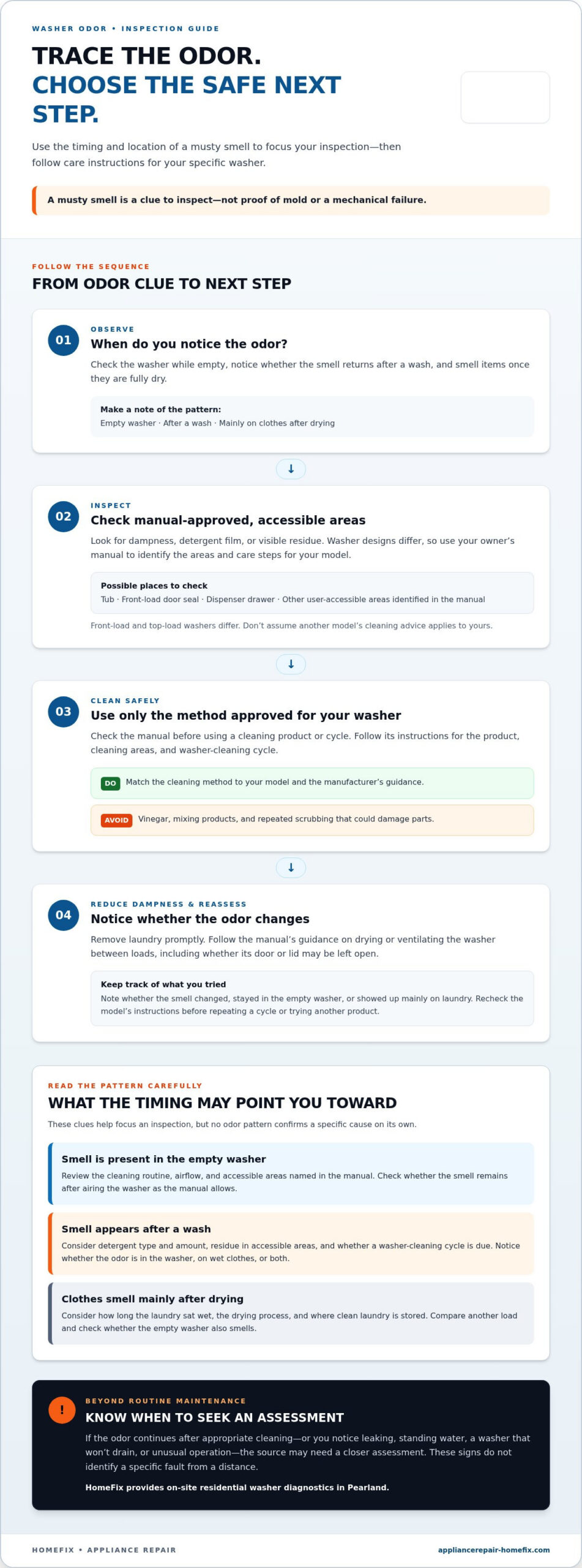
Track when the odor appears before changing cleaning products or repeating a cycle. Check the washer while it’s empty, notice whether the smell returns after a wash, and smell a few items once they’re fully dry. These patterns can help you choose what to inspect next, but they can’t confirm the cause on their own.
| When you notice the odor | Areas or habits to check | Useful next observation |
|---|---|---|
| In the empty washer | Cleaning routine, airflow, and accessible areas identified in the owner’s manual | Remove laundry, leave the washer open only as the manual allows, then check whether the smell remains |
| After a wash | Detergent type and amount, residue in user-accessible areas, and whether a washer-cleaning cycle is due | Note whether the odor is inside the washer, on wet clothes, or both |
| Mainly on clothes after drying | How long clothes sat wet, the drying process, and where clean laundry is stored | Compare another load and check whether the empty washer also smells |
What different odor patterns may suggest
If the empty drum smells musty, first review the washer’s cleaning and airflow routines. An odor that appears mainly after a wash may point you toward detergent residue or a missed cleaning cycle, but neither pattern proves a particular issue. If clothes smell after drying while the empty washer doesn’t, the odor may have another source, such as damp laundry left waiting or the drying and storage process.
To make a useful comparison, remove the load promptly and smell the empty washer. Follow the manual’s instructions for leaving its door or lid open to air; don’t force a position the manufacturer advises against. Check again after it has had time to air. If the odor fades inside the washer but returns on clothes, note that difference. The EPA guidelines on mold prevention also provide general information on controlling moisture indoors.
When a cleaning attempt has not solved it
Before repeating a cleaning cycle or trying a different product, return to the instructions for your model. Use only the method and cleaning areas approved for your washer, and don’t combine products. Keep track of what you tried and whether the smell changed. This simple record can help distinguish a one-time odor from one that keeps returning.
Recurring odor deserves attention, especially if you also see standing water or notice unusual operation, such as a new noise or a cycle that doesn’t behave as expected. These signs don’t identify a specific fault from a distance. Arrange a professional assessment if the odor persists after appropriate cleaning or the washer’s operation changes. For a washer smells like mildew Pearland concern that won’t clear, HomeFix can diagnose a residential washer on-site and explain the next step. Learn more about washer repair in Pearland.
Washer Cleaning Products Compared: Choose a Safe Method for Your Model
Choose a cleaning method by checking your washer’s care instructions first, not by copying a tip meant for another model. A cleaner that’s suitable for one machine may not be approved for another. The same goes for bleach, household alternatives, cycle settings, and where a product should go.
The owner’s manual determines which cleaner and cycle are appropriate. If you’re looking up “washer smells like mildew Pearland,” use that rule before buying a product or starting another cleaning cycle.
Washer cleaner, bleach, and household alternatives
A washer-cleaning product can be an option if your manual permits that product type and explains how to use it. Bleach is different: don’t assume your washer allows it. Maytag guidance cautions that bleach may not be suitable for some front-load machines, but that warning shouldn’t be generalized to every brand or model. Check your own washer’s instructions.
- Washer cleaner: Use only a type approved for your machine, and follow the product label and washer manual.
- Bleach: Use it only if the specific model’s instructions allow it, in the location and cycle they specify.
- Household alternatives: Don’t assume vinegar, baking soda, or a combination is safe or effective. Use one only when the manufacturer clearly supports it for your model.
Never mix cleaning products. Combining them can create hazardous fumes or reactions, and it may expose washer parts to chemicals the manufacturer doesn’t approve. Don’t add a second product to “boost” the first one.
How to choose a cleaning method without risking damage
Find the manual for your exact model, using the model information on the washer’s identification label if needed. Look for washer-cleaning or care instructions, then confirm the allowed product type, dispenser or drum placement, and cycle. Don’t substitute a similar-sounding cycle or guess a quantity when the instructions give specific directions.
If the manual doesn’t clearly approve a product, leave it out. Avoid improvised mixtures and don’t remove panels to reach hidden areas. Stick to accessible cleaning tasks described by the manufacturer. A strong chemical or extra-long cycle isn’t automatically a better solution.
Before starting, check the product label as well as the washer instructions. Both should support the method you plan to use. If they conflict, or the care directions are unclear, pause rather than experimenting. That’s especially sensible if the odor keeps returning after a correctly performed cleaning cycle. Repeatedly changing cleaners can add risk without clarifying the source.
A safe method is specific to your appliance, not a universal recipe. Follow its approved cleaner and cycle, and keep the steps within the care guidance. If manual-approved cleaning doesn’t resolve a persistent odor, the washer may need an on-site diagnostic rather than another chemical treatment.
How to Clean a Washer That Smells Like Mildew, Step by Step
Use a routine that matches your washer, not a generic recipe. Cycle names, dispenser parts, and cleaning instructions vary by model. Keep the work to user-accessible areas, and don’t remove panels or handle wiring. If you’re dealing with a washer smells like mildew Pearland problem, these steps can help you clean safely and see whether routine maintenance addresses the odor.
A manual-first cleaning routine
Start with the manufacturer’s instructions for your exact washer. They determine which areas you can clean and which cycle and products are appropriate. Follow the steps in order, and stop if a direction is unclear rather than improvising.
- Remove laundry. Empty the drum, including any damp items left behind. Check that nothing is caught in the door opening or around the accessible parts of the tub.
- Check the manual. Find the cleaning or care instructions for your model. Confirm whether it has a dedicated washer-cleaning cycle, what product type is allowed, and where the product belongs. Don’t assume a cycle or dispenser is the same across brands.
- Clean approved areas. Wipe only surfaces the manual identifies as user-cleanable. If it directs you to clean the dispenser or a door seal, use its recommended method and avoid pulling, prying, or dismantling components.
- Run the approved cycle. Use the cleaner, placement, and cycle specified for your washer. Follow the product label as well. Don’t substitute a setting or add an extra cleaning product to make the cycle stronger.
- Dry accessible surfaces. Once the cycle ends, wipe accessible moisture with a clean cloth if your manual permits it. Leave the washer open only as the manufacturer recommends, and keep the area clear while it airs.
This process focuses on routine maintenance, not repairs. Don’t reach behind panels or try to clear internal parts. If a cleaning step requires disassembly, leave it to a technician.
Keep the odor from returning
Small habits can help limit lingering dampness and residue between cleanings. Remove wet clothing promptly after a cycle, and allow airflow according to the manual. Use the detergent type and amount specified for your washer and load. Too much detergent can leave residue, so don’t add extra in an attempt to improve cleaning.
Follow the manufacturer’s schedule for routine washer cleaning, even after the smell fades. Keep a note of the date and method used. If the odor persists after you complete the approved routine, returns quickly, or appears alongside standing water or unusual operation, don’t keep repeating cycles or changing products. HomeFix technicians diagnose residential washers on-site in Pearland and explain the next step.
When Pearland Homeowners Should Arrange Washer Repair
Cleaning is a sensible first step when the washer’s care instructions point to routine maintenance. But if the smell quickly returns after you’ve followed those directions, stop switching products and repeating cycles. A lasting odor can have a source that ordinary cleaning won’t address, so a professional diagnostic visit can help clarify what’s happening.
Signs the issue may need more than routine cleaning
Pay attention to what you can observe. Recurring odor, water left in the washer, a leak, pooling water, or a new operating sound all warrant closer assessment. None of these signs alone confirms a particular fault. If a leak or another immediate safety concern develops, stop using the washer and arrange professional help rather than continuing to run cycles.
- The smell returns quickly: You completed the model-approved cleaning routine, but the odor comes back during normal use.
- Water remains: You see standing water after a cycle or water pooling around the washer.
- Operation changes: The washer makes an unusual sound or behaves differently during a cycle.
Make a note of when the smell returns and what else you observed. For example, record whether water remained after the cycle or whether the sound happened during washing or draining. These details can help a technician understand the pattern, but don’t try to identify the cause yourself or take apart the machine.
What to expect from washer repair in Pearland
HomeFix provides residential washer repair in Pearland. A technician performs on-site diagnostics before recommending a repair, so the next step is based on an assessment of the appliance rather than the odor alone. You’ll receive a written estimate before work begins, with an explanation of the proposed work before you decide how to proceed.
HomeFix offers same-day or next-day scheduling with three-hour arrival windows. Most calls are completed within 24 hours. If you’re dealing with a washer smells like mildew Pearland concern that persists despite the manual-approved cleaning steps, arranging a diagnostic visit is a practical next move.
For local help, explore the washer repair service. Share the washer’s symptoms, any cleaning you’ve already completed, and whether you noticed standing water, a leak, or unusual sounds. This information can help keep the assessment focused. Don’t keep running a washer that’s leaking or showing another immediate safety concern.
Take the Next Step Toward Fresh Laundry
If your washer still smells after you’ve followed its care instructions, you don’t need to keep guessing or trying another cleaner. Treat the recurring odor as a reason to get a clearer assessment, especially if the washer’s behavior has changed. Before arranging help, jot down when the smell appears and any unusual signs you’ve noticed. That gives the technician a useful starting point without requiring you to diagnose the appliance yourself.
A persistent washer smells like mildew Pearland problem can be frustrating, but there’s a practical path forward: stop repeated trial-and-error cleaning and let a professional assess the washer. HomeFix serves Pearland and surrounding Greater Houston communities, including Houston, Katy, The Woodlands, Sugar Land, Cypress, and Fulshear. On-site diagnostics and a written estimate are provided before work begins, and same-day or next-day scheduling is available with three-hour arrival windows.
With a clear diagnosis, you can decide on the next step with more confidence and get back to laundry without the lingering uncertainty.
Frequently Asked Questions
Why does my washer smell like mildew even after I clean it?
Cleaning may not reach every residue-holding spot, or the odor may have another source. For example, if a washer still smells after its approved cleaning cycle, note whether water remains after draining or whether the smell is strongest near the dispenser. Don’t repeat the cycle with a stronger product. Keep track of what you cleaned and what still smells, then use those observations to guide your next step.
Can I use bleach to clean a washer that smells musty?
Use bleach only if the instructions for your exact washer allow it. Check where it can be added and which cycle to use; don’t pour it onto a seal or into the drum unless the manufacturer directs you to. Bleach can be incompatible with some models or parts. Never combine it with another cleaner, including vinegar or ammonia, and stop if your manual doesn’t clearly explain the approved method.
How do I get mildew smell out of a front-load washer?
Follow the front-load washer’s care instructions rather than relying on steps for a different design. Check the visible door-seal folds and dispenser area for residue, but don’t stretch the seal or remove parts. Clean only as the manual directs, then use the specified washer-cleaning cycle if one is provided. If odor remains in clothes after the washer has been cleaned, check whether it’s present in the empty drum too.
Should I leave my washer door open after doing laundry?
Leave the door or lid open only if your washer’s manual recommends it. Allowing air to circulate may help the interior dry between loads, but the right approach depends on the appliance’s design and placement. If the manual permits it, leave the opening unobstructed after removing laundry. Don’t force a door to stay open or block a walkway; follow the manufacturer’s guidance for safe everyday care.
Can a clogged washer drain cause a mildew smell?
A drainage problem may leave water in or around the washer, and lingering moisture can contribute to odor. But a musty smell alone can’t confirm a clogged drain. Notice whether water remains after a cycle, drains more slowly than usual, or appears near the appliance. Don’t reach into hidden parts or remove panels to investigate. If water stays in the washer or a leak appears, arrange a professional assessment.
When should I call for washer repair in Pearland?
Arrange an assessment if the odor keeps returning after you’ve followed the model’s care instructions, or if you notice standing water, a leak, or unusual operation. Stop using the washer if a leak creates an immediate safety concern. Note when the symptoms occur and what you’ve already tried. That information can help a technician assess the washer. HomeFix provides residential washer repair in Pearland and the Greater Houston area, including Houston, Katy, The Woodlands, Sugar Land, Cypress, and Fulshear.
Can mildew smell transfer from my washer to clean clothes?
Yes, clothes can pick up a musty odor during washing if the washer or load smells, and damp items can retain odor if left sitting. To check, compare the empty washer’s smell with a freshly washed item before it goes into storage. Keep musty laundry separate from clean, dry clothes. Once you address the washer or laundry source, wash affected items again according to their care labels.
How often should I clean my washing machine?
Use the cleaning interval in your washer’s manual rather than a universal schedule. Instructions can vary by model, and your routine may also depend on how often you wash and which cycle you use. Check the manual for the recommended cleaning cycle and any care prompts on the machine. If you can’t find a schedule, look up the manufacturer’s guidance for your model before setting a recurring reminder.