In Houston, the 77% average humidity in September isn’t just a comfort issue. It’s a silent killer for your kitchen appliances. High moisture levels often lead to mold growth and warped gaskets that prevent your fridge from staying shut. If you’ve noticed a refrigerator door not sealing Houston humidity is likely the primary culprit behind those rising energy bills. You’re probably dealing with condensation on the shelves or a motor that never seems to stop humming. It’s a stressful situation that puts your grocery budget and your kitchen floor at risk.
We know how a malfunctioning fridge disrupts your daily routine. You want a kitchen that works without constant monitoring or expensive surprises. This guide provides the exact steps to identify, fix, and prevent seal failures before they lead to a total cooling breakdown. We’ll cover everything from simple cleaning techniques to the “dollar bill test” for suction. You will learn how to restore that airtight seal yourself or determine if the damage requires a professional touch. Let’s get your appliance back to peak efficiency and keep your electricity costs under control.
Key Takeaways
- Understand how Houston’s high humidity levels accelerate seal degradation and mold growth on your appliance gaskets.
- Learn the “dollar bill test” and other simple DIY methods to confirm if your refrigerator door not sealing Houston is a minor adjustment or a major failure.
- Discover why common kitchen grime is the leading cause of torn gaskets and how to prevent it with regular maintenance.
- Evaluate the risks of DIY gasket repairs, including the “hairdryer trick” and the difficulty of sourcing correct OEM parts for your specific model.
- Find out when to call a specialist for high-end systems like Sub-Zero or Viking to ensure your repair is done correctly and protects your warranty.
Why Your Fridge Door Isn’t Sealing (The Houston Humidity Factor)
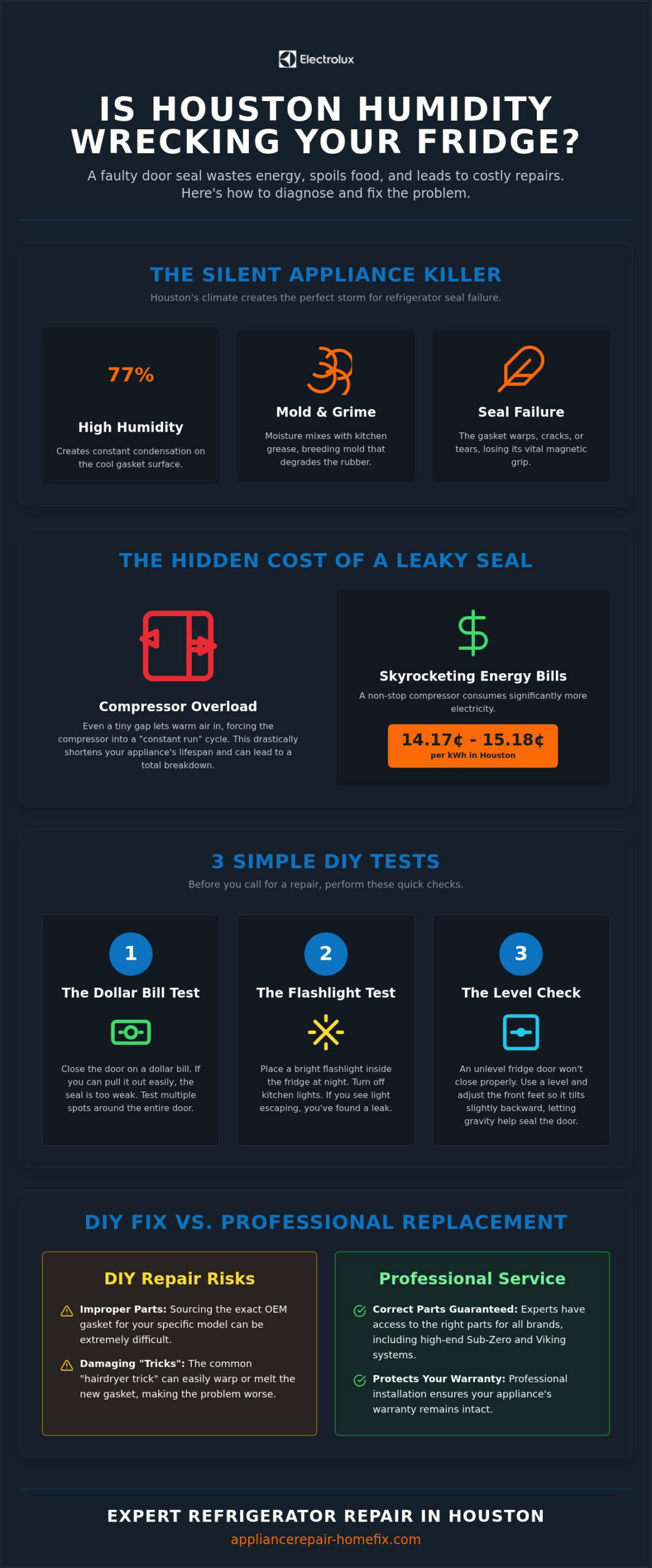
Houston’s climate is notoriously hard on household appliances. The average annual humidity sits at 75%, and during the peak of summer, it often climbs much higher. When you have a refrigerator door not sealing Houston weather is usually the silent culprit. High moisture levels in the air collide with the cold surface of your fridge, creating immediate condensation right on the gasket. This isn’t just a surface issue; it’s a mechanical threat.
This “sweating” does more than just make a mess on your floor. It creates a perfect breeding ground for mold and mildew. These fungi gradually break down the rubber and silicone materials that make up your door seal. Over time, the magnetic strip inside the gasket loses its ability to grip the metal frame firmly. Additionally, kitchen grease and airborne oils from cooking mix with this moisture to form a thick, sticky grime. This residue acts like an unwanted adhesive. It causes the seal to pull and tear every time you open the door, eventually leading to structural failure of the rubber.
Humidity and Gasket Condensation
Condensation is the first sign of trouble. When moisture traps between the gasket and the frame, it breaks the vacuum seal required for efficiency. In West Houston, the summer months bring the highest risk for these failures due to the extreme dew point. You might notice “puckering” in the rubber or small black spots of mold along the inner folds of the seal. If the gasket feels slimy or wet to the touch, it’s already losing its suction. This moisture prevents the magnetic strip from making full contact, which is essential for how refrigerators work to maintain stable internal temperatures.
The Energy Cost of a Leaky Door
A small gap has a big impact on your wallet. Even a 1/4 inch opening allows cold air to escape while drawing warm, humid Houston air inside. This forces the compressor into a “constant run” cycle. Instead of cycling off once the target temperature is reached, the motor works non-stop to fight the heat intrusion. This doesn’t just shorten the lifespan of your appliance; it spikes your monthly utility costs. With Houston electricity rates averaging between 14.17 and 15.18 cents per kWh as of September 2026, an inefficient fridge becomes an expensive liability. If you suspect a leak, booking a refrigerator repair near me can prevent a total mechanical failure. A failing seal is often the first step toward a blown compressor, which is a far more costly fix than a simple gasket replacement.
3 Simple DIY Tests to Check Your Refrigerator Gasket
Before you assume the gasket is dead, check your floor. A fridge that isn’t level won’t close properly. This often mimics a case of a refrigerator door not sealing Houston homeowners frequently misdiagnose. Use a carpenter’s level on top of the unit. Adjust the front leveling legs until the fridge tilts slightly backward. This helps gravity pull the door shut. Once the unit is stable, you can move on to specific seal diagnostics.
Start with a thorough visual inspection. Look for cracks, thinning rubber, or areas where the gasket looks “puckered” or pulled away from the channel. Next, run a wet hand along the perimeter of the closed door. Moisture makes your skin more sensitive to the tiny drafts of cold air escaping the cabinet. If you feel a chill, you’ve found a leak. Clean the entire seal with warm, soapy water as a first step. Sometimes, a layer of sticky syrup or kitchen grease is the only thing preventing a tight grip. It is vital to Check the door seals regularly to maintain peak efficiency and lower your utility load.
The Dollar Bill Test
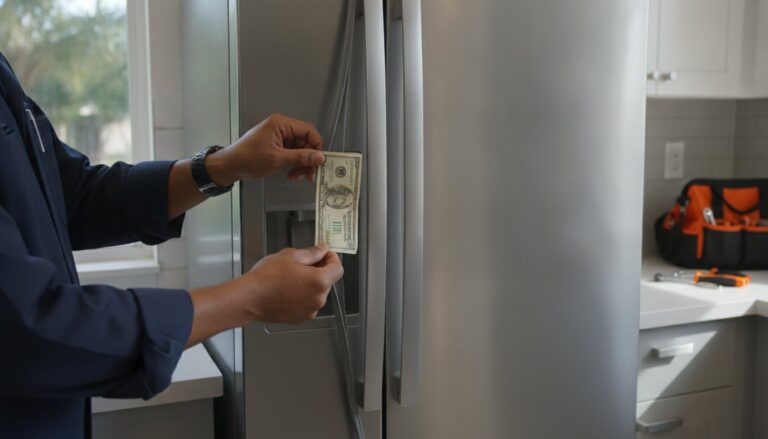
This is the gold standard for testing seal tension. Open the refrigerator door and place a crisp dollar bill across the gasket. Close the door firmly on the bill. Now, try to pull the bill out slowly. You should feel significant resistance. If the bill slides out easily or falls to the floor, the magnetic strip has lost its “snap” or the rubber has hardened. Repeat this process every 6 inches around the entire door frame. Don’t skip the bottom edge; that’s where heavy items in door bins often cause the most sagging and seal separation.
The Flashlight Test for Nighttime
Wait until dark for this high-accuracy check. Place a bright LED flashlight inside the refrigerator, directed toward the door seal. Close the door and turn off all the kitchen lights. Walk around the perimeter of the fridge. If you see light glowing through the gasket, you have a “pinhole” leak or a warped seal. Small points of light usually indicate a damaged gasket that needs replacement. However, if you see a long, consistent gap of light at the top or bottom, the door frame itself might be misaligned. If these tests reveal a deep gap that cleaning won’t fix, you can schedule a professional inspection to get a precise diagnosis and prevent food spoilage.
Common Causes of Seal Failure: Grime vs. Structural Damage
If you’re dealing with a refrigerator door not sealing Houston kitchens often reveal a mix of environmental and mechanical issues. While humidity is a major factor, everyday use plays an equally large role. Most seal failures fall into two categories: preventable grime and permanent structural damage. Identifying which one you have determines whether you need a sponge or a screwdriver.
Food spills and sticky syrups are the leading causes of torn gaskets. When soda, juice, or condiments leak onto the door frame, they act like a powerful adhesive. Every time you open the fridge, the rubber gasket sticks to the frame. This repeated pulling eventually causes the rubber to stretch, pucker, or tear away from its mounting track. Additionally, the magnetic strip inside the gasket can lose its effectiveness. These strips provide the “snap” that keeps the door shut. If the strip breaks into pieces or shifts inside the rubber sleeve, the door won’t stay closed even if the rubber looks perfect.
Sometimes the door itself is the problem. Heavy door bins filled with gallons of milk or large soda bottles put immense pressure on the hinges. Over time, this weight causes the door to sag. When the door is no longer square with the cabinet, the gasket cannot make full contact with the frame. This is particularly common in high-end appliances where the doors are heavier. If your luxury unit is struggling, professional Sub-Zero repair Houston can realign these heavy doors to restore the factory seal.
Cleaning vs. Replacing
You can often restore a stiff or “leaky” seal with basic maintenance. Use warm, soapy water and a soft cloth to clean both the gasket and the metal frame it touches. This removes the sticky residue that causes tearing. If the rubber feels dry or brittle, apply a very thin layer of petroleum jelly to the hinge side of the gasket. This keeps the rubber supple and helps it slide into place rather than folding over. However, if you see deep cracks, missing chunks of rubber, or black mold that has penetrated the material, the gasket is beyond cleaning and must be replaced.
Structural Issues and Door Alignment
Before buying a new gasket, check the hardware. Loose hinge screws on older models can cause the door to hang at an angle. Tighten these screws and see if the alignment improves. You should also check the door bins. If the seal only fails when the door is fully loaded, you may need to redistribute the weight to the main shelves. In rare cases, the door frame itself can warp due to heat or improper leveling. If the frame is bent, a new gasket won’t fix your refrigerator door not sealing Houston problem; the door itself may need professional adjustment or replacement.
DIY Gasket Repair vs. Professional Replacement
Sourcing a replacement gasket is more complicated than buying a lightbulb. You must locate the exact OEM (Original Equipment Manufacturer) part number for your specific model. Using a “close enough” part usually results in a refrigerator door not sealing Houston homeowners then have to fix twice. Most modern units from brands like Samsung or LG use specialized magnetic profiles. Universal gaskets found at big-box stores rarely provide the airtight grip these high-efficiency machines require.
Many DIY tutorials suggest the “hairdryer trick” to soften a new, stiff gasket. While heat does make rubber more pliable, it is a high-risk move. Excessive heat can permanently melt the gasket or warp the plastic door liner. If the seal isn’t perfectly seated, your fridge will continue to fight the Houston humidity. This constant struggle often leads to a burnt-out motor. In extreme cases, a neglected seal failure forces an LG refrigerator compressor replacement because the system worked itself to death.
The Risks of Incorrect DIY Installation
A poorly installed gasket is often worse than the old one. If the rubber is even slightly wrinkled or twisted, it creates a tunnel for warm air. This moisture quickly turns into frost buildup on your evaporator coils. For owners of premium brands like KitchenAid or Bosch, a DIY attempt can also void your existing manufacturer warranty. You might spend hours struggling with a “puckered” seal only to find the door still pops open. Professional installation ensures the rubber sits flat and the magnetic strip engages the frame instantly.
Why Professional Replacement is Often Cheaper
Hiring a specialist often saves money in the long run. Professional repairs include a 1-year warranty on most parts and a 3-month labor warranty. We don’t just swap the rubber; we also check your hinges and leveling to ensure the door is perfectly square. At HomeFix, our standard diagnostic fee is $89. However, if you choose us for the repair, that fee is reduced to $69 and applied directly to your total bill. You get a guaranteed fix, genuine parts, and the peace of mind that your energy bills will finally drop.
Book a professional gasket replacement today
Expert Refrigerator Repair in Houston: Fast Local Service
When you discover a refrigerator door not sealing Houston heat doesn’t wait. Your groceries are at risk the moment the internal temperature begins to climb. We provide rapid refrigerator repair across West Houston, Katy, Sugar Land, and Cypress. Our team understands that a broken seal is an emergency in the Texas summer. We offer same-day or next-day service to get your kitchen back to normal. You’ll always receive a written estimate before any work begins, ensuring complete transparency and no hidden fees.
High-end appliances require specialized knowledge that general handymen often lack. We are certified to handle professional brands like Sub-Zero, Thermador, and Viking. These units feature complex hinge systems and heavy-duty gaskets with unique magnetic profiles. Whether it’s a built-in model or a professional-grade freestanding unit, we have the tools and OEM parts to restore the factory-tight seal. We also specialize in LG cooling systems. This expertise ensures your compressor isn’t damaged by the strain of a leaky door.
Why HomeFix is Houston’s Top Choice
Our technicians undergo brand-specific training to stay current on the latest appliance technology. We value your time, which is why we provide 3-hour arrival windows. You won’t have to wait all day for a specialist to show up at your home. Our goal is a first-visit fix whenever possible. We arrive with the most common parts already in our service vehicles. If you’re having issues beyond the seal, check out our guide on Expert Refrigerator Ice Maker Repair in Houston for more troubleshooting tips.
Schedule Your Same-Day Repair Today
Don’t let a minor gap lead to a major cooling failure. We are currently serving neighbors in Memorial, Cinco Ranch, and surrounding suburbs. Our diagnostic process is straightforward and fair. While our standard diagnostic fee is $89, it drops to $69 and applies directly to your repair cost if you choose us for the job. We back our work with a 1-year warranty on parts and a 3-month warranty on labor. This protection gives you peace of mind that your refrigerator door not sealing Houston problem is solved for good.
Booking is fast and flexible for busy Houston professionals. You can schedule online or send an SMS to (346) 489-7171 for an immediate response. Our dispatchers are ready to find the earliest available slot for your home. We’re the dependable local specialists you can trust for honest, hardworking service.
Book Your Refrigerator Diagnostic Now
Restore Your Kitchen’s Efficiency Today
Houston humidity is a constant factor that accelerates appliance wear and tear. A failing seal allows moisture to creep in, forcing your motor to work overtime and driving up your utility bills. By identifying a refrigerator door not sealing Houston families can protect their grocery investment and lower monthly energy costs. You’ve learned how to test your gasket and when a simple cleaning is enough to restore suction. Don’t wait for the ice to build up or the motor to burn out before taking action.
We are ready to help with same-day service across West Houston and the surrounding suburbs. Our technicians provide clear, written estimates so you always know what to expect before the work begins. Your diagnostic fee becomes just $69 and applies toward the final repair cost when we perform the service. We also provide a 1-year warranty on most parts to ensure your peace of mind and the long-term reliability of your appliance.
Schedule Your Houston Refrigerator Repair Now
Take the first step toward a more efficient home today. Our local specialists are just a text or click away from fixing your cooling issues for good. Get your fridge back to its factory-fresh performance and enjoy a cooler, more reliable kitchen.
Frequently Asked Questions
How do I know if my refrigerator door seal is bad?
You can identify a bad seal by looking for visible cracks, thinning rubber, or black mold spots along the gasket folds. Perform the “dollar bill test” by closing the door on a bill and pulling it out; if it slides out easily, the suction has failed. You might also notice the motor running constantly or condensation forming on the shelves. These are clear signs of a refrigerator door not sealing Houston homeowners should address quickly.
Can I fix a refrigerator seal myself?
You can often fix minor issues by cleaning the gasket with warm, soapy water or applying a thin layer of petroleum jelly to restore flexibility. However, replacing the entire gasket is difficult because you must source the exact OEM part for your model. Incorrect installation often leads to puckering and air leaks. For premium brands like Sub-Zero or Viking, professional installation ensures the magnetic strip engages correctly and preserves your manufacturer warranty.
Why is there condensation on my refrigerator door gasket?
Condensation occurs when warm, humid Houston air meets the cold surfaces of your refrigerator. This often happens if the gasket is warped or torn, allowing cold air to escape and moisture to collect on the rubber. In our local climate, humidity levels frequently exceed 75%, making this a common problem. If you see “sweating” around the door frame, it indicates that the airtight barrier has failed and requires an immediate inspection to prevent mold growth.
How much does it cost to replace a refrigerator door seal in Houston?
The total cost depends on the brand and model of your appliance. OEM gaskets for professional units like Thermador are more expensive than standard parts for GE or Whirlpool. At HomeFix, we provide transparent pricing with written estimates before any work begins. Our standard diagnostic fee is $89, but we reduce this to $69 and apply it directly to your repair cost if you choose us to perform the replacement. This ensures a fair result.
Is it worth replacing the seal on an old refrigerator?
Replacing a seal is almost always worth the investment compared to the cost of a new appliance. A new gasket typically costs a fraction of a new refrigerator and can extend the life of your unit by reducing strain on the compressor. By fixing a refrigerator door not sealing Houston residents can save significantly on monthly electricity costs. However, if the fridge is over 15 years old and has major mechanical issues, a replacement might be better.
How do I clean my refrigerator gasket without damaging it?
Clean your gasket using a mixture of warm water and mild dish soap with a soft microfiber cloth. Gently wipe the folds to remove sticky food spills, syrups, and kitchen grease that cause the rubber to tear. Avoid using harsh chemicals, bleach, or abrasive scrubbers, as these can dry out the silicone and lead to permanent cracking. Regular cleaning every few months prevents grime buildup and keeps the magnetic strip functioning at peak efficiency.
Does a bad door seal cause frost buildup in the freezer?
Yes, a failing door seal is the primary cause of frost buildup inside your freezer. When the gasket leaks, warm, moisture-rich air enters the cabinet and quickly freezes onto the walls and coils. This frost forces the defrost system to work harder and can eventually block the airflow entirely. If you see ice forming around the edges of your freezer door, the seal is likely warped and needs a professional adjustment or a full gasket replacement.
How long does a refrigerator door seal usually last?
Most refrigerator door gaskets last between five and ten years. However, their lifespan is significantly shorter in humid environments like Houston if they aren’t maintained properly. Constant exposure to moisture and kitchen grease can cause the rubber to become brittle or grow mold prematurely. You can extend the life of your seal by keeping it clean and ensuring the fridge is level, which prevents the door hinges from sagging and pulling on the rubber.