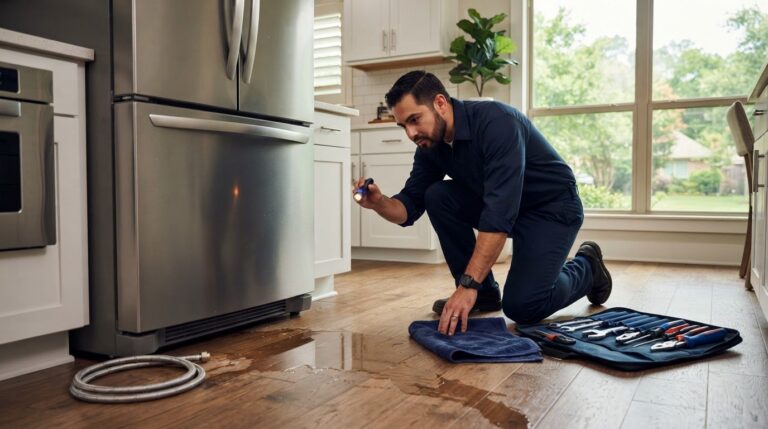
Your dishwasher works up to 50% harder just to fight off the mineral scale from Houston’s very hard water. Finding a pool of murky, smelly water at the bottom of your machine is a stressful discovery. You’re likely tired of hand-washing every plate and dreading the cost of a service call for a problem you might be able to fix yourself. Stagnant water creates unpleasant kitchen odors and disrupts your daily routine, but most drainage issues have a straightforward solution.
You can often resolve a dishwasher not draining Houston problem without professional help. This guide provides a practical path to identify the cause of the backup and clear the clog. We’ll walk through five simple troubleshooting steps to help you decide if you can handle the cleaning yourself or if you need a professional for dishwasher repair. Learn how to diagnose the issue quickly so you can stop wasting time at the sink and get your kitchen running smoothly again.
Key Takeaways
- Identify common causes of a dishwasher not draining Houston homeowners face, ranging from simple food clogs to mechanical failures.
- Follow a safe, five-step troubleshooting process to remove standing water and inspect your drainage system without specialized tools.
- Learn how Houston’s high mineral content creates scale buildup that can damage your drain pump impellers and solenoid valves.
- Recognize specific diagnostic sounds like humming or grinding to determine if your pump requires professional attention.
- Know when to stop DIY efforts and schedule expert dishwasher repair to prevent electrical hazards or plumbing damage.
Common Reasons Your Dishwasher is Not Draining
A dishwasher not draining Houston homes often stems from a disruption in the machine’s mechanical cycle. To understand why water stays in the tub, you need to understand how a dishwasher cleans and disposes of waste. Most modern units rely on a pump-driven system rather than simple gravity. The pump forces dirty water through a series of hoses and valves. If any point in this path is blocked, the cycle stalls and leaves you with a mess.
You might wonder if some water is normal. A small amount of standing water in the very bottom of the sump area is standard. It keeps the seals from drying out. However, if water covers the floor of the unit or spills out when you open the door, you have a drainage failure. Early warning signs include foul odors from stagnant water, gurgling sounds during the drain cycle, or dishes that remain dripping wet after the heat cycle. The water must travel from the tub, through the filter, into the pump, and out through a drain hose before reaching your sink plumbing. Any restriction along this route causes a backup.
The Role of the Filtration System
Your dishwasher’s filter is the first line of defense. This fine-mesh assembly catches food particles, labels, and grease before they reach the drain pump. When the filter becomes saturated, water cannot pass through, leading to a backup. For Houston residents, this is a frequent issue. The city’s hard water, averaging 12 grains per gallon, contains minerals that bind with grease and soap scum. This creates a thick paste that clogs the mesh faster than in other regions. Regular cleaning of this filter is non-negotiable to maintain proper flow and prevent a dishwasher not draining Houston situation.
Drain Hose and Air Gap Fundamentals
The drain hose connects your machine to the house plumbing. It often features a “high loop,” which is a section of hose fastened to the underside of the counter. This prevents sink water from siphoning back into your dishwasher. Many Houston kitchens also use an air gap, the small silver cylinder located near the faucet. If this device is clogged with debris, the dishwasher cannot vent properly and water will pool in the tub. A kinked hose or a restricted drain line will also cause the pump to struggle. If the pump can’t push water past a kink, the system eventually fails completely.
DIY Troubleshooting: 5 Steps to Unclog Your Dishwasher
Fixing a dishwasher not draining Houston residents often find is a task you can start yourself. Before you reach for tools, address safety. Disconnect the power by unplugging the unit or flipping the circuit breaker. Shut off the water supply valve usually located under the sink. Once the power is off, you must remove the standing water. Use a small plastic container to scoop the liquid into a bucket. Use a sponge to soak up the final inch of water until the bottom of the tub is dry. This allows you to see the components clearly and prevents a mess when you open the internal parts.
Many drainage problems start at the connection between your machine and the house plumbing. You can often clear a blockage without pulling the entire appliance out from the cabinet. Check the drain hose for visible kinks or heavy sagging. If you need more technical details on part locations, consult a comprehensive dishwasher repair guide to identify your specific model’s layout. Most issues are found in the filter or the disposal connection.
Cleaning the Filter and Sump Area
Remove the bottom rack to access the cylindrical filter. Twist the filter counterclockwise to lift it out. Houston’s hard water, which averages 12 grains per gallon, often leaves white calcium crust on the mesh. Scrub the filter in your sink using a soft brush and dish soap. Inspect the sump area where the filter sits. Use a flashlight to look for hidden glass shards, toothpick fragments, or small bones. These tiny items frequently jam the impeller and stop the drainage cycle. If you find the parts are damaged by scale, you might need professional dishwasher repair to replace the assembly.
The Garbage Disposal Connection
The most common “hidden” culprit is a new garbage disposal. If you recently replaced your disposal, the installer may have forgotten to remove the knockout plug. This plastic disc sits inside the nipple where the dishwasher hose connects. Tap it out with a screwdriver and hammer, then fish the plastic piece out of the disposal hopper. Also, check the “Y” joint where the hose meets the sink drain. Grease and food waste often collect here. Disconnect the hose clamp, pull the hose off, and clear any sludge with a pipe cleaner. Always run your disposal for 30 seconds before starting a dishwasher cycle to ensure the path is clear. Once cleared, run a short rinse cycle to verify the water flows out successfully.

The Houston Factor: Hard Water and Drainage Failures
Houston’s water is notoriously difficult on household machinery. With an average hardness of 12 grains per gallon, the city’s water is classified as “very hard.” These dissolved minerals, primarily calcium and magnesium, create a relentless layer of scale on every internal component. When you deal with a dishwasher not draining Houston residents must look beyond simple food clogs. The environment itself is often the primary culprit behind mechanical failure.
Mineral deposits frequently target the drain pump impeller. This small, spinning blade pushes water out of the unit. As calcium carbonate builds up on the impeller, it becomes heavy and unbalanced. Eventually, the motor can’t spin the blade fast enough to clear the tub. Solenoid valves also suffer. These electromagnetic components open and close to control water flow. Scale buildup can jam the valve in the closed position, preventing drainage entirely. This mineral interference can reduce the lifespan of your appliance by 30% to 50% if left unaddressed. The same hard water that causes drainage failures is also a leading factor in dishwasher leaking Houston homeowners experience, as scale destroys door seals and valve components over time.
Local environmental factors add another layer of difficulty. In areas like Katy and Sugar Land, groundwater sources often carry even higher sediment levels than surface water. This grit acts like sandpaper on rubber seals and valves. Additionally, Houston’s high humidity levels accelerate corrosion on the electronic control board. Moisture seeps into the cabinet and oxidizes sensitive connections. If the board can’t send a signal to the drain pump, the water stays put regardless of how clean your filters are.
Mineral Buildup in the Drain Line
Scale doesn’t just sit in the tub; it lines your pipes. Over time, these minerals narrow the diameter of the drain hose. A hose that was once an inch wide might only have a half-inch of clearance left after years of mineral accumulation. This restriction forces the pump to work harder, leading to premature failure. Look for white, chalky spots on the tub floor or a cloudy film on your glassware. These are clear indicators of hard water damage that will eventually lead to a dishwasher not draining Houston homeowners can’t fix with a simple plunge. Installing a home water softener is the most effective long-term solution to protect your appliances from this internal narrowing.
Preventative Maintenance for Houston Homes
Protect your investment with a consistent maintenance routine. Run a monthly cleaning cycle using white vinegar or citric acid crystals to dissolve mineral deposits. These acids break down the bond between the scale and the plastic components. Always use a high-quality rinse aid. In hard water regions, rinse aids are essential for breaking the surface tension of the water, allowing it to sheet off surfaces before minerals can settle. For long-term protection, consider scheduling an annual professional inspection with HomeFix. A technician can check the pump’s health and clear the drain lines before a total breakdown occurs.
Advanced Mechanical Issues: When the Pump Fails
When DIY cleaning doesn’t solve a dishwasher not draining Houston problem, the issue is likely mechanical. You need to listen to your machine to identify the fault. A humming sound during the drain cycle suggests the motor is trying to turn but is physically stuck. This usually happens when a small object or heavy calcium scale from Houston’s hard water jams the impeller. A grinding noise indicates the internal bearings have failed. Total silence means the motor isn’t receiving power or the internal windings have burned out.
The check valve is a small rubber flap that plays a critical role. It allows water to exit the tub but prevents dirty sink water from flowing back in. If this valve is worn, warped, or stuck open, you’ll see the tub fill up again shortly after the cycle ends. Some older models also use a drain solenoid. This electromagnetic coil pulls a lever to open the drain port. In local homes, mineral deposits often cause this lever to seize. You can test these components for electrical continuity using a multimeter. If the motor or solenoid shows a reading of “infinite” or “O.L,” the part has failed and requires replacement.
Diagnosing a Dead Drain Pump
Access the pump by removing the bottom kickplate. You’ll typically find the pump assembly located toward the front or center of the machine’s base. Check the impeller blades for physical obstructions. Small items like toothpicks, fruit pits, or plastic labels from jars often bypass the main filter and jam the pump directly. If the motor hums but doesn’t spin, removing the obstruction may restore flow. However, if the impeller is cracked or the motor shaft is loose, the entire pump assembly must be replaced.
Control Board and Timer Failures
Sometimes the hardware is functional, but the “brain” of the unit fails. The control board must send 120 volts to the pump at the exact right moment in the cycle. If the relay on the board is burnt, the pump never receives the signal to start. Try a hard reset first. Disconnect the power for 10 minutes to clear the board’s memory and reset the internal timer. If the unit still won’t drain after a reset, inspect the board for black scorch marks or a “burnt electronics” smell. These are clear signs of a failed control relay that cannot be repaired.
If you’ve reached this stage and the water still won’t move, it’s time for professional help. You can schedule dishwasher repair with a local expert to handle these complex electrical components safely and restore your kitchen’s efficiency.
When to Call a Houston Dishwasher Repair Expert
Troubleshooting a dishwasher not draining Houston homes often reveals issues that go beyond a simple filter rinse. While clearing a food clog is a safe DIY task, internal mechanical repairs involve high-voltage electricity and complex plumbing. Mixing these elements without proper training creates significant safety risks. If you’ve cleared the visible obstructions but the tub remains full, it’s time to step back. Attempting to disassemble a pump or rewire a control board can also void your manufacturer’s warranty, leaving you responsible for the full cost of future failures.
We provide a clear path to a working kitchen. Our technicians offer expert diagnostics in Katy, Memorial, and Cypress. We charge a standard diagnostic fee to identify the root cause of your drainage failure. This fee covers the technician’s time, travel, and professional expertise. If you choose to proceed with the recommended repair, we apply that fee toward the total cost of the job. This ensures you only pay for the solution, not just the visit. Knowing exactly what is wrong prevents you from wasting money on parts you don’t actually need.
Deciding between a DIY fix and a professional call comes down to the source of the problem. You can handle external issues like a clogged sink tailpiece or a dirty filter. However, you should call a specialist if you notice any of the following:
- Water leaking from the bottom of the machine onto your floor.
- A burning smell coming from the control panel or kickplate.
- The dishwasher trips your circuit breaker every time it tries to drain.
- The drain pump makes a loud grinding noise but won’t move water.
The HomeFix Repair Process
We understand that a broken appliance disrupts your entire day. We offer three-hour arrival windows so you aren’t stuck waiting from dawn until dusk. Our service vehicles stay stocked with genuine OEM parts for major brands like Whirlpool, LG, and Samsung. This allows us to complete most repairs in a single visit. We are proud to serve local neighborhoods, providing reliable appliance service in Sugar Land and Cypress.
Same-Day Service and Reliability
Standing water is more than a nuisance. It’s a threat to your cabinetry and flooring. We prioritize kitchen drainage issues to prevent expensive water damage. Working with a local specialist means you get a pragmatic partner who understands the specific challenges of Houston’s environment. We focus on fast, transparent results that get your dishwasher back in the cycle. Ready for a fix? Schedule your dishwasher repair now and stop hand-washing your dishes.
Restore Your Kitchen’s Efficiency Today
Managing a dishwasher not draining Houston homeowners often find is about identifying the line between a simple clog and a mechanical failure. You now know how to inspect your filters and check for common garbage disposal obstructions. You also understand how Houston’s hard water accelerates mineral buildup in your pump and drain lines. If these DIY steps haven’t cleared the tub, don’t risk further damage to your appliance or your kitchen floors with forced cycles. Professional diagnostic tools are sometimes the only way to pinpoint a failing solenoid or a burnt control relay safely.
Our expert technicians serve Katy, Sugar Land, and Cypress with reliable solutions. We offer same-day or next-day service to get your home back on track quickly. Our pricing is completely transparent; we waive the service call fee when you move forward with a repair. Stop hand-washing your dishes and let a dependable local specialist handle the heavy lifting. Book Your Same-Day Dishwasher Repair in Houston today. Your kitchen will be back to normal before you know it.
Frequently Asked Questions
Is it normal to have a little water at the bottom of my dishwasher?
Yes, seeing about an inch of clean water in the sump area is standard. This liquid keeps the internal pump seals from drying out and cracking between cycles. However, if the water is murky, smells bad, or covers the floor of the machine, you have a drainage failure that requires troubleshooting.
How much does it cost to fix a dishwasher that won’t drain in Houston?
Total costs depend on whether the issue is a simple food clog or a mechanical pump failure. Labor rates and the price of replacement parts vary significantly by brand and model. A professional diagnostic visit is the most reliable way to get an accurate quote for a dishwasher not draining Houston before committing to a full repair.
Can a clogged garbage disposal cause dishwasher drainage problems?
Yes, a blocked disposal is a frequent cause of dishwasher backups. Most units drain through the same plumbing as your sink. If the disposal is full of food or the knockout plug wasn’t removed during installation, the water has nowhere to go and will stay in your dishwasher tub.
Why does my dishwasher smell like rotten eggs?
This sulfur-like odor comes from bacteria growing in trapped food waste and stagnant water. When a clog prevents proper drainage, the leftover moisture becomes a breeding ground for organisms. Houston’s high humidity often makes these kitchen odors more intense and noticeable if the filter isn’t cleaned regularly.
How do I clear a dishwasher drain hose without removing the unit?
You can often clear the line from underneath your sink. Disconnect the drain hose where it meets the garbage disposal or sink tailpiece. Straighten the hose to remove any kinks and use a flexible pipe brush or a shop-vac to pull out clogs. This often restores flow without the need to pull the appliance out.
What is the most common reason a dishwasher stops draining?
A clogged filter assembly is the number one cause of drainage issues. Food particles, grease, and paper labels collect on the fine mesh screen over time. When the mesh becomes fully saturated, the pump cannot pull water out of the tub, leaving you with a pool of dirty water.
Should I use Drano or chemical cleaners in my dishwasher?
Never use caustic drain cleaners like Drano in your appliance. These chemicals are too harsh for the machine’s internal components and can melt rubber seals or damage plastic hoses. Use white vinegar, citric acid, or a specialized dishwasher cleaner to safely dissolve grease and mineral deposits.
How often should I clean my dishwasher filter in Houston?
Clean your filter at least once a month to maintain proper performance. Houston’s water is classified as “very hard” with 12 grains per gallon of mineral content. These minerals create scale buildup that traps food and grease faster than in soft water areas, leading to a dishwasher not draining Houston homeowners can avoid with regular maintenance.