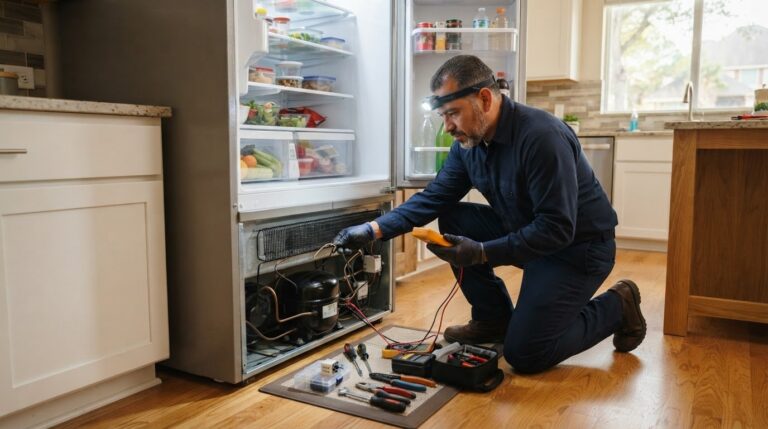
A refrigerator that stops cooling or a washer that won’t drain can throw off the whole day. But the symptom alone rarely tells you what failed or whether repair makes sense. An appliance diagnostic service Houston homeowners can rely on turns those clues into a clear next step, without asking you to approve repair work before you understand the problem.
It’s frustrating when an essential appliance stops working and the cause isn’t obvious. You need a straightforward explanation before deciding what to do. During a HomeFix visit, a certified, licensed, and background-checked technician assesses the appliance, looks for the likely source of the failure, and explains the findings. You’ll receive an upfront estimate before any repair begins.
This guide explains what a diagnostic visit may cover, what details and access to prepare before the technician arrives, and what happens after the issue is identified. You’ll also learn how to use the diagnosis and estimate to make an informed repair decision. If you approve the repair, HomeFix uses original replacement parts. The diagnostic fee is waived when a repair is performed.
Key Takeaways
- An appliance diagnostic service Houston visit helps distinguish a visible symptom, such as a leak, from the mechanical or electrical fault causing it.
- Note when the problem started and any unusual sounds, leaks, or changes in operation. These details can help guide the technician’s inspection.
- Use basic observations to describe the issue, but treat recurring, worsening, electrical, or gas-related symptoms as reasons to seek professional inspection.
- Before the appointment, gather the appliance brand and model if accessible, and clear a safe path to the unit.
- Once the fault is identified, use the technician’s findings to understand the available next step for your appliance.
What an Appliance Diagnostic Service in Houston Actually Does
An appliance diagnostic service is a technician’s inspection of a household appliance to identify the likely mechanical or electrical fault behind a problem. The technician considers what the appliance is doing, checks relevant components, and uses those findings to explain possible next steps. The inspection informs a repair estimate; it doesn’t guarantee a particular repair or outcome.
A symptom is what you notice. The underlying cause is the fault that may be producing it. For example, a refrigerator leak is a symptom, but it doesn’t reveal by itself where the water is coming from or what part may be involved. A technician needs to inspect the appliance and assess the details before identifying a likely cause. This is the practical value of an appliance diagnostic service Houston homeowners can use to make a more informed repair decision.
Which appliance problems can a diagnostic visit investigate?
A diagnostic visit can investigate problems across residential appliances, from refrigerators and freezers to washers, dryers, dishwashers, ranges, ovens, and microwaves. These are all types of home appliances, but each one has different functions and possible failure points. The reported symptom helps the technician decide what to examine.
- Refrigerators: Poor cooling, leaks, unusual sounds, or frost buildup can each point to different areas for inspection. The symptom alone doesn’t confirm which part is at fault. For a refrigerator concern involving a Sub-Zero model, HomeFix also provides Sub-Zero repair in Houston.
- Washers and dryers: A washer that won’t drain or a dryer that isn’t heating presents different clues and calls for an appliance-specific assessment.
- Dishwashers: Water left inside, poor cleaning, or a leak can help describe the problem, but inspection is needed to assess its likely source.
- Ranges, ovens, freezers, and microwaves: A technician can investigate reported operating problems in these appliances as well.
What a diagnosis can, and cannot, tell you
Inspection findings help the technician identify a likely fault and explain the appropriate next steps. They also provide a basis for an estimate before repair work begins, so you can understand the proposed work before deciding whether to authorize it.
A diagnosis is not a promise that a specific component has failed based only on a description, or that a repair will produce a guaranteed result. Similar symptoms can have different causes, and the technician needs to assess the appliance itself. Share what you’ve observed, then use the inspection findings and estimate to decide how to proceed. That gives you clearer information than guessing from a symptom alone.
How Houston Appliance Technicians Diagnose a Fault
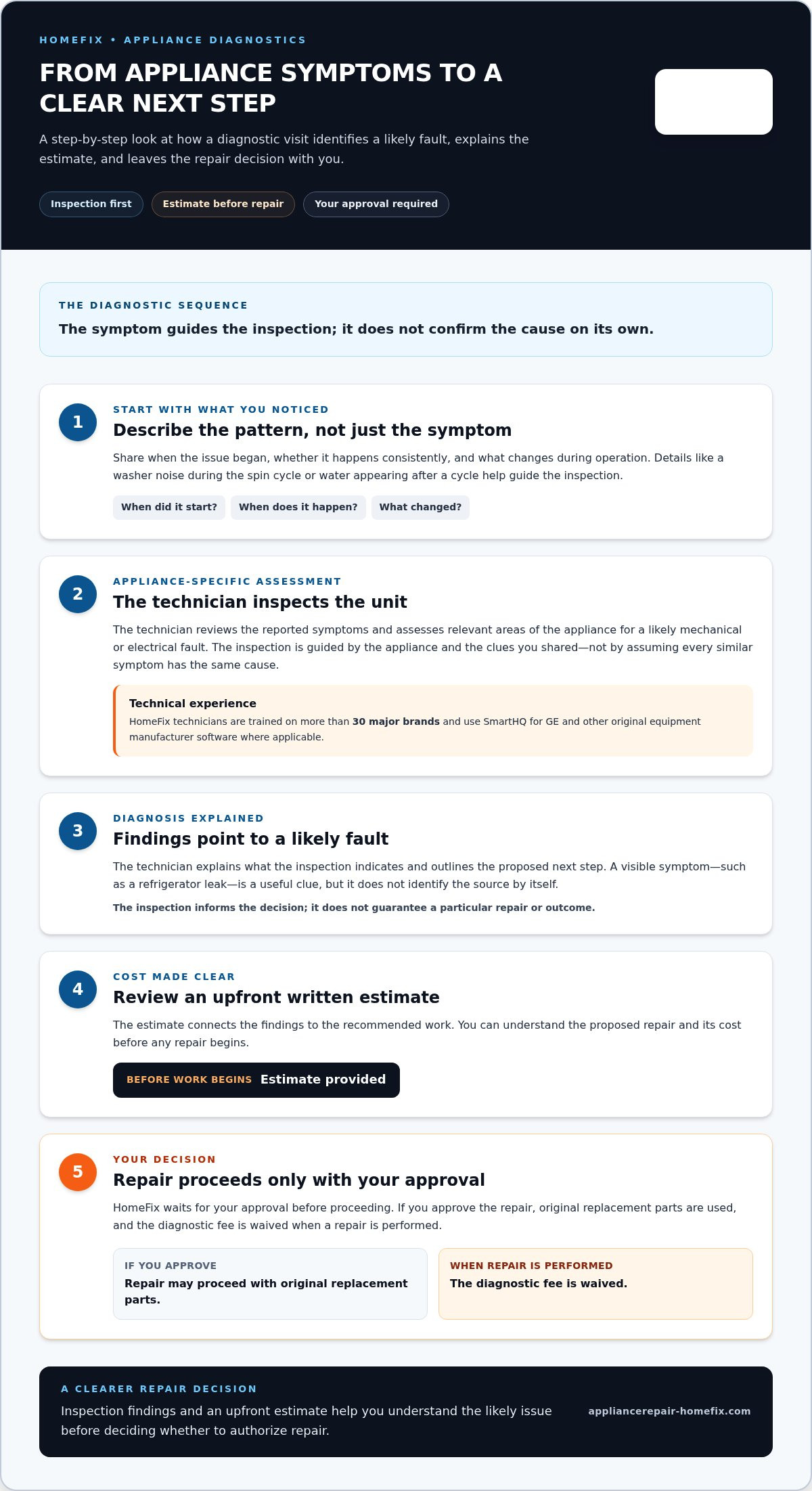
A clear diagnosis starts with the details you’ve noticed, then moves to an appliance-specific inspection. The technician evaluates the reported problem before discussing repair work. For an appliance diagnostic service Houston homeowners can understand, the sequence matters: first identify the likely fault, then explain the estimate, and only proceed with repair after you approve it.
Share the pattern, not just the headline. “It makes a noise” gives the technician less to work with than “the noise starts during the spin cycle and stops when the washer pauses.” Note when a leak appears, whether an appliance’s operation has changed, and if the issue happens every time or only sometimes. These observations help focus the inspection without deciding the cause in advance.
From reported symptoms to a focused inspection
The technician reviews your description and inspects the appliance in light of those clues. Timing can help distinguish a problem that occurs at startup from one that appears during a particular part of a cycle. A new sound, an intermittent leak, or a change in normal operation each gives useful context. The technician checks relevant areas based on the appliance and symptoms rather than assuming every similar complaint has the same cause.
- Review the appliance history. The technician asks what has changed, when the issue began, and whether it happens consistently. Details such as a noise during operation or water appearing after a cycle help narrow the inspection.
- Inspect the appliance. The technician assesses the unit and the reported symptoms to look for a likely mechanical or electrical fault. HomeFix technicians are trained on more than 30 major brands and use SmartHQ for GE and other original equipment manufacturer software where applicable.
- Explain the findings. The technician shares what the inspection indicates and outlines the proposed next step. A symptom is a useful clue, but it isn’t a diagnosis by itself.
The inspection is separate from the repair decision. HomeFix identifies the likely issue, provides an upfront written estimate before work begins, and waits for your approval before proceeding, so you can review the proposed repair and its cost before authorizing any work.
Findings, estimate, and approval
The estimate connects the diagnosis to a practical decision. It explains the recommended work based on what the technician found, rather than treating a symptom as proof that a particular part needs replacement. If you have questions, use this point in the visit to clarify the findings and proposed next step. The technician’s assessment informs the estimate, but it can’t guarantee a specific repair outcome.
After reviewing the estimate, you decide whether to approve the repair. If you do, the technician can move from diagnosis to the authorized work. If you don’t, the diagnostic visit has still provided useful information about the likely fault and what repair would involve. For washer concerns, you can also explore HomeFix washer repair as a next step.
Diagnostic Visit, DIY Checks, or Replacement: How to Decide
A visible symptom can point you toward a problem, but it doesn’t always identify the failed component. A refrigerator that isn’t cooling, for example, could have more than one possible cause. Safe observations help you describe what’s happening. A professional inspection is the better next step when the issue keeps returning, worsens, or involves electrical or gas-related concerns. An appliance diagnostic service Houston homeowners use can turn those observations into findings you can weigh before deciding what to do.
When simple observations are useful, and when to stop
Stick to what you can safely see, hear, and record. Note any displayed error message, what the appliance was doing when the symptom appeared, and whether an unusual sound or leak happens every time. Check the manufacturer’s basic guidance if you need help understanding a message. Don’t take apart the appliance or attempt electrical or gas-related work. If you suspect a safety concern, stop using the appliance and arrange professional service.
Use the pattern to decide whether observation is enough or an inspection is warranted:
- Occasional, non-urgent change: Record what happened and whether it repeats. A clear description can help a technician understand the issue.
- Recurring or worsening symptoms: Arrange an inspection rather than relying on repeated resets or guesses. A fault that returns may need a closer assessment.
- Electrical or gas-related concerns: Stop using the appliance if you’re concerned about safety and seek professional attention. Don’t try to diagnose the issue by opening or adjusting the unit.
- Unclear cause: If the appliance’s operation has changed but the source isn’t obvious, an inspection can help distinguish among possible faults.
DIY checks are for gathering information, not proving which part has failed. A puddle, for instance, shows that water escaped, but not necessarily where it originated. Likewise, an unusual sound may have several possible explanations. Treat the symptom as a clue, not a repair diagnosis.
How a diagnosis supports a repair-or-replace decision
A diagnosis adds the information a symptom alone can’t provide: the technician’s findings, the likely fault, and the scope of the proposed repair. With an upfront estimate, you can consider that scope alongside the appliance’s age and overall condition. There’s no single rule that makes replacement the right choice for every household or appliance.
Consider the whole picture. Is the appliance otherwise working reliably? Does the inspection point to a focused repair, or describe a broader issue? How does the proposed work fit your needs and plans for the appliance? These questions help you compare practical options without assuming that every older appliance should be replaced or every malfunction should be repaired.
For a refrigerator, for example, a cooling problem deserves an assessment before you decide based on the symptom alone. The findings and estimate give you a clearer basis for choosing whether to authorize repair or consider replacement. You remain in control of that decision.
How to Prepare for an Appliance Diagnostic Appointment in Houston
A few simple steps can help the technician focus on the issue and access the appliance safely. Before an appliance diagnostic service Houston appointment, gather what you know about the unit, make a clear path to it, and keep the area ready for inspection. You don’t need to troubleshoot or take anything apart.
Information that helps the technician understand the problem
Write down the appliance type and brand. If the model number is easy to find without moving the unit or removing a panel, note that too. Record what the appliance is doing, when the issue began, and whether it happens during a particular cycle or under certain conditions. Include any error message shown on the display.
- Describe the pattern: Note whether the problem happens every time or only occasionally, and whether it has changed or become more frequent.
- Capture useful details: Record unusual sounds, visible leaks, operating changes, and error codes. A photo of a displayed message can help you share it accurately.
- Keep checks safe: Use only basic guidance from the appliance manufacturer. Don’t open panels, handle wiring, or touch gas components to find a model number or investigate a fault.
Specific details are useful. For example, a washer symptom may occur only during a certain part of its cycle. Note what you observe without trying to identify the failed part yourself. HomeFix’s washer repair service covers washer concerns that may need professional assessment.
Make room for an efficient on-site visit
Clear a safe route to the appliance and move personal items away from the immediate work area. Keep pets away while the technician is inspecting the unit. If the appliance is in a tight space, remove nearby obstacles where you can do so safely, but don’t pull out or disconnect the appliance unless the technician has asked you to.
Leave enough room for the technician to reach the appliance and inspect the area around it. Keep your symptom notes and model information handy, and mention any change since you booked. These small preparations help the visit stay focused without requiring you to diagnose the problem in advance.
HomeFix provides three-hour arrival windows, and same-day service is available in most ZIP codes. Appointment availability can vary by ZIP code, so use the online booking process to view scheduling options for your location. Online booking can be completed in less than a minute.
Before the appointment, make sure the technician can reach the appliance, your notes are accessible, and the area is safe. That’s enough preparation. Leave inspection and diagnosis to the technician.
What Happens After a HomeFix Appliance Diagnosis
Once the technician has assessed the appliance, you’ll hear what the inspection suggests and what the next step may involve. This handoff is designed to give you clear information before repair work starts. You can review the findings, consider the proposed work, and decide whether to approve it.
Estimate and repair approval
The diagnosis informs an upfront written estimate. The technician explains the proposed repair based on the inspection, so you can understand the recommended work before making a decision. You don’t have to authorize repair simply because the technician has identified a likely fault. Repair work begins only after you approve the estimate.
- Review the findings. Ask the technician to explain the likely issue and how it relates to the appliance’s symptoms.
- Consider the estimate. Review the proposed work and its cost before deciding whether to proceed.
- Approve or decline. The technician waits for your decision before starting repair work.
If you approve the repair, HomeFix uses original replacement parts. Service vehicles stock common replacement parts to help minimize delays, though the parts needed depend on the diagnosis. The diagnostic fee is waived when a repair is performed. HomeFix provides a 90-day warranty on all repairs and labor warranty after each successful repair.
For example, a dishwasher that leaves water behind needs an assessment before the appropriate repair can be proposed. The symptom alone doesn’t determine the cause. HomeFix’s Houston dishwasher repair service covers dishwasher problems that need professional attention.
Book local diagnostic service with HomeFix
HomeFix provides residential appliance diagnostics in Houston and nearby communities, including Katy, Sugar Land, Memorial, Bellaire, and Cypress. Same-day service is available in most ZIP codes, with three-hour arrival windows. Availability can vary by ZIP code, so use online booking to view appointment options for your location.
Before booking, have the appliance type and a short description of the problem ready. Include any error message or change in operation you’ve noticed. Those details help prepare for the visit, while the technician’s inspection provides the basis for the diagnosis and estimate.
For an appliance diagnostic service Houston homeowners can use to understand the problem and choose a next step, arrange a visit with HomeFix.
Turn Uncertainty Into a Clear Next Step
A malfunctioning appliance can make it tempting to guess, keep restarting it, or put off deciding what to do. Instead, use the diagnosis to make a choice that fits your household. Think about what you need the appliance to do, how much disruption the problem is causing, and what you want to understand before approving any work.
Keep your questions focused on the decision ahead: What did the inspection reveal? What work is being proposed? What should you consider if you choose not to proceed right now? Clear answers can help you weigh your options without feeling rushed into a choice.
An appliance diagnostic service Houston homeowners can use is a practical starting point when symptoms leave the cause uncertain. You don’t need to solve the problem yourself. Bring your observations, hear the findings, and decide on a next step with better information.
With a clearer picture of the problem, you can move forward with confidence and get your household back on track.
Frequently Asked Questions
What does an appliance diagnostic service include?
An appliance diagnostic service includes an on-site assessment to identify the likely source of a mechanical or electrical problem. The technician considers the symptoms and inspects the appliance before explaining the findings and proposed next step. For example, a refrigerator that runs but doesn’t keep food cold needs an assessment to narrow down the cause. The diagnosis helps guide a repair estimate, but it doesn’t guarantee a particular repair outcome.
What happens during an appliance diagnostic appointment?
The technician reviews the reported problem, assesses the appliance, and explains what the inspection indicates. The visit helps distinguish between what you’ve observed and the likely fault behind it. Keep the appliance accessible and share any changes since you booked, such as a new sound or an error message. Before repair work begins, you’ll receive an upfront estimate and can decide whether to approve the proposed work.
Is the diagnostic fee applied toward the repair?
HomeFix waives the diagnostic fee when you proceed with a repair. The fee is for the diagnostic visit, while the estimate explains the proposed repair before work begins. You can review the findings and estimate before deciding whether to authorize the repair. If you’re unsure about the recommended work, ask the technician to clarify how it relates to the appliance’s symptoms so you can make an informed choice.
Can I use my appliance while waiting for a diagnostic appointment?
It depends on the symptom and whether using the appliance could create a safety concern. Don’t continue operating a unit if you notice signs of an electrical or gas-related issue, or if you otherwise feel it may be unsafe. Follow the manufacturer’s guidance and avoid opening panels or attempting repairs. If the problem seems to be worsening, stop using the appliance and arrange professional service rather than testing it repeatedly.
How soon can HomeFix provide appliance diagnostic service in Houston?
Same-day service is available in most ZIP codes, and technician arrival windows are three hours. Same-day appointments aren’t guaranteed in every ZIP code, so scheduling depends on your location and current availability. Use HomeFix’s online booking to view appointment options for your area. If the appliance has a safety-related symptom, stop using it while you arrange service instead of waiting to see whether the problem resolves on its own.
What areas around Houston does HomeFix serve?
HomeFix serves Houston and nearby communities, including Katy, The Woodlands, Sugar Land, Cypress, Pearland, and Fulshear. Service also extends to areas such as Memorial, Bellaire, Alief, and Bunker Hill Village. If you’re near the edge of the Houston service area, enter your ZIP code during online booking to see relevant appointment options. This helps match scheduling to your location without assuming every nearby address has the same availability.
What should I have ready before an appliance diagnostic visit?
Have the appliance type and brand ready, plus the model number if you can access it safely. Write down when the issue began and what was happening when it occurred. A photo of an error message can help you share its exact wording. Clear a route to the appliance and keep pets away from the work area. Don’t move a heavy unit or remove panels to find information.