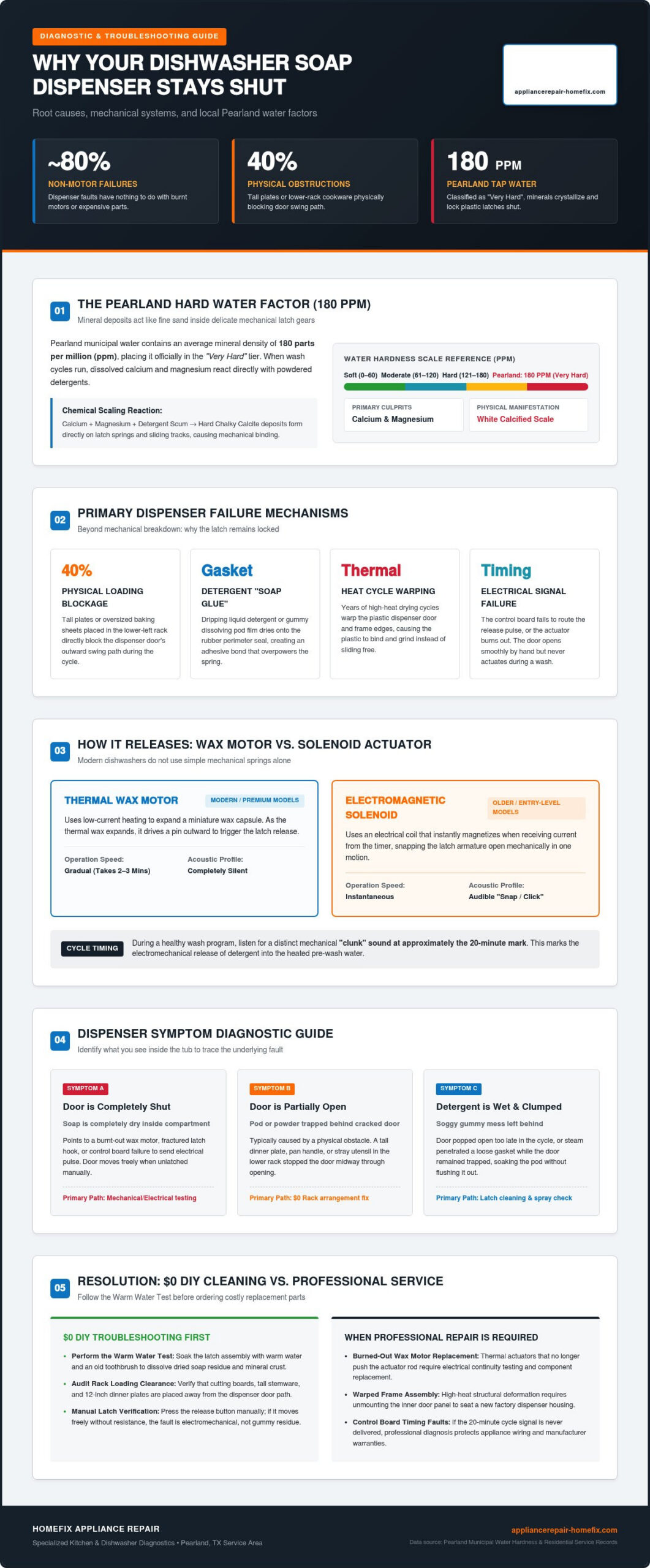
Did you know that nearly 80% of dishwasher soap dispenser failures have nothing to do with broken motors or expensive parts? It’s incredibly frustrating to wait an hour for a cycle to finish, only to find a soggy detergent pod stuck behind a closed door. You end up hand-washing dishes or running the whole machine again, wasting water and your limited evening time. If you’re dealing with a dishwasher soap dispenser not opening Pearland tap water might actually be the hidden culprit. Our local water averages 180 ppm, which is classified as very hard. These minerals build up on your dispenser latch and eventually freeze the plastic components shut.
We understand the stress of a broken household routine. You want clean dishes on the first try without worrying about a massive repair bill. This guide will help you identify why your dispenser is stuck and show you how to fix it yourself or when it’s time to call in a professional. We’ll walk through common loading errors, gummy detergent residue, and mechanical testing. You’ll learn whether you need a simple five-minute cleaning or a professional part replacement to get your kitchen back in order today.
Key Takeaways
- Identify how common loading errors and tall utensils physically block your detergent door from opening during the wash.
- Learn why a dishwasher soap dispenser not opening Pearland homes is often caused by local hard water mineral buildup and how to dissolve it.
- Master the “Warm Water Test” to quickly determine if your issue is a simple detergent clog or a mechanical failure.
- Understand the specific sounds your dishwasher makes when the dispenser successfully triggers so you can spot problems early.
- Discover when a $0 DIY cleaning is enough and when professional intervention is required to protect your machine’s warranty.
Understanding Why Your Dishwasher Soap Dispenser Fails to Open
You open the dishwasher door after a long cycle, expecting sparkling plates. Instead, you’re met with a cloud of steam and a closed detergent door. The dishes are wet but still dirty. The soap remains trapped in its plastic compartment, completely dry or turned into a gummy mess. This failed cycle is a common frustration. The detergent dispenser acts as the gatekeeper for your cleaning routine. Its primary role is timing the release of soap so it mixes with water at the peak of the wash cycle. If that door stays shut, the soap never reaches your dishes.
During a healthy cycle, you should hear a distinct “clunk” sound about 20 minutes in. This is the sound of the latch releasing. If your kitchen remains silent, you likely have a dishwasher soap dispenser not opening Pearland residents often find that mineral buildup or mechanical failure has silenced this crucial signal. Understanding how dishwasher wash cycles operate helps you see that this isn’t just a plastic flap; it’s a timed electromechanical event. If your machine is silent when it should be clicking, you might need professional dishwasher repair to restore the timing.
The Role of the Wax Motor and Solenoid
Modern dishwashers don’t use simple springs to open. Most premium brands rely on a wax motor. When the control board sends a signal, electricity heats a small wax cylinder. The wax expands, pushing a pin that triggers the door latch. This is a slow, silent process that takes a few minutes to complete. Older or entry-level models use a solenoid instead. This is an electromagnetic coil that snaps the latch open instantly with a loud click. If the electrical signal never reaches these parts, or if the wax motor burns out, the door stays locked. You’ll know it’s an electrical issue if the door moves freely by hand but never moves during a wash.
Common Symptoms of a Stuck Dispenser
Identifying the specific way your dispenser failed helps narrow down the fix. Look for these three common scenarios:
- Door is completely shut: This usually points to a failed wax motor, a broken latch, or an electrical glitch in the control board.
- Door is partially open: Detergent is often still inside. This usually means a tall plate or a stray spoon in the lower rack physically blocked the door’s swing path.
- Detergent is wet but clumped: The door opened, but it happened too late. Water didn’t have enough time to flush the compartment, or the door was propped open just enough to let steam in without letting the soap out.
Dealing with a dishwasher soap dispenser not opening Pearland homeowners should first check for these physical blocks before assuming the motor is dead. A simple rack adjustment often solves the problem for $0.
Identifying the Root Causes: From Gunk to Mechanical Failure
Finding the source of the problem is the first step toward a fix. Most people assume a motor has died when they see a dishwasher soap dispenser not opening Pearland residents often find the cause is much simpler. Statistics show that roughly 40% of these failures are caused by physical obstructions. If you place a large baking sheet or a tall dinner plate in the lower-left corner of the rack, it can block the dispenser door from swinging or sliding open. Always check your loading pattern before assuming there is a major mechanical fault.
Another common culprit is detergent buildup. Over time, liquid detergent or the film from pods can leak and dry on the rubber gasket. This creates a “soap glue” that holds the door shut even when the latch releases. You might see the door try to twitch, but the sticky residue keeps it pinned. Heat damage also plays a role. Years of high-heat drying cycles can warp the plastic dispenser cover, causing it to bind against the frame. If the door feels tight or grinds when you move it manually, warping is likely the issue.
Hard Water Impact in Pearland
Pearland tap water is officially classified as “very hard,” averaging about 180 ppm of mineral content. These minerals, specifically calcium and magnesium, react with powder detergents to form stubborn hard water deposits and soap scum. This white scale builds up inside the latch mechanism and on the spring. Eventually, the minerals act like sand in a gear, preventing the latch from sliding. Homeowners in Pearland often see these issues more frequently than those in other suburbs because of this specific mineral concentration.
The ‘Rinse Aid’ Leak Factor
A leaking rinse aid compartment is a hidden cause of dispenser failure. If the cap is loose or the seal is worn, the oily rinse aid fluid drips down onto the soap door latch. When this fluid mixes with dry detergent dust, it creates a thick, gummy paste. This gunk is much harder to clean than standard soap residue. Check for a blue or clear sticky trail leading from the rinse aid cap. If you notice this residue, cleaning the cap and gasket is a priority. For persistent leaks or mechanical jams, you can schedule a professional inspection to prevent further cycle failures.
Finally, consider the door spring. If you trigger the latch and the door barely moves, the spring is likely broken or detached. A healthy door should “pop” open with enough force to clear any remaining steam. Without that tension, the door stays resting against the latch even when it’s technically unlocked. If the spring has snapped, the entire dispenser assembly usually needs replacement to restore proper function.
DIY Troubleshooting vs. Professional Dishwasher Repair in Pearland
Start with the “Warm Water Test.” This simple step solves many cases where a dishwasher soap dispenser not opening Pearland residents encounter is caused by dried residue. Take a microfiber cloth soaked in hot water and firmly wipe the perimeter of the dispenser door and the rubber gasket. If the door pops open after a few minutes of scrubbing, you’ve saved yourself a service call. For tougher mineral buildup, use the “Vinegar Soak.” Pearland water is rich in calcium, which often calcifies the latch spring. Dip a toothbrush in white vinegar and scrub the latch assembly until the white crust disappears.
If the latch is physically snapped or the plastic is cracked, cleaning won’t help. Homeowners should weigh the cost of buying an OEM dispenser assembly against the average dishwasher repair and dispenser replacement costs. Often, a professional can install the part and provide a warranty that a DIY job lacks. If you decide to inspect the part yourself, you must pull the inner door panel off. Always shut off the circuit breaker first. The inner edges of stainless steel panels are razor-sharp, so wear cut-resistant gloves during disassembly.
When a Simple Cleaning is Enough
A five-minute tune-up can extend the life of your dispenser. First, scrub the gasket to remove “soap glue.” Second, test the door manually while the machine is off to ensure it moves without grinding. Third, consider switching from pods to liquid detergent if you see gummy residue. Pods often fail to dissolve completely in cooler “eco” cycles, leaving behind a film that glues the door shut. This simple switch often prevents the dishwasher soap dispenser not opening Pearland homeowners frequently report.
Recognizing Signs of Electrical Failure
Electrical issues are harder to spot. If the door moves freely by hand but never opens during a cycle, the wax motor or solenoid has likely failed. Advanced DIYers can use a multimeter to check for continuity in the dispenser actuator. However, if your dishwasher is also skipping cycles or failing to drain, the main control board might be the real problem. These complex repairs involve 120V circuits and delicate wiring harnesses. In these cases, it’s safer to call a professional Pearland technician to diagnose the exact failure point and ensure a safe, lasting fix.
Step-by-Step Guide to Fixing a Stuck Soap Dispenser
Restoring your dishwasher to peak performance requires a systematic approach. If you’re struggling with a dishwasher soap dispenser not opening Pearland residents should follow these five steps to troubleshoot the most common mechanical and physical failures. Start with the easiest solutions first. Many issues are caused by simple loading errors or surface residue that you can clear in minutes without specialized tools.
- Step 1: Clear the area. Ensure no tall baking sheets, oversized cutting boards, or long utensils are in the bottom rack’s front-left corner. These items often lean against the door during the wash, physically preventing it from swinging open.
- Step 2: Scrub the gasket. Use a soft toothbrush and warm water to clean the rubber seal around the detergent cup. This removes the “soap glue” that binds the door shut when liquid detergent dries.
- Step 3: Inspect the latch. Look for tiny hairline cracks in the plastic housing or a missing tension spring. If the latch hook is loose or feels “mushy” when you press it, it won’t hold the door shut or release it properly when the cycle triggers.
- Step 4: The ‘Dry Test’. Always ensure the dispenser cup is bone-dry before adding detergent. Moisture inside the cup causes pods to stick to the plastic before the cycle even begins.
- Step 5: Run a descaling cycle. Use a commercial dishwasher descaler to strip away calcium deposits. Running a descaling cycle is the best defense against a dishwasher soap dispenser not opening Pearland homeowners often experience due to local hard water.
Cleaning the Dispenser Door and Gasket
Gather a toothbrush, white vinegar, and a microfiber cloth for a deep clean. Focus on the hidden hinge area at the bottom of the dispenser door. Soap often collects in these crevices, hardens, and acts as a physical wedge that stops the door from moving. Follow the “dry-touch” rule: never handle detergent pods with wet hands. Even a single drop of water can start the dissolving process, causing the pod to glue itself to the door gasket instantly. Scrubbing the perimeter once a month prevents this sticky buildup from forming.
Book a professional dishwasher diagnostic today
Checking the Dispenser Spring and Latch
Check the tension of the latch hook by flicking it with your finger. It should snap back into place immediately with a sharp click. If it stays in one position or feels sluggish, the internal spring is likely stretched or unhooked. While some homeowners attempt temporary fixes by bending the spring with pliers, a stretched spring usually signals that the mechanical assembly has reached its limit. Permanent part replacement is the only way to guarantee a reliable release on every cycle. If the latch is physically broken, it’s time to transition from DIY cleaning to a professional component swap.
Professional Dishwasher Repair Solutions with HomeFix Pearland
Sometimes, cleaning the gasket or adjusting your plates isn’t enough to solve the problem. If you’re still facing a dishwasher soap dispenser not opening Pearland families can rely on HomeFix for a permanent, professional solution. Mechanical failures in wax motors or solenoids require technical disassembly that goes beyond basic maintenance. We provide fast, local dishwasher repair across all Pearland ZIP codes. Our team offers same-day or next-day service to get your kitchen back on track as quickly as possible.
We believe in transparent and fair pricing for every customer. Our standard diagnostic fee is $89 to have a certified technician inspect your machine. If you choose to move forward with the recommended repair, we reduce that fee to $69 and apply it directly toward your final bill. This ensures you only pay for the expert labor and high-quality parts needed to fix the actual problem. We never use generic, low-quality components. We use genuine OEM parts to ensure total compatibility and long-lasting performance for your specific model.
Why Choose HomeFix for Pearland Appliance Repair?
Our technicians carry the expertise needed for modern, complex machines. We are certified to work on premium brands like KitchenAid, Bosch, and Miele. As a local independent company, we aren’t a distant franchise with a call center. We live and work in the Houston area. We understand the specific hard water challenges Pearland residents face every day. Every repair we perform comes with a 1-year parts warranty and a 3-month labor warranty. You get peace of mind knowing your appliance is backed by a professional guarantee.
- Expert Training: Our team stays updated on the latest dishwasher technology and manufacturer specs.
- Local Focus: We prioritize Pearland and Greater Houston residents for faster response times.
- Reliable Parts: We only install parts that meet or exceed original manufacturer standards.
- Clear Communication: You’ll receive a full explanation of the failure before any work begins.
Scheduling Your Diagnostic and Repair
We respect your time and your home. You won’t have to wait around all day for a technician to show up. We provide 3-hour arrival windows so you can plan your schedule with total confidence. Our service vehicles are stocked with common dispenser assemblies and latches to complete most repairs in a single visit. If you’re tired of wasting detergent and hand-washing dishes, schedule your Pearland dishwasher repair now. Our online booking system is available 24/7 for your convenience.
Get Your Dishwasher Back to Work
Dealing with a dishwasher soap dispenser not opening Pearland homes often means battling local mineral scale or simple loading errors. You’ve learned how to identify “soap glue” on the gasket and how to test for mechanical actuator failure. Most of the time, a thorough cleaning with vinegar or a rack adjustment solves the issue. If these DIY steps don’t restore that satisfying “clunk” of a releasing door, it’s time for a professional to step in.
HomeFix provides the fast, reliable support you need to stop hand-washing your dinner plates. Our team offers same-day or next-day service to minimize your household disruption. We stand behind our work with a 1-year parts warranty and a 3-month labor warranty. Our $89 diagnostic fee is reduced to $69 and applied directly to your repair cost if you move forward with the fix. We use genuine OEM parts to ensure your machine runs like new again.
Schedule Your Dishwasher Repair in Pearland Now
You don’t have to settle for dirty dishes or wasted detergent. Take action today and enjoy a fully functional kitchen once more.
Frequently Asked Questions
Can a dishwasher soap dispenser be repaired, or does it need to be replaced?
Most dispensers are designed as single units, so a snapped latch or broken internal spring usually requires a full assembly replacement. However, if the door is simply stuck due to detergent buildup or a physical obstruction, a professional cleaning can repair the function. We always inspect the mechanical components first to see if a simple adjustment can save you the cost of a new part.
Why is my dishwasher detergent pod not dissolving?
Detergent pods fail to dissolve when the dispenser door doesn’t open at the right time or water doesn’t reach the compartment. If you’re dealing with a dishwasher soap dispenser not opening Pearland tap water minerals might be gluing the door shut. Additionally, ensure your water temperature is at least 120 degrees Fahrenheit. Low temperatures or blocked spray arms prevent the pod’s outer film from breaking down during the wash.
Is it okay to put the detergent pod in the bottom of the dishwasher?
You shouldn’t toss the pod directly into the bottom of the tub because it will dissolve during the initial pre-wash cycle. Dishwashers are engineered to release soap during the main wash after the first rinse water has drained away. Placing it on the floor of the machine means the detergent is wasted and flushed out before the actual cleaning begins. Always use the designated dispenser cup for the best results.
How much does it cost to replace a dishwasher soap dispenser in Pearland?
The total cost for a dispenser replacement depends on your specific brand and model. We provide clear, written estimates after an on-site diagnostic to ensure you aren’t overpaying for parts you don’t need. Our standard diagnostic fee is $89, but we reduce it to $69 if you choose to move forward with the repair. This fee is then applied directly toward the final labor and parts cost.
Can hard water cause my dishwasher soap door to stick?
Yes, Pearland’s very hard water is a primary reason for sticking dispenser doors. Calcium and magnesium deposits create a white, abrasive scale on the plastic latch and metal springs. This mineral buildup causes friction that prevents the door from popping open when the timer triggers it. Regularly scrubbing the latch with white vinegar or running a monthly descaling cycle helps prevent these mineral-related mechanical failures in your kitchen.
What brands of dishwashers does HomeFix repair in Pearland?
We repair a wide variety of standard and professional dishwasher brands. Our technicians are certified for common names like LG, Samsung, GE, and Whirlpool. We also specialize in premium appliances, including Bosch, Miele, KitchenAid, JennAir, and Thermador. Whether you have a professional-grade unit or a standard household model, our team carries the brand-specific training and high-quality parts required to restore your machine to peak performance quickly.
Does HomeFix offer a warranty on dishwasher repairs?
Yes, we provide comprehensive warranties to give you peace of mind. We offer a 1-year warranty on most replacement parts and a 3-month warranty on our labor. This double layer of protection ensures that your repair is a lasting solution rather than a temporary fix. If the same issue returns within the warranty period, we’ll come back to make it right at no additional cost to you.
How quickly can a technician come to my home in Pearland?
We prioritize speed and often provide same-day or next-day service for local residents. Most of our repair calls are completed within 24 hours of your request. We offer convenient 3-hour arrival windows so you don’t have to wait around all day. Our goal is to fix your dishwasher soap dispenser not opening Pearland issue quickly so you can stop hand-washing dishes and return to your normal routine.